EVchargerReviews is supported by our readers. We may earn commissions from links on this page. Why trust us?
Best NACS Home EV Chargers Tested
Best NACS Home EV Chargers
- EVIQO Level 2 EV Charger
($510.00$399.99) - IYILO Level 2 EV Charger
($389.99$349.98) - Tesla Wall Connector
(Check Price) - ChargePoint Home Flex
($570.79) - FLO Home X3
($774.81) - Emporia EV Charger
($479.00) - Tesla Mobile Connector
($300.00)
Prices updated: August 20, 2026 at 8:09AM (EST)
Updated August 14, 2026, by Roman Kim
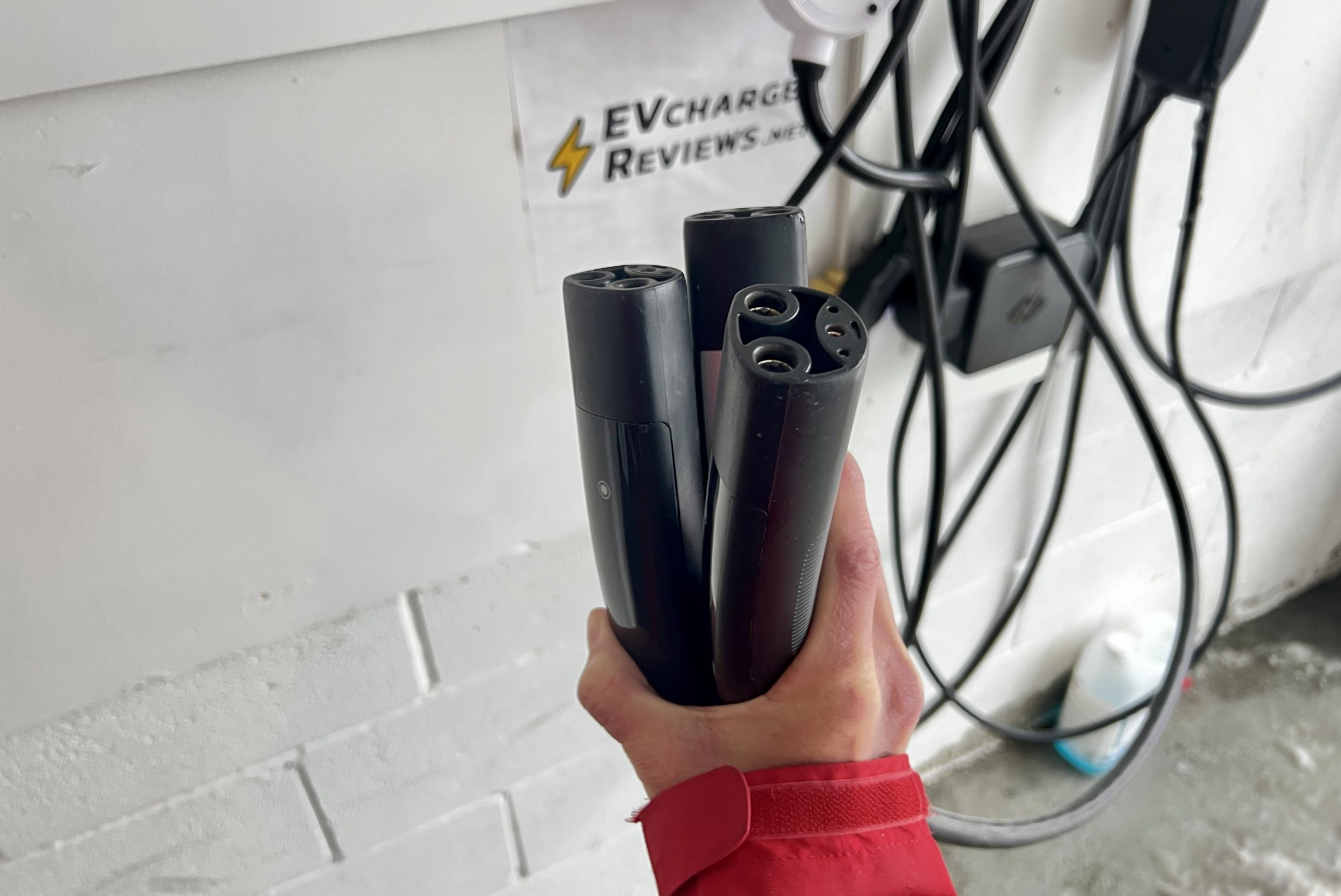
NACS (North American Charging Standard) connectors are quickly taking over the U.S. and Canadian EV markets. First popularized by Tesla in the early 2010s, the NACS connector’s popularity and widespread use at Tesla’s Supercharger stations forced the rest of the industry to give up CCS1 and transition to NACS. Now in 2026, many popular EVs come with NACS built-in with backwards compatibility to J1772/CCS1 via adapters.
Below, you will find our favorite level 2 home chargers for NACS equipped cars. We tested more than 20 home charging stations and selected products worth your consideration.
Why trust us? We have hands-on testing experience with the most popular EV charging products.
1. EVIQO Level 2 EV Charger
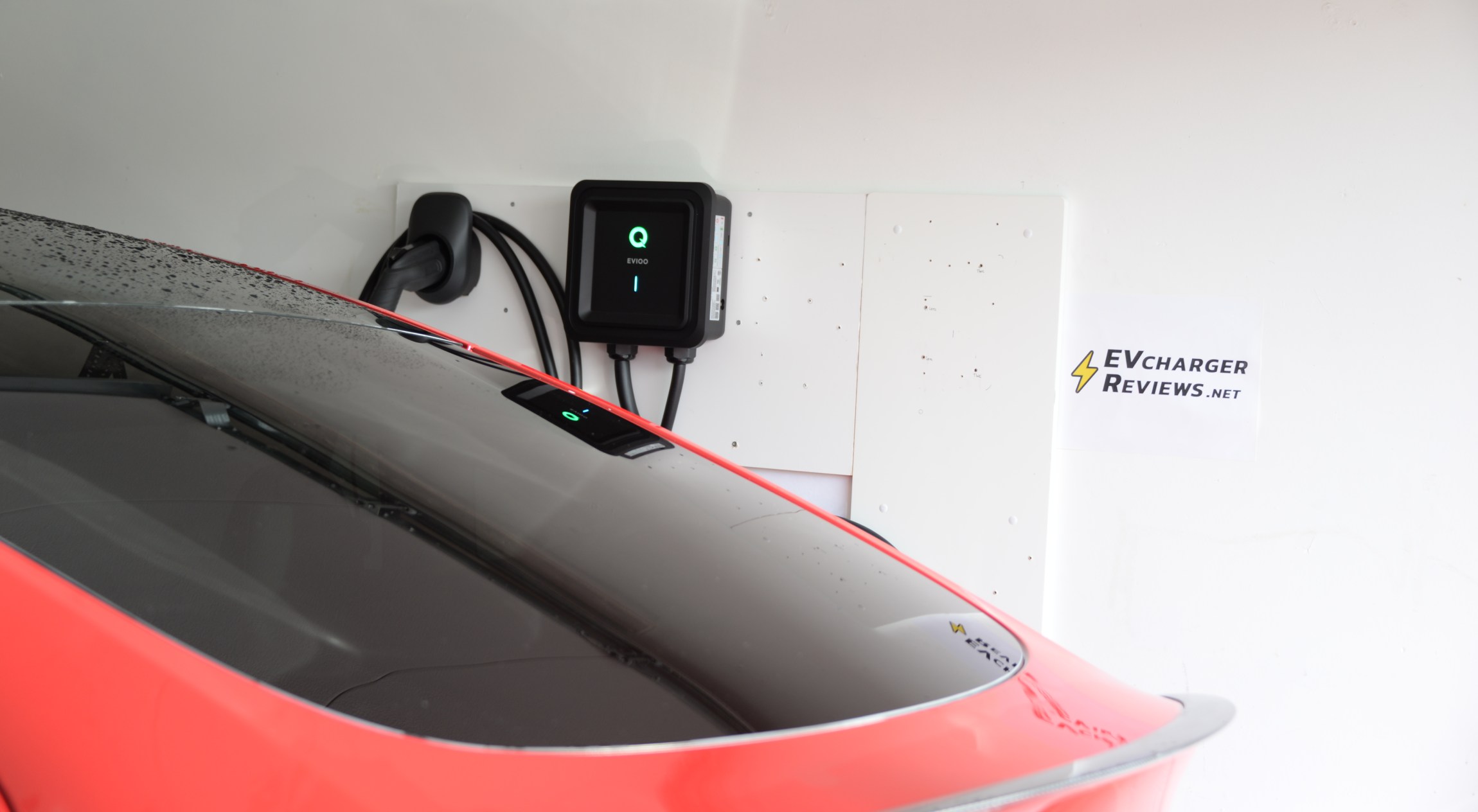
Eviqo is a newer brand, but they have already iterated to a Gen. 2 version of their successful home charging station. It was designed by EV drivers and addresses many common pain points from owners. All touch points and materials feel solid and stand up to daily use and abuse. Long input cords make installation easier, and Eviqo offers ultimate flexibility with NACS & J1772 options, as well as NEMA 14-50 or hardware install options. The app is really well done too, with flexible scheduling and charging cost tracking too.
Specs
- Up to 48 amps
- 25 foot cord length
- Wi-Fi connectivity and great Eviqo app for management
- Weatherproofing: NEMA 4
- Hardwire or NEMA 14-50 outlet install options
2. IYILO Level 2 EV Charger
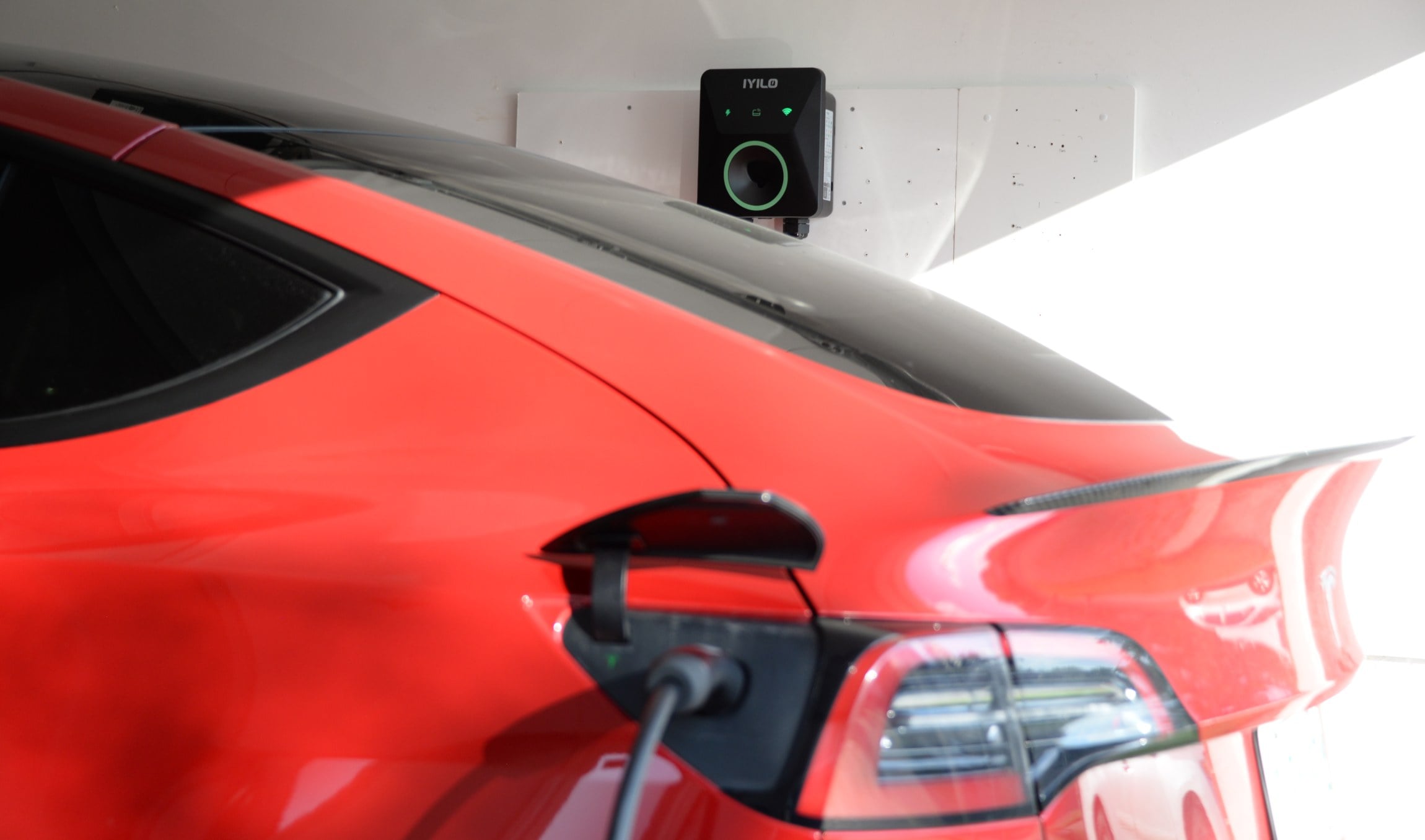
IYILO is another innovative new entrant into the home EV charger space, offering a lot of value for money. In addition to having an app and smart features, the company offer their charger in both NACS & J1772 EV connectors, and hardwired and & NEMA 14-50 wall plugs. The enclosure is plastic but rated for outdoor installation, and the integrated holster makes storing excess cable easy when not in use.
But IYILO’s biggest differentiator is their focus on safety and regulating charging temperatures. The product features temperature sensors both on the input and output connectors, so it is able to intelligently reduce amps (or stop charging) if things get a little too toasty. High ambient temps during summers, sun exposure, and high amps can contribute to connectors overheating and melting, but IYILO is one of few companies offering temperature monitoring where it matters most.
Specs
- Up to 48 amps
- 25 foot cord length
- NTC Temperature sensors on input & output connectors
- Hardwired and NEMA 14-50 versions available
3. Tesla Wall Connector
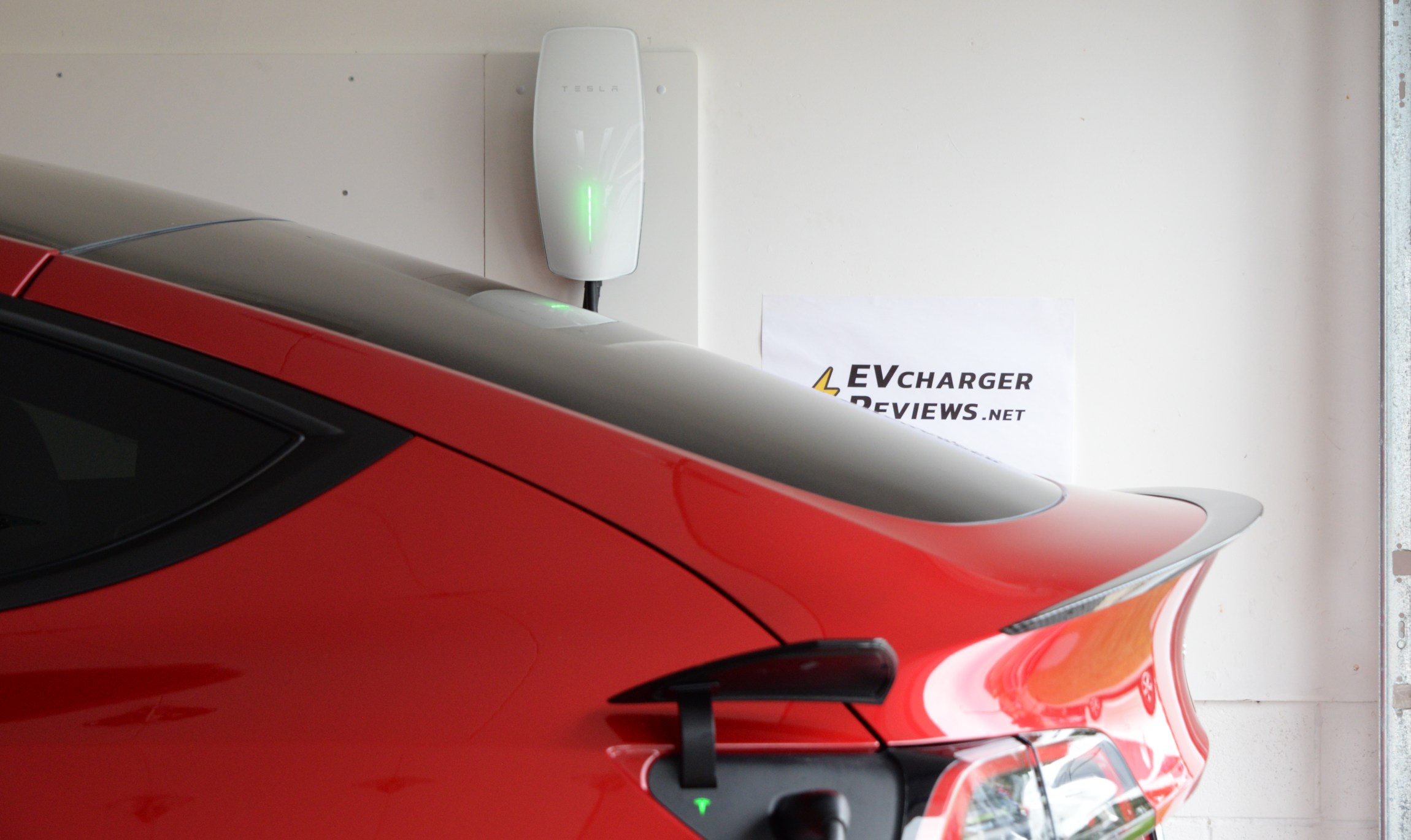
The Tesla Wall Connector (Gen. 3) is one of the oldest products on this list, but it is still consistently one of the best. It offers 48 amps (11 kW) of charging, a high quality charging cord and NACS connector, and an attractive design that looks at home in any garage. Performance has never been an issue for me during summer heat waves or in the depths of winter, and I love the integrated connector holster in the side of the charger, so that the cord is out of the way when you’re driving in/out of the garage.
Specs
- Up to 48 amps
- 24 foot cord length
- Wi-Fi and Tesla app integration
- Weatherproofing: NEMA 3R
- Must be hardwired, no outlet install
3. ChargePoint Home Flex (NACS)
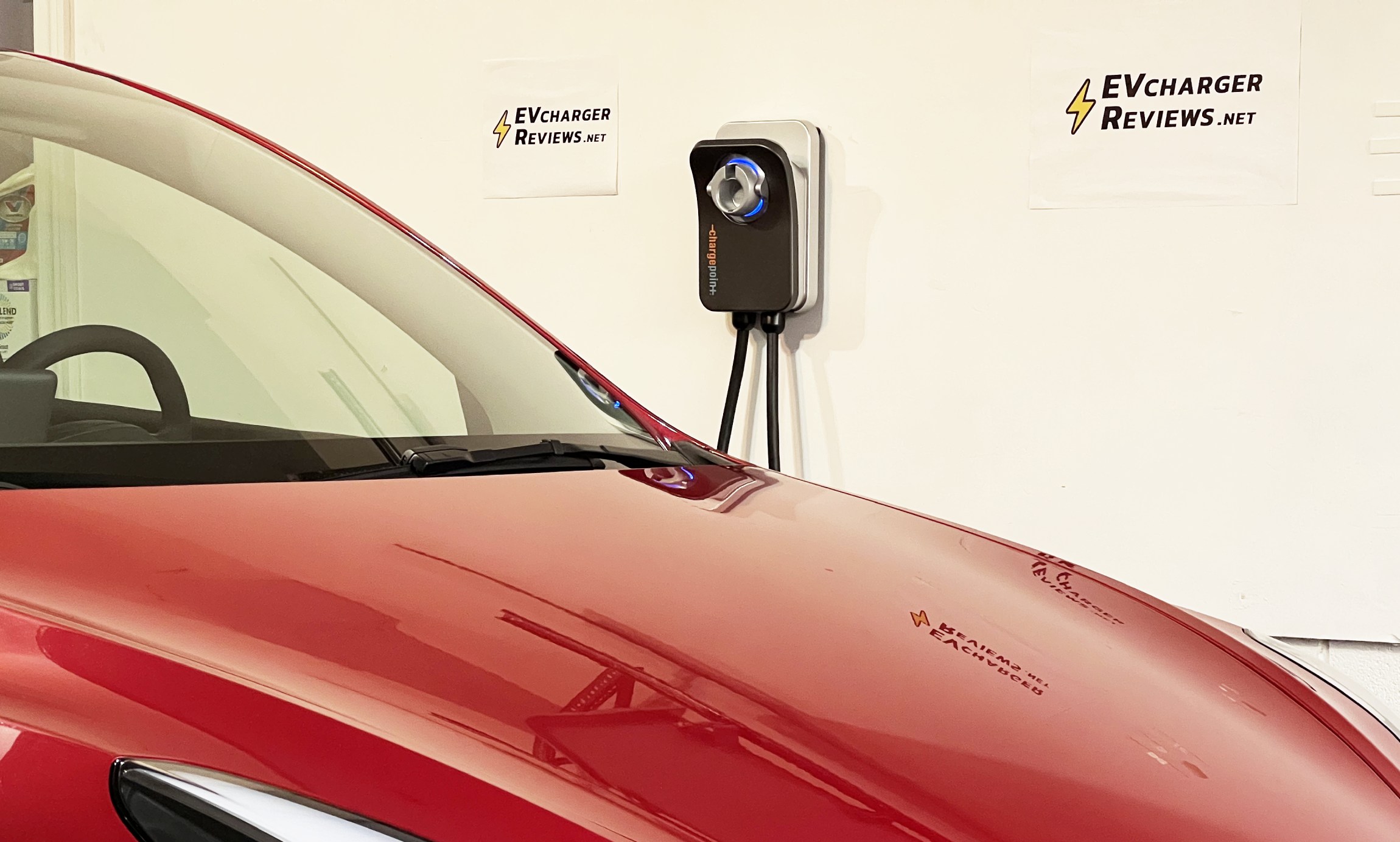
The ChargePoint Home Flex has been around for years, but it has recently been improved and updated with NACS connectors. The hardware is still excellent and performs well in all climates. The unit delivers 50 amps flawlessly in hot weather, and the charging cord stays flexible and pliable during the coldest months of winter. ChargePoint offers a great cord management solution with the swivelling holster, and the ChargePoint app integration is a big bonus for drivers who already use the ChargePoint public charging network.
Specs
- Up to 50 amps
- 23 foot cord length
- Wi-Fi connectivity and ChargePoint app integration
- Weatherproofing: NEMA 3R
- Hardwire or NEMA 14-50 install options
4. FLO Home X3 EV Charger (NACS)
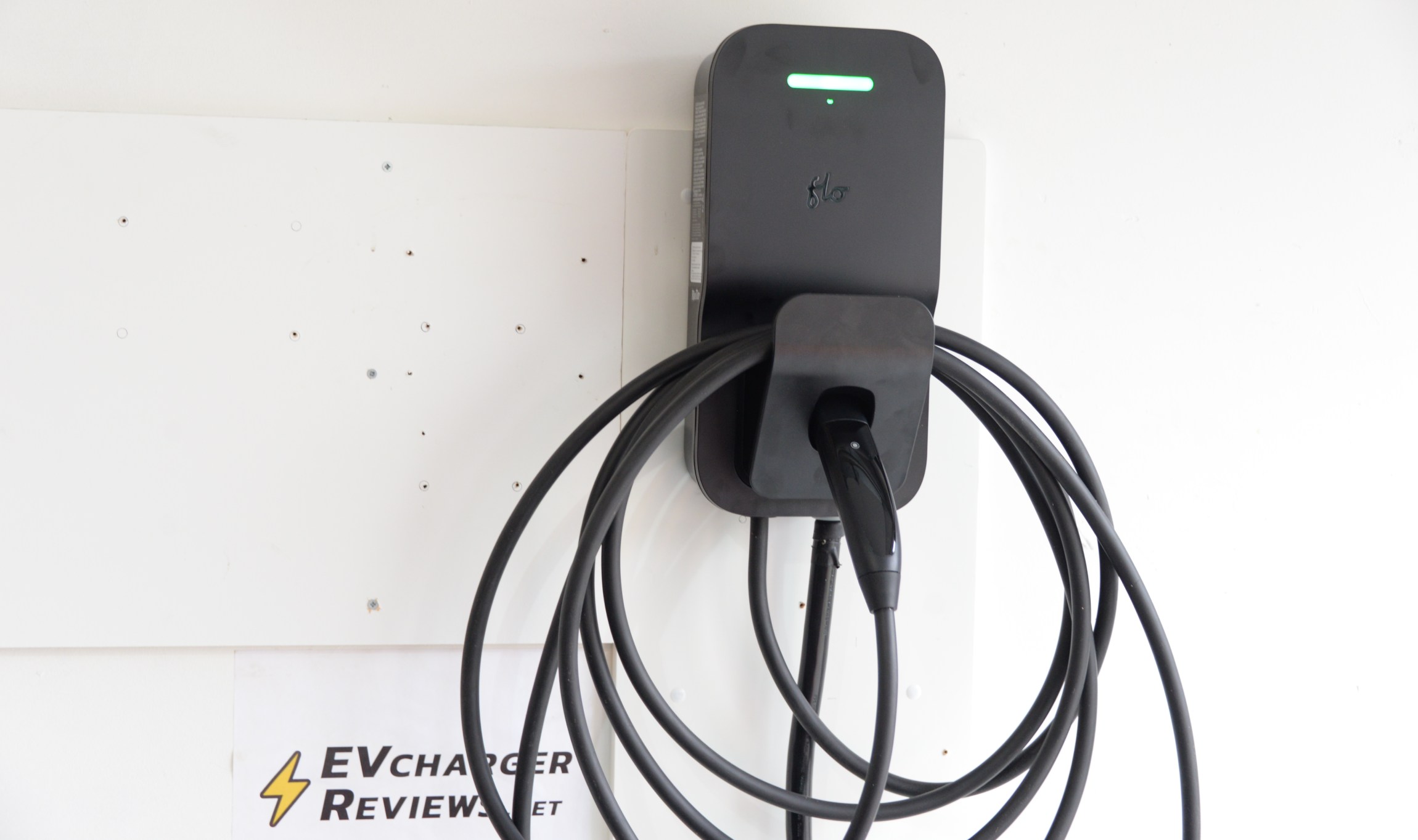
If you need to install an EV charger outdoors in a harsh climate, there is no better option than a product from FLO. These are seriously over-engineered chargers build to survive Canadian winters. FLO owns and operates a public DC fast charging network, and their infrastructure hardware is consistently some of the most reliable. Their latest X3 home chargers offer both NACS and J1772 options, and are NEMA 4X rated, meaning they withstand weather and corrosion. The FLO app has also matured over the years and it’s one of the best out there.
Specs
- Up to 50 amps
- 25 foot charging cord
- Wi-Fi connectivity and FLO app integration
- Weatherproofing: NEMA 4X
- Hardwire or NEMA 14-50 outlet install options
5. Emporia EV Charger (NACS)
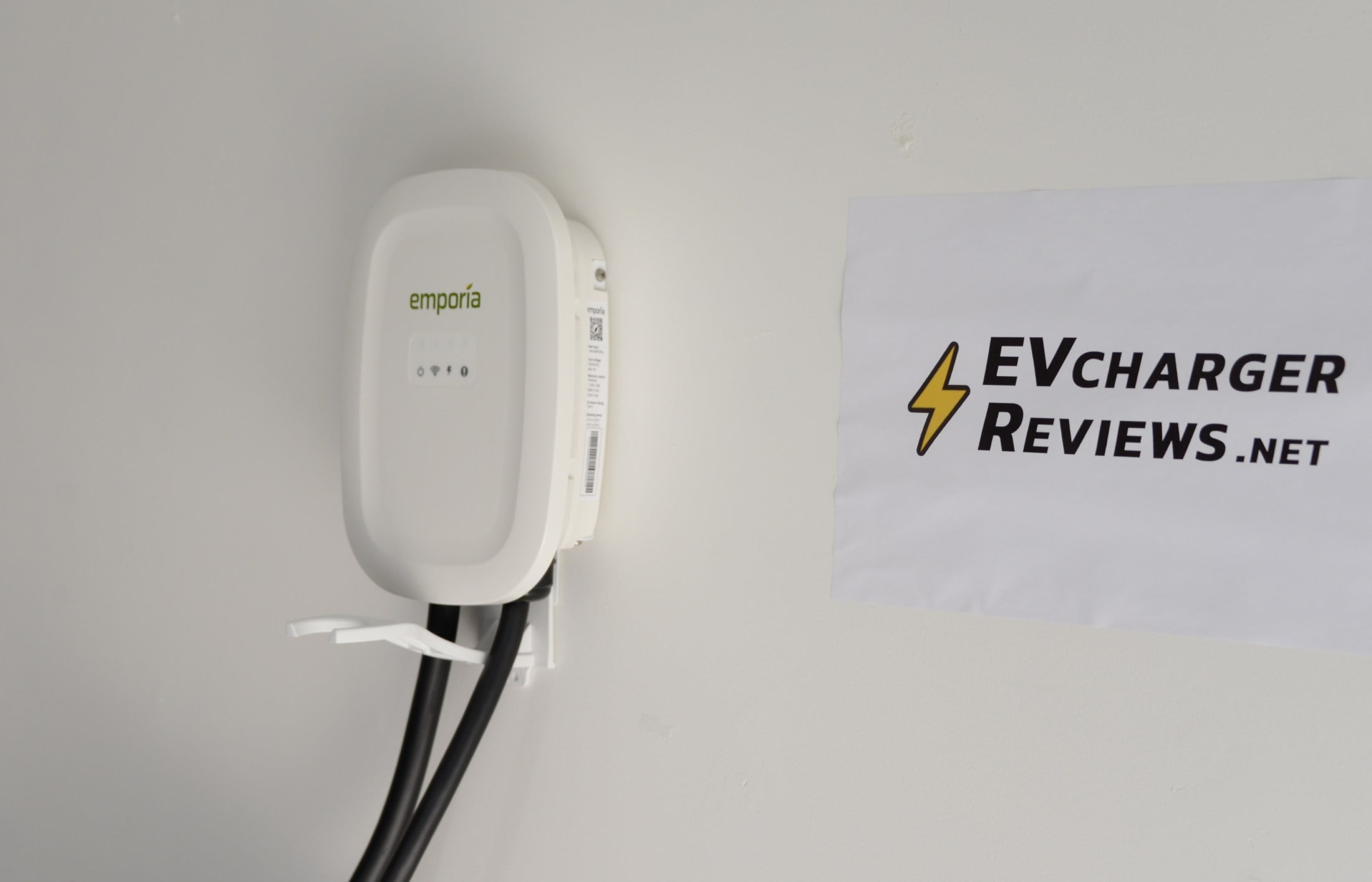
Emporia’s excellent EV charger now comes with a NACS connector option. This is a proven model that has been around for several years now with many happy users. We liked it too in our own review, too. It has robust hardware and integration with Emporia’s home energy app. If you have any other energy management products from Emporia in your home, this is a very easy recommendation.
We liked the advanced scheduling and energy management features in the app, as well as a durable cord management system for when you’re not charging. This product is UL Listed for safety, and has EnergyStar certification.
Specs
- Up to 48 amps
- 25 foot charging cord
- Wi-Fi connectivity and Emporia app control
- Weatherproofing: NEMA 4
- Hardwire or NEMA 14-50
6. Tesla Mobile Connector
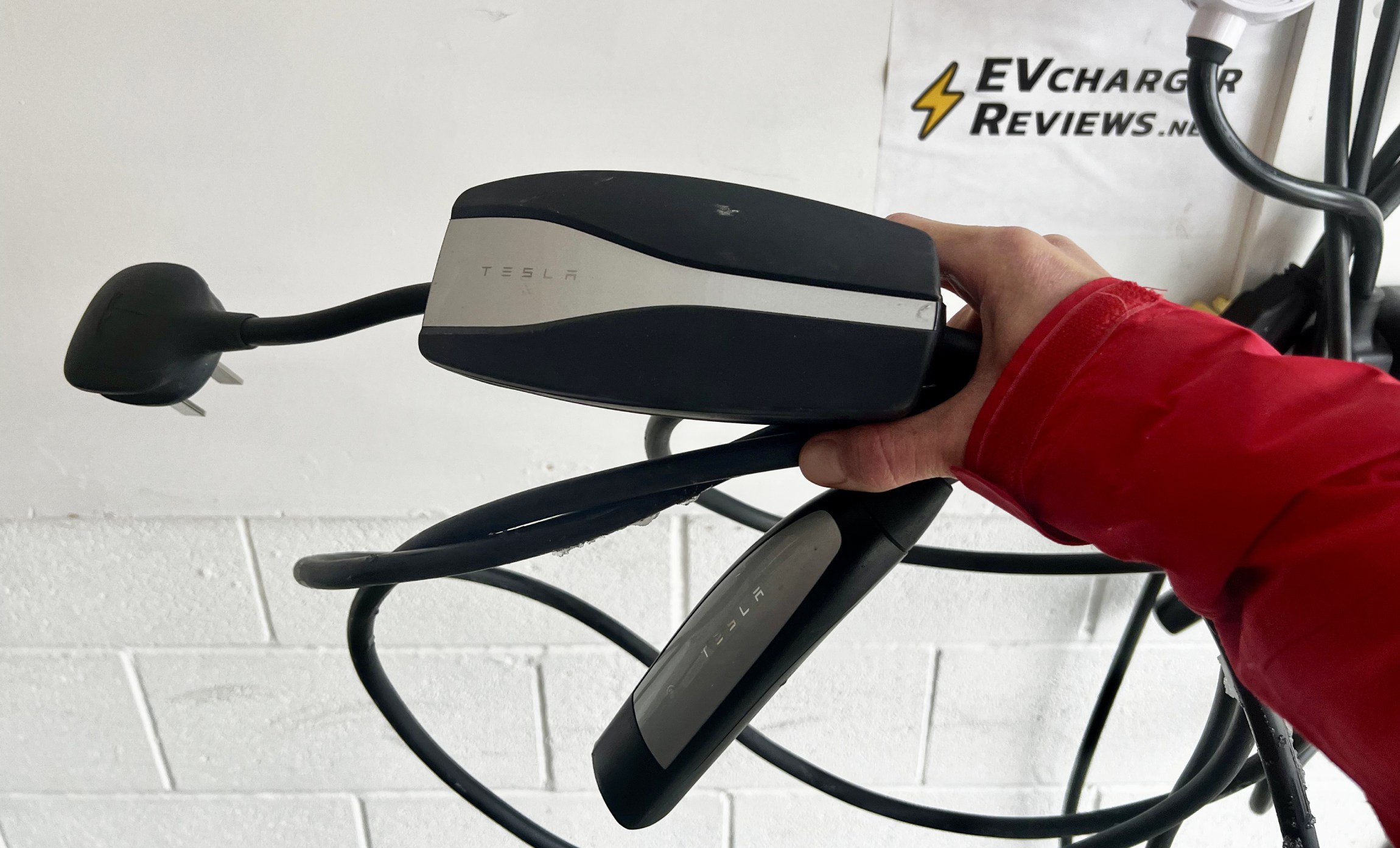
If you need a portable EV charger with NACS, I’d suggest looking at the official Tesla Mobile Connector. It’s not the cheapest option on the market, but it offers 32 amp charging, and critically, it has built in temperature sensors on the input and output cords. Many cheap portable EV chargers lack temperature sensors on the NEMA 14-50 input connector, and this vital connection can overheat when exposed to summer heat or direct sunlight. The Tesla Mobile connector has interchangeable input adapters allowing both Level 1 (120v) and Level 2 (240v) charging. It’s a very flexible package.
Specs
- Up to 32 amps (7.2 kW)
- NEMA 14-50 and NEMA 5-15 input adapters
- Level 1 (120v) and Level 2 (240v) charging
- 20 foot cable length
- Included carrying case
Compare EV Chargers with NACS
| EV Charger | Price Today | Amperage | Input Connection | Cord Length |
| EVIQO | 48 Amps | Hardwired or NEMA 14-50 | 25 feet | |
| IYILO | 48 Amps | Hardwired or NEMA 14-50 | 25 feet | |
| Tesla Wall Connector | Check Price | 48 Amps | Hardwired | 24 feet |
| ChargePoint Home Flex | $570.79 | 50 Amps | Hardwired or NEMA 14-50 | 23 feet |
| FLO Home X3 | $774.81 | 50 Amps | Hardwired or NEMA 14-50 | 25 feet |
| Emporia | $479.00 | 48 Amps | Hardwired or NEMA 14-50 | 24 feet |
| Tesla Mobile Connector | $300.00 | 32 Amps | NEMA 14-50 | 20 feet |
What you need to know about Home EV Chargers with NACS
Until very recently, North American EVs were in two camps: (1) Tesla vehicles with NACS/J3400 ports while almost all (2) non-Tesla EVS has a combination of J1772 & CCS1. The round J1772 part of the port is used for slow AC charging, and the entire J1772+CCS1 combo port was used for rapid DC fast charging. We are still living through confusing time where EV drivers really need to carry adapters to take advantage of all charging opportunities, but the situation is improving because the industry is rallying around a single NACS/Tesla connector that can be used for both AC charging at home and DC fast charging on the road.
Benefits of NACS Ports/Connectors
- The Tesla Supercharger network is the largest and most reliable DC fast charging network in North America, and it uses NACS connectors.
- Smaller, lighter, and easier to use connector. One handed use versus bulky CCS1 connectors.
- Both AC and DC charging is done over a single, small connector.
- Still backwards compatible with CCS1 vehicles with adapters.
EV Car Brands Supporting NACS
For 2026, many popular EVs from Hyundai/Kia/Genesis, Nissan, Porsche, and Rivian will be arriving from their factories with native NACS ports. Over time, we can expect all brands that have signed up for Tesla Supercharger access to transition fully to NACS connectors for the North American markets.
Adapters Are Still Key
Regardless if you have a NACS-port car or a CCS1 car, adapters are going to be useful to own in the foreseeable future. Supercharger stations are NACS, most other DC fast charging infrastructure is CCS at this point. Level 2 charging infrastructure is also split with many paid charging stations offering J1772 connectors, while some hotels and malls often offer “destination” chargers with NACS connectors to their patrons. We’ve done a deep explainer on adapters here, and suggest what types of adapters are most useful to EV drivers.