
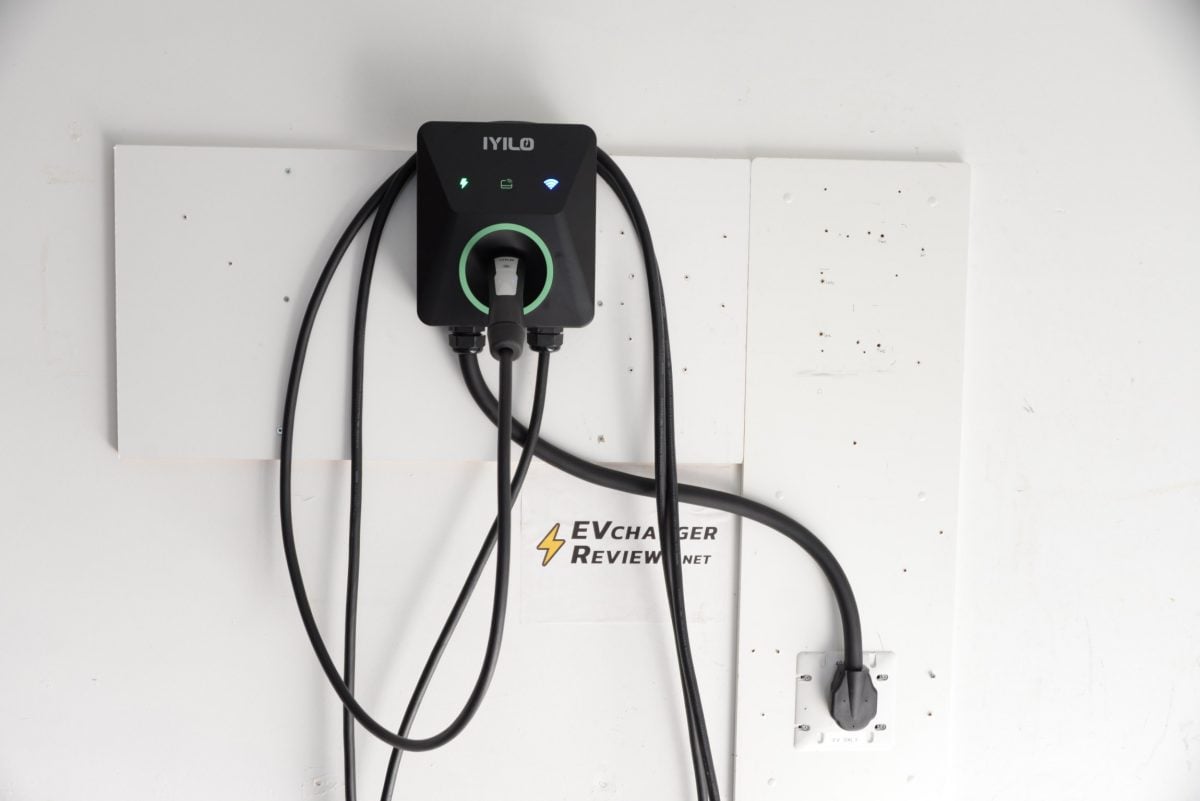
Even as relative newcomer to the market, IYILO is probably one of the most complete products for home EV charging. This EV charging station comes in 40 amp NEMA 14-50 plug-in versions, as well as 48 amp hardwired versions. In addition, you can choose between J1772 and NACS EV connectors. As I’m currently experiencing a summer heat wave, it seems there is no better home EV charger to be testing than IYILO. It carries multiple safety oriented certifications, but I’m most impressed that it has temperature sensors both in the NEMA 14-50 wall connector and the EV connector. Most competing products monitor temperature only inside the charger box, IYILO monitors temps on the input/output where is it more likely to be a problem. I think IYILO deserves a lot of credit for their approach.
Our Rating: 4.9/5
Prices updated: September 13, 2026 at 11:01PM (EST)
What we loved
- NTC temperature sensors on input & output connectors
- Long and pliable charging cord
- Wi-Fi connectivity and smart features
What could be better
- The app is functional but could use more polish
- Built-in holster works well, but angle makes the cord stick out from wall
Hardware Overview
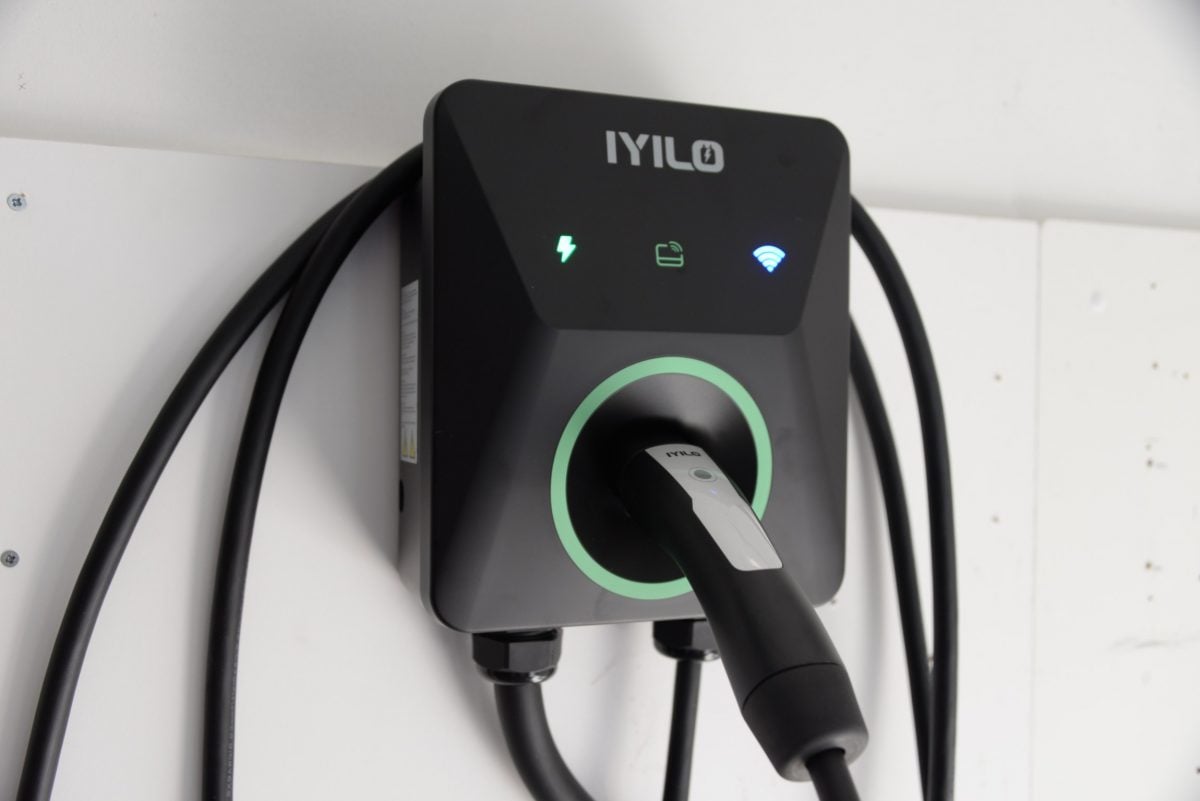
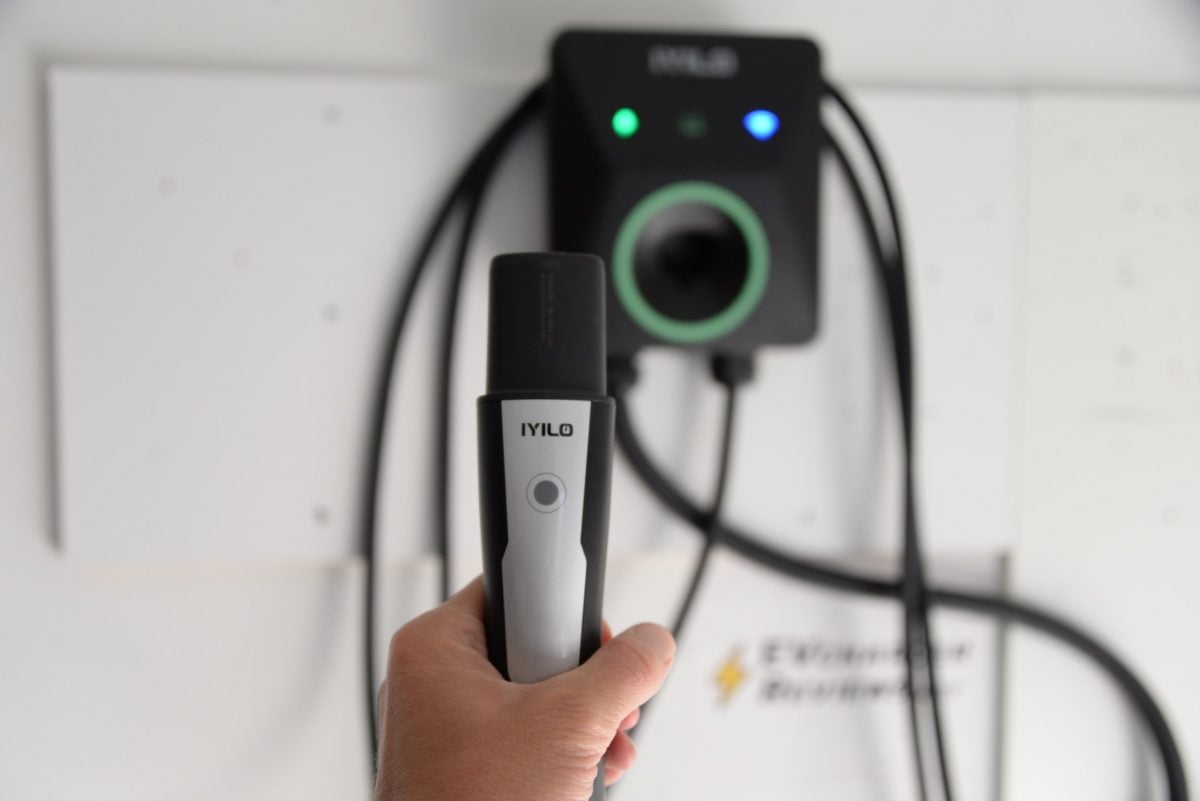
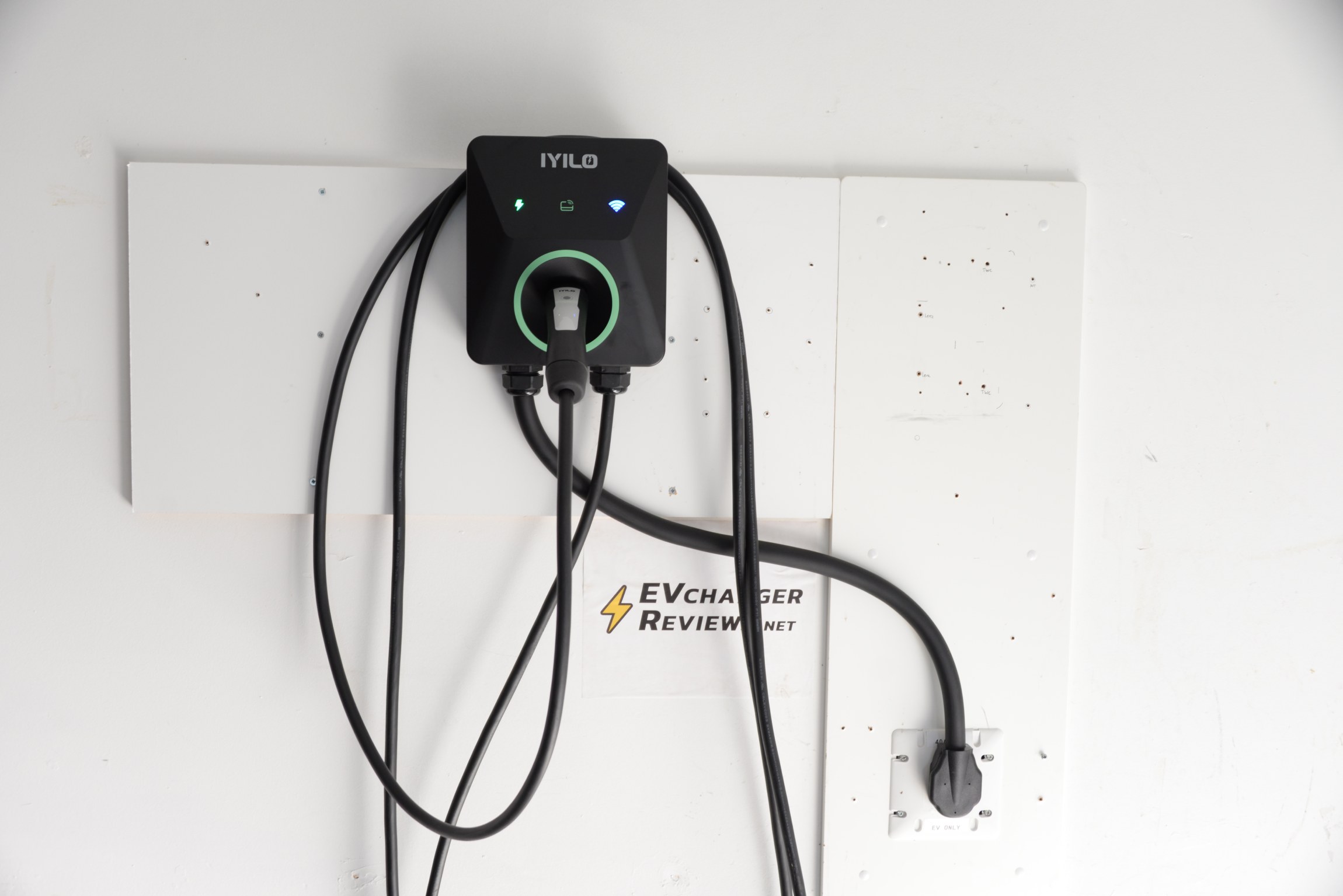
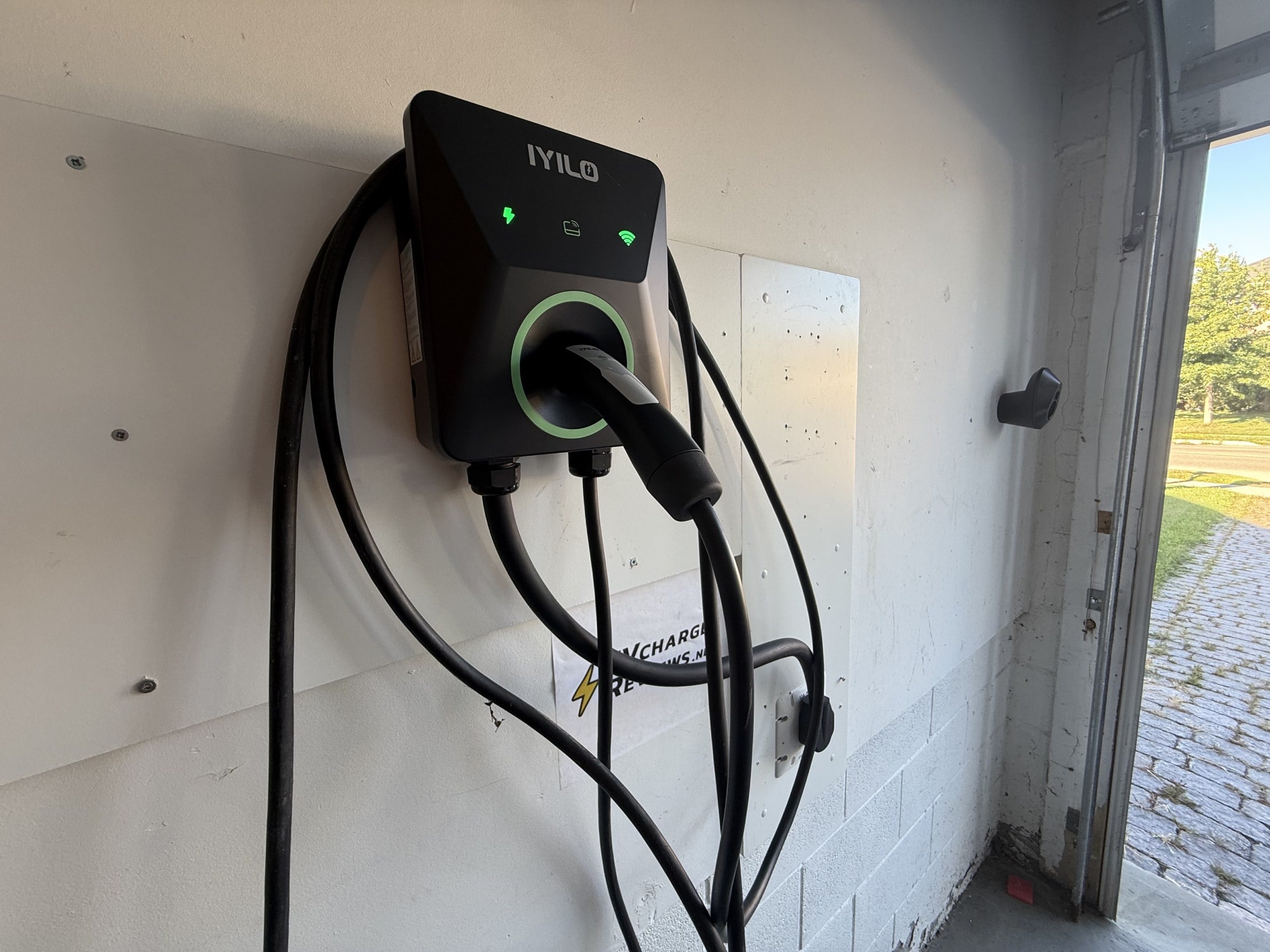
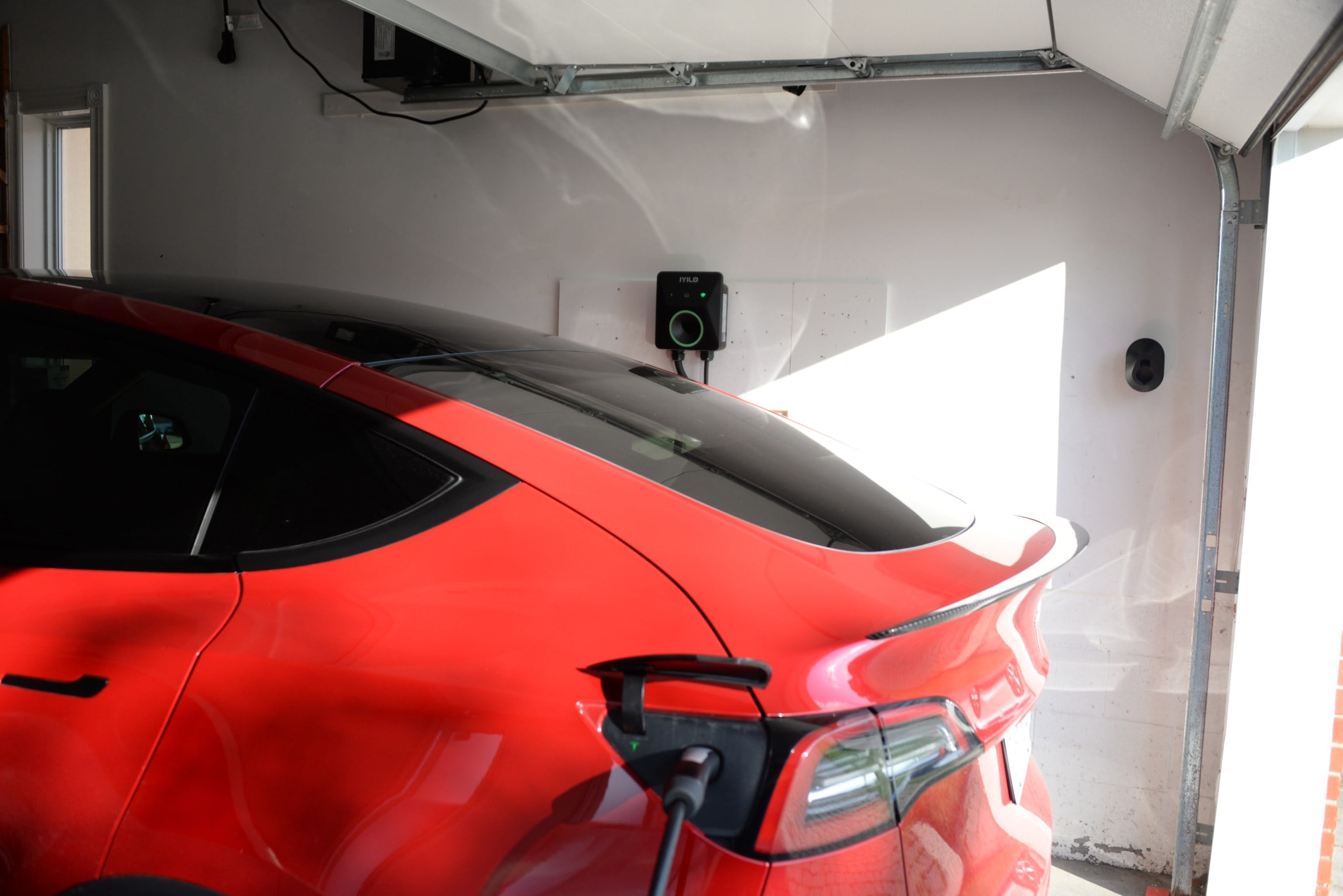
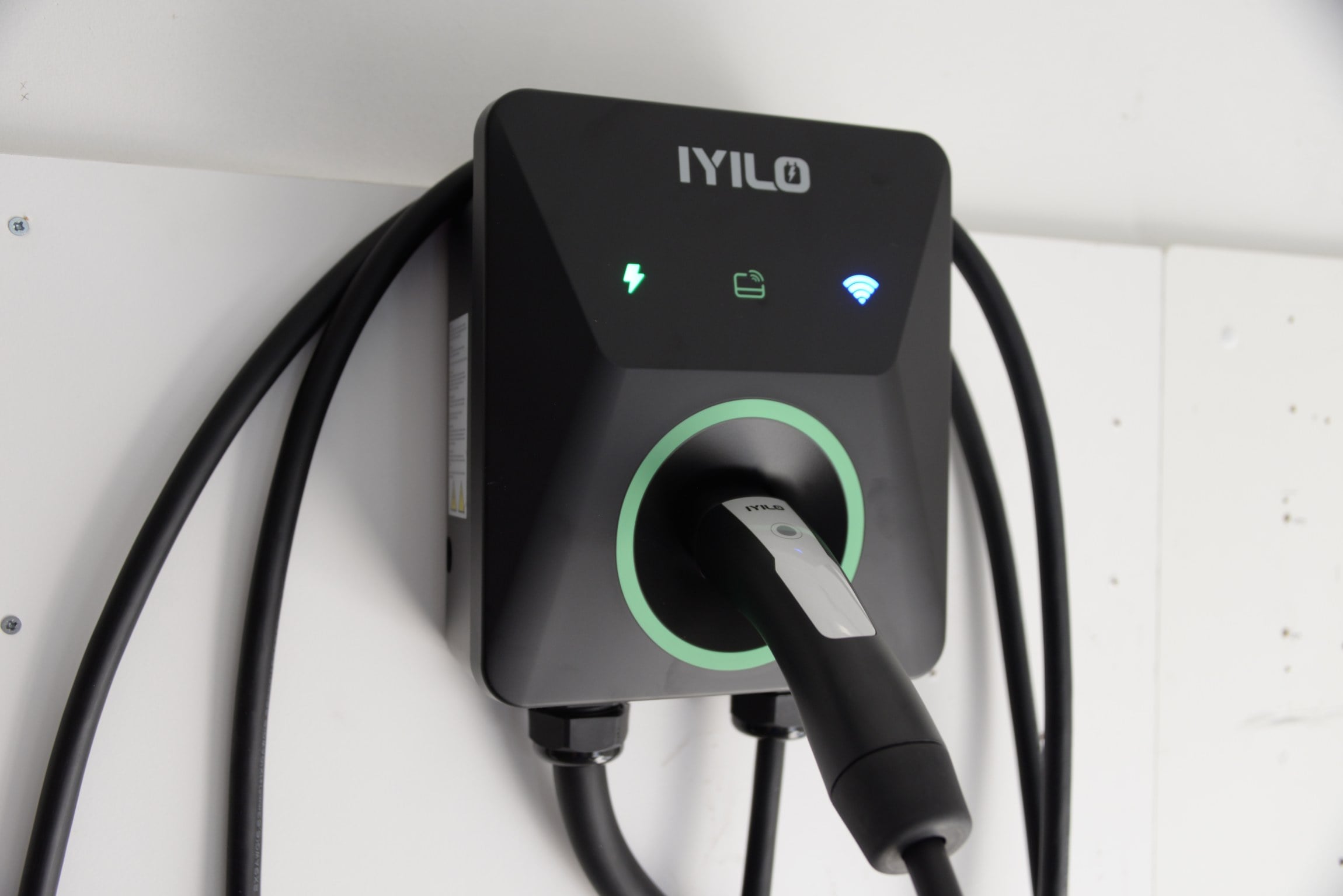
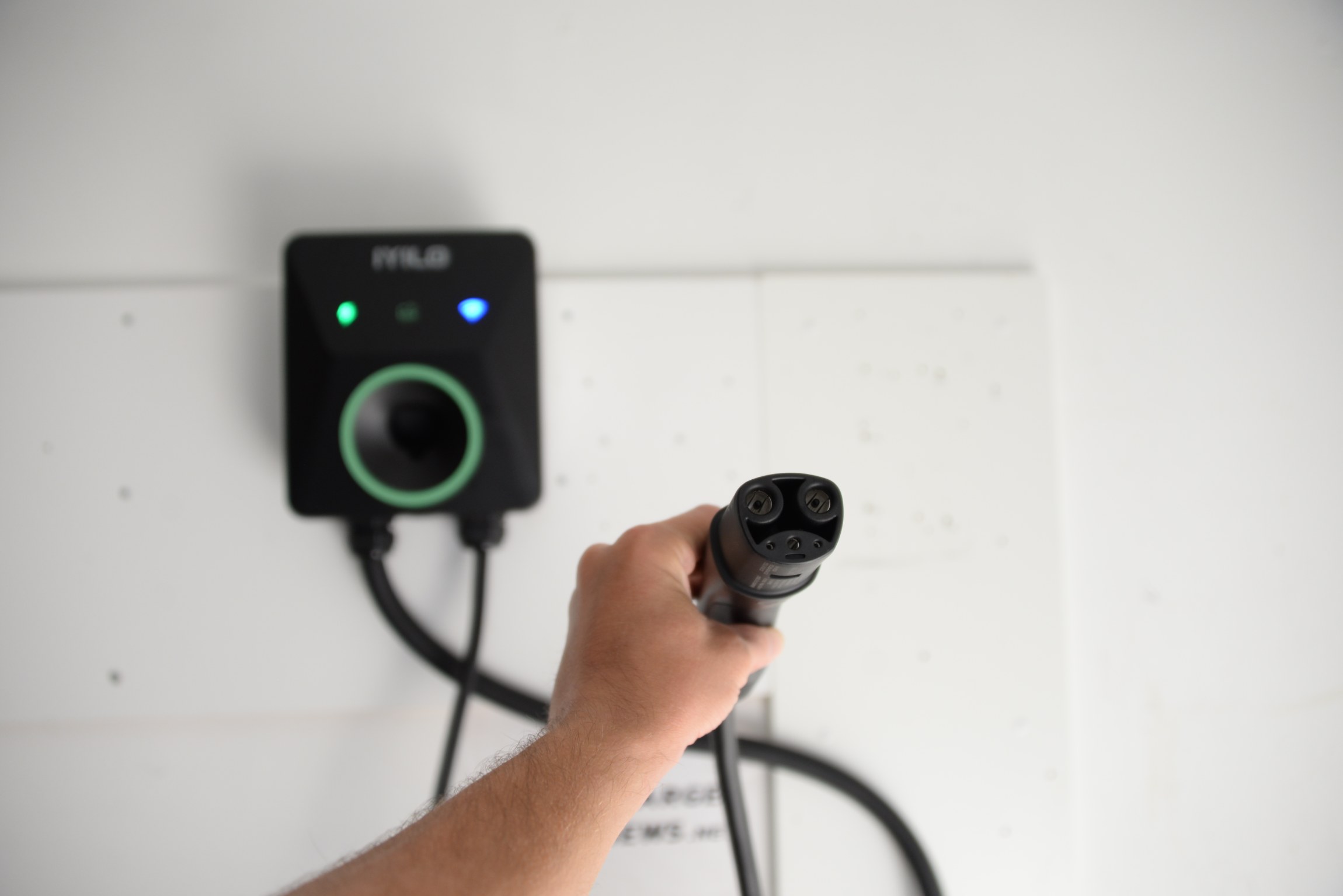
The IYILO home EV charger is black rectangular box with front facing cord holster, and two status indicator LEDs. One for charging status, and the other one is for network connectivity status. The top of the charger also has a protruding lip that allows the excess cord to loop around the unit for storage. It’s a simple but thoughtful design that doesn’t occupy a lot of wall space.
The enclosure is made of hard black plastic, but it feels durable to handle, and it has been rated IP66/NEMA 4 for dust and weather resistance, meaning this product is well suited for both indoor or outdoor application.
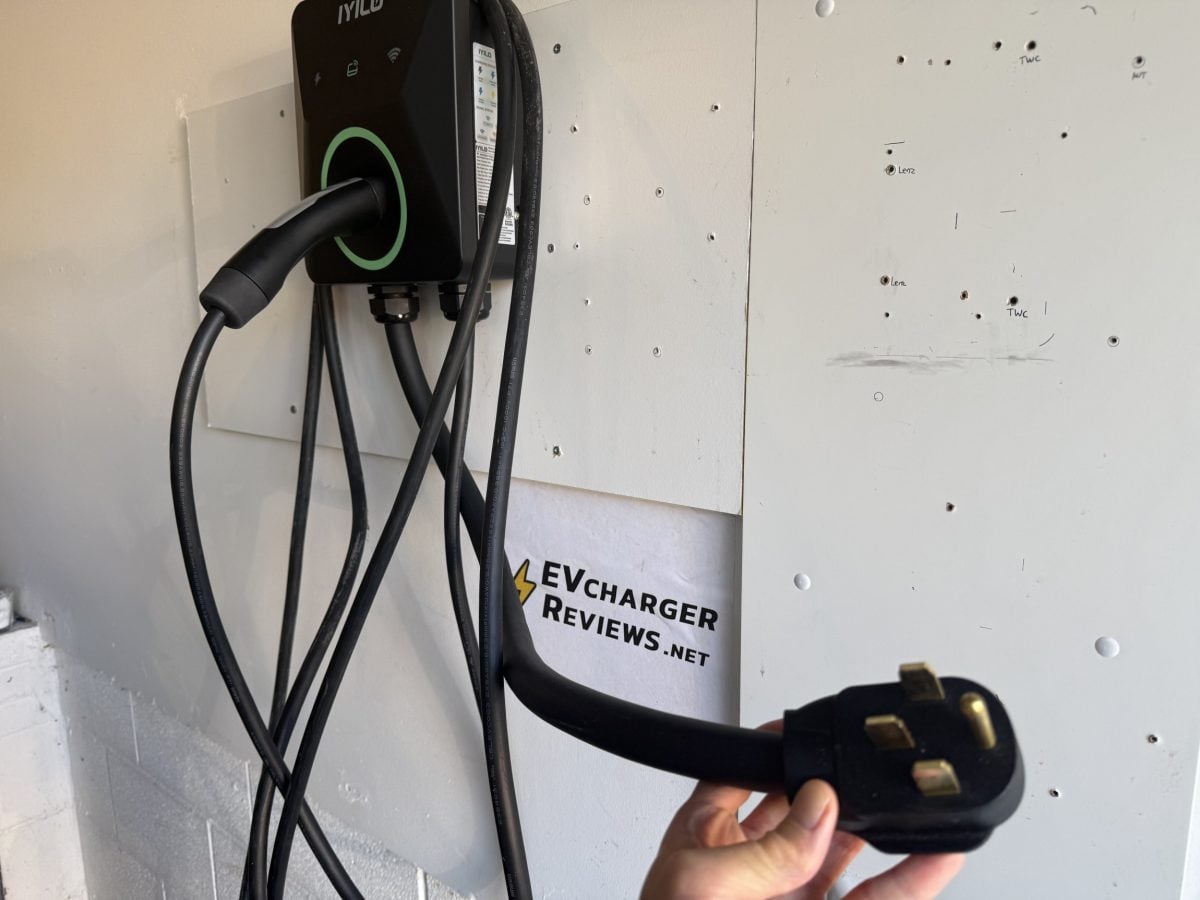
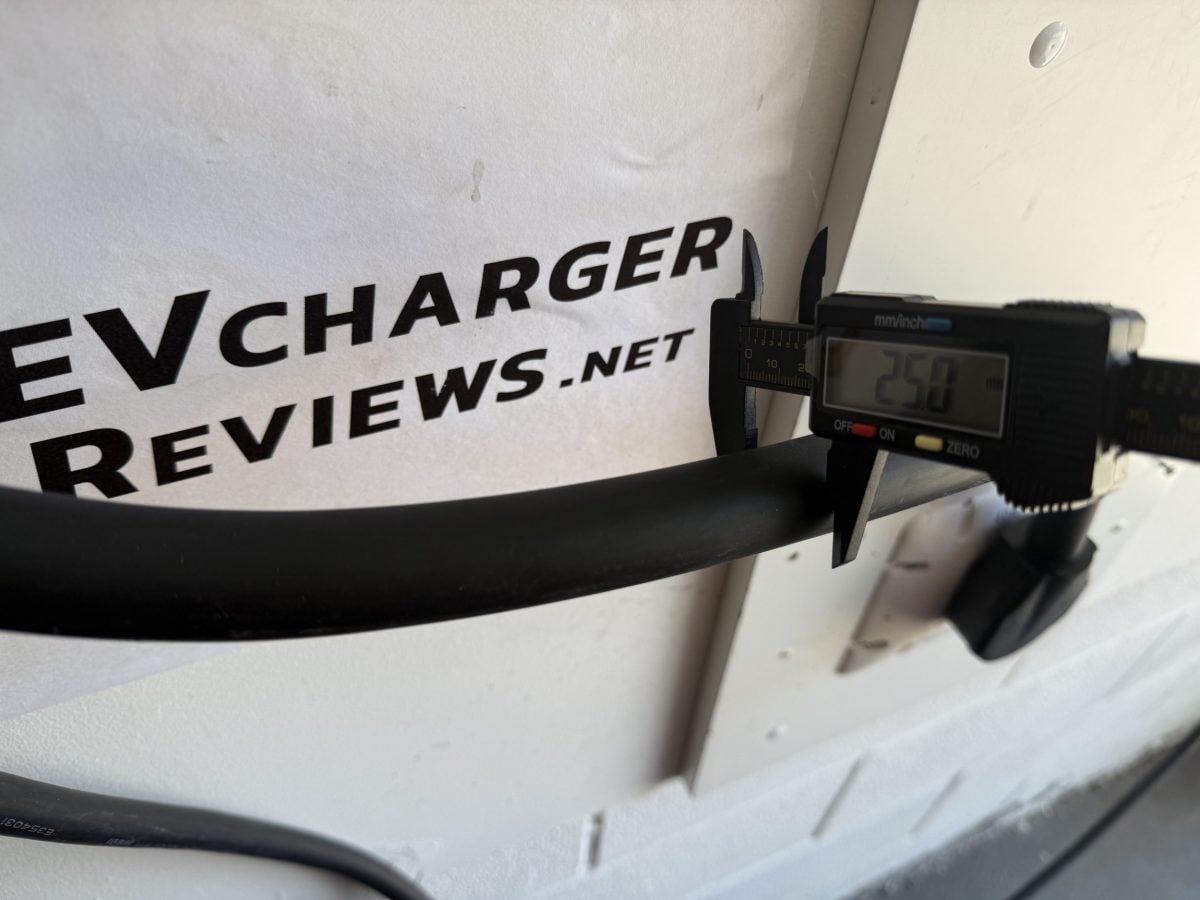
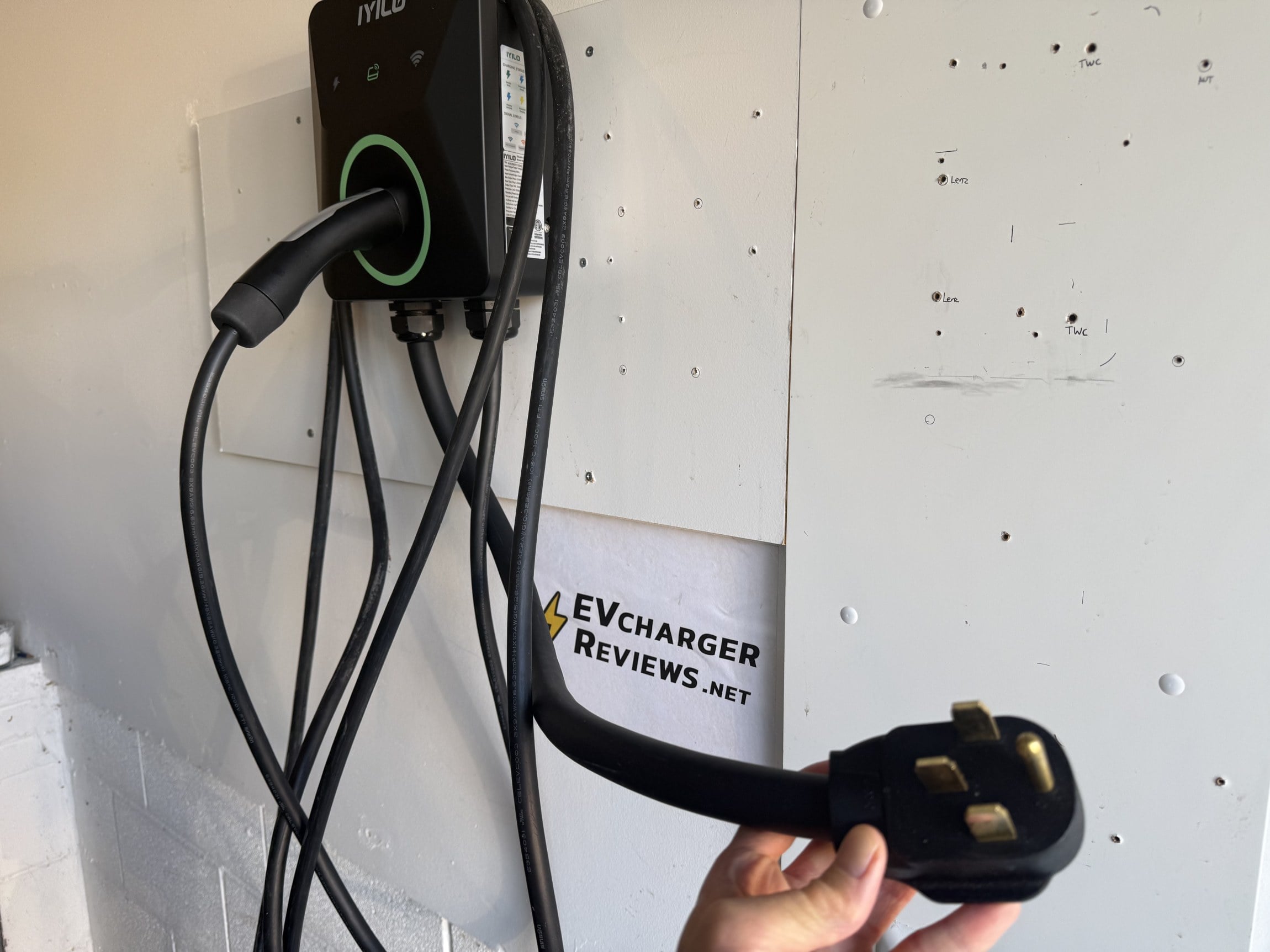
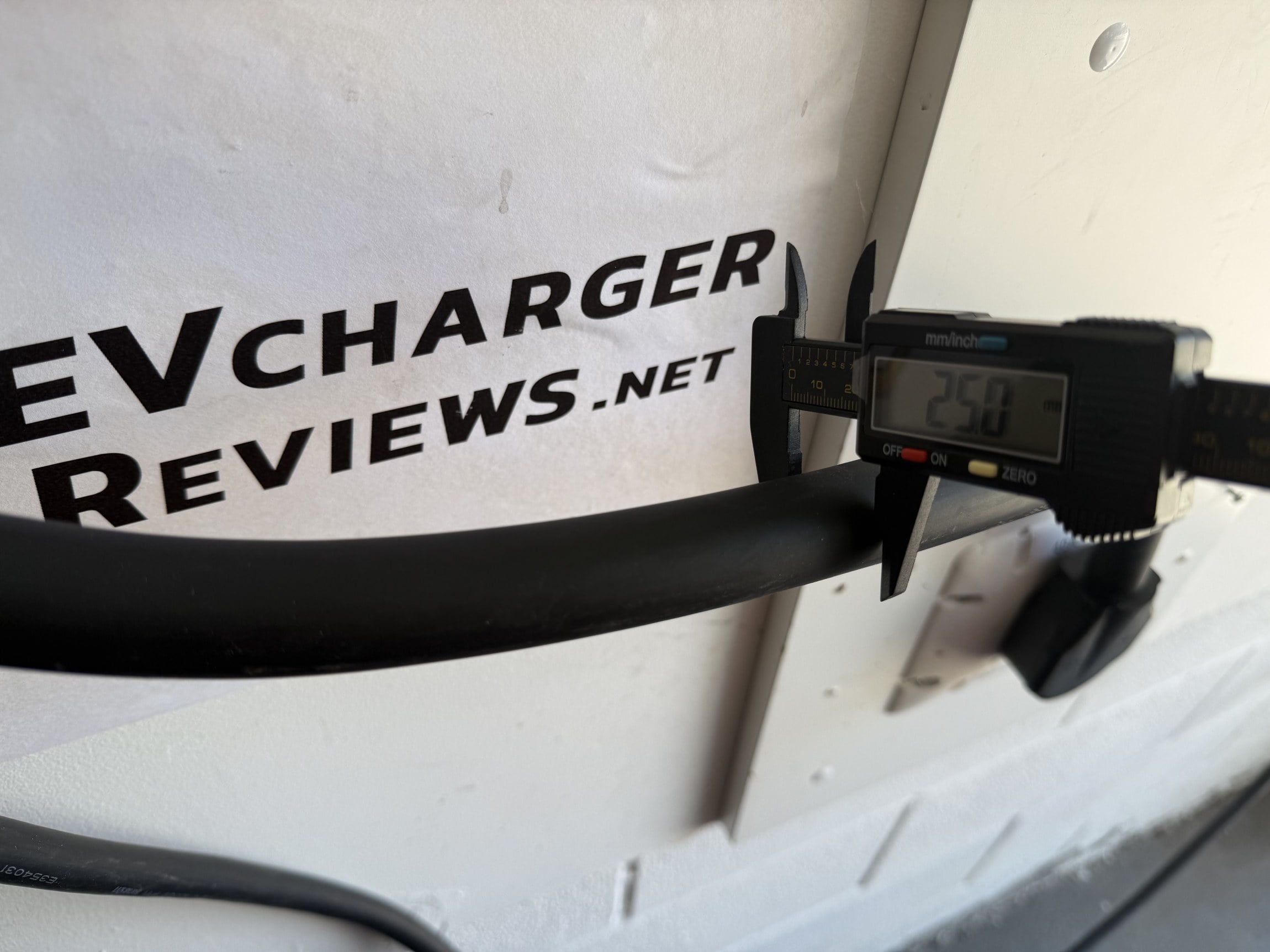
If you opt for the plug-in NEMA 14-50 variants of IYILO EV charger, the input cord is generously long at nearly 3 feet. This allows for flexible installation options, if your 14-50 outlet is in a sub-optimal location. This input cord is really beefy (25 mm thick), with two 6AWG wires for L1/L2 and one 8AWG gauge wire for ground. This is plenty of copper to carry 40 amps.
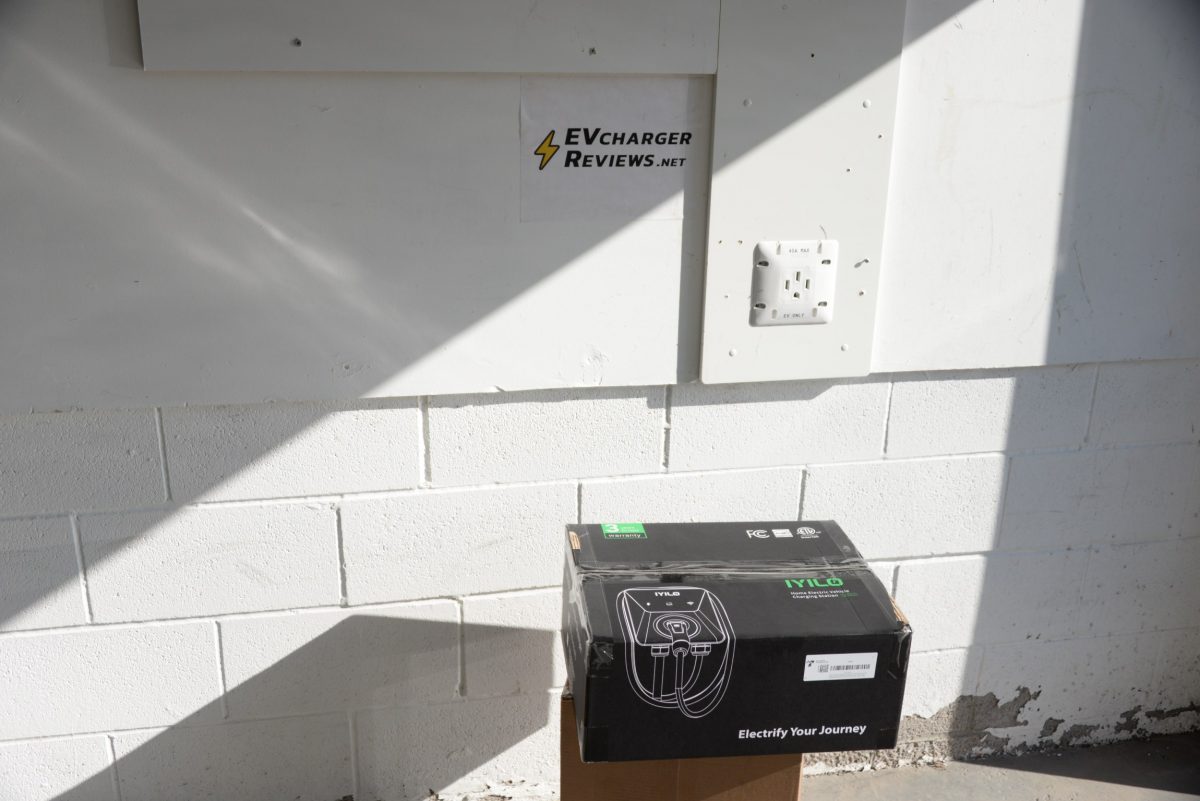
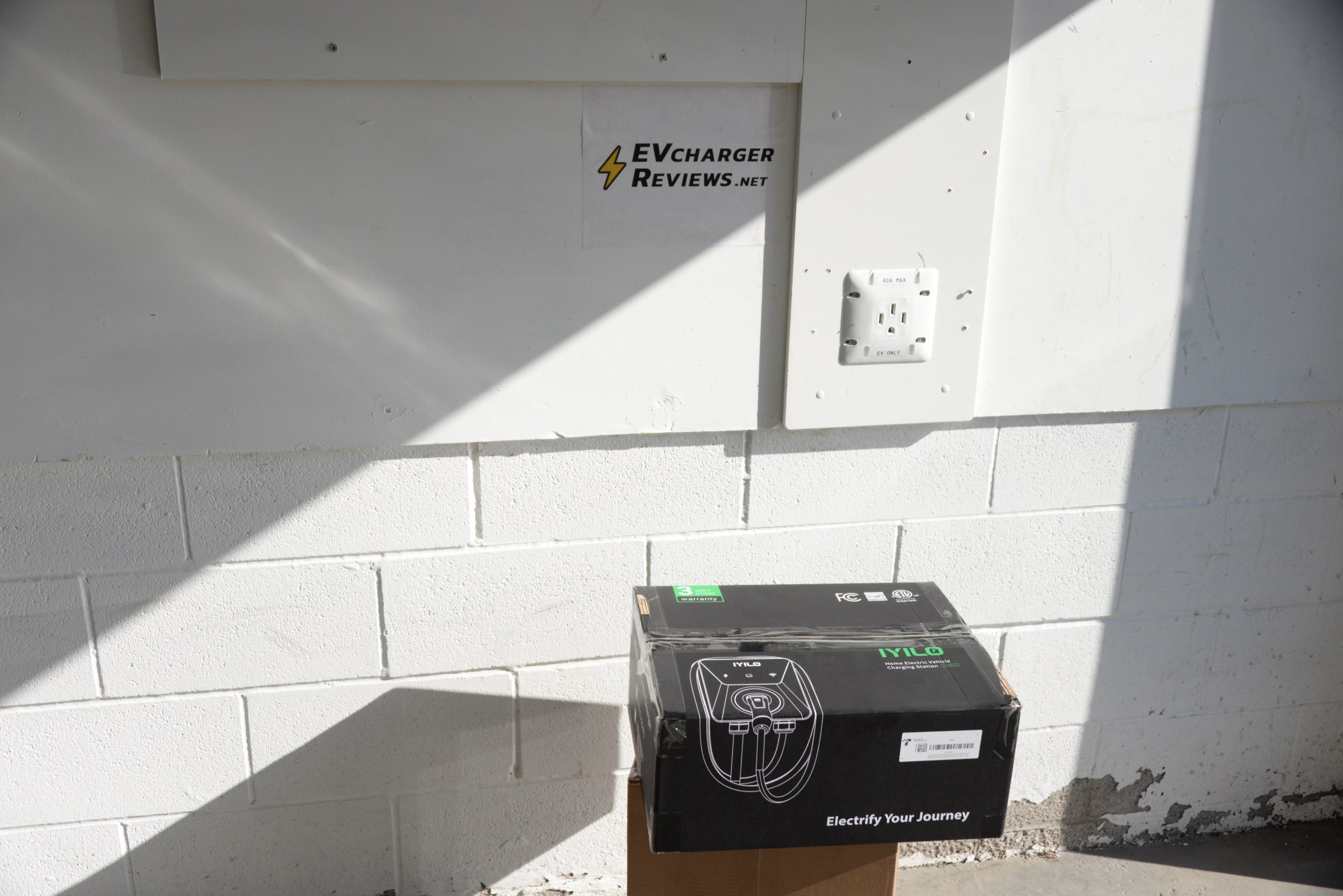
Installation is very simple, too. The NEMA 14-50 unit took about 10 minute DIY to mount and connect, if you already have a 14-50 240v outlet. The box includes a black metal plate and screw hardware for both metal brick wall installation. The plate is held to the wall with four heavy duty screws, the the charger box clips onto the plate, and is secured with an anti-theft allen key. However, if you opt for the 48-amp hardwired version, hire a licensed electrician to do the wiring. Everything from wire gauge to torque specs must be carefully considered for safe 48-amp operation.
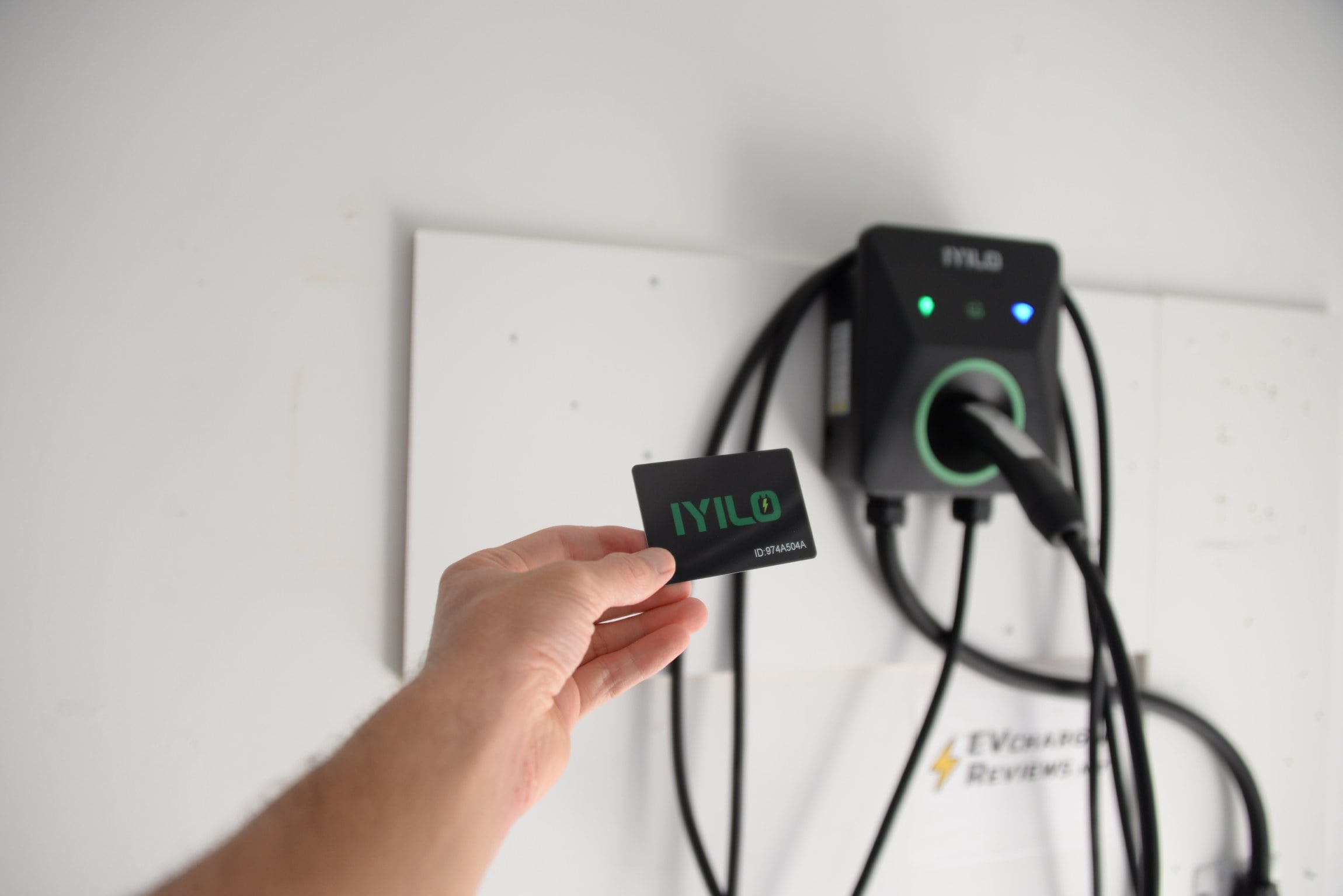
The front of the box also has an RFID key card reader. Because IYILO can be programmed to activate charging session with a key card, if you plan to install the charger in a publicly accessible location. Two key cards are included in the box along with an instruction manual. By default, however it is set to plug-and-charge.
Charging Cord and NACS Connector
The output charging cord is a generous 25 feet long, meaning I was able to park my car in either orientation, or even in an adjacent spot and still reach the charging port. 25 foot cord is really nice to have for a home charging station.
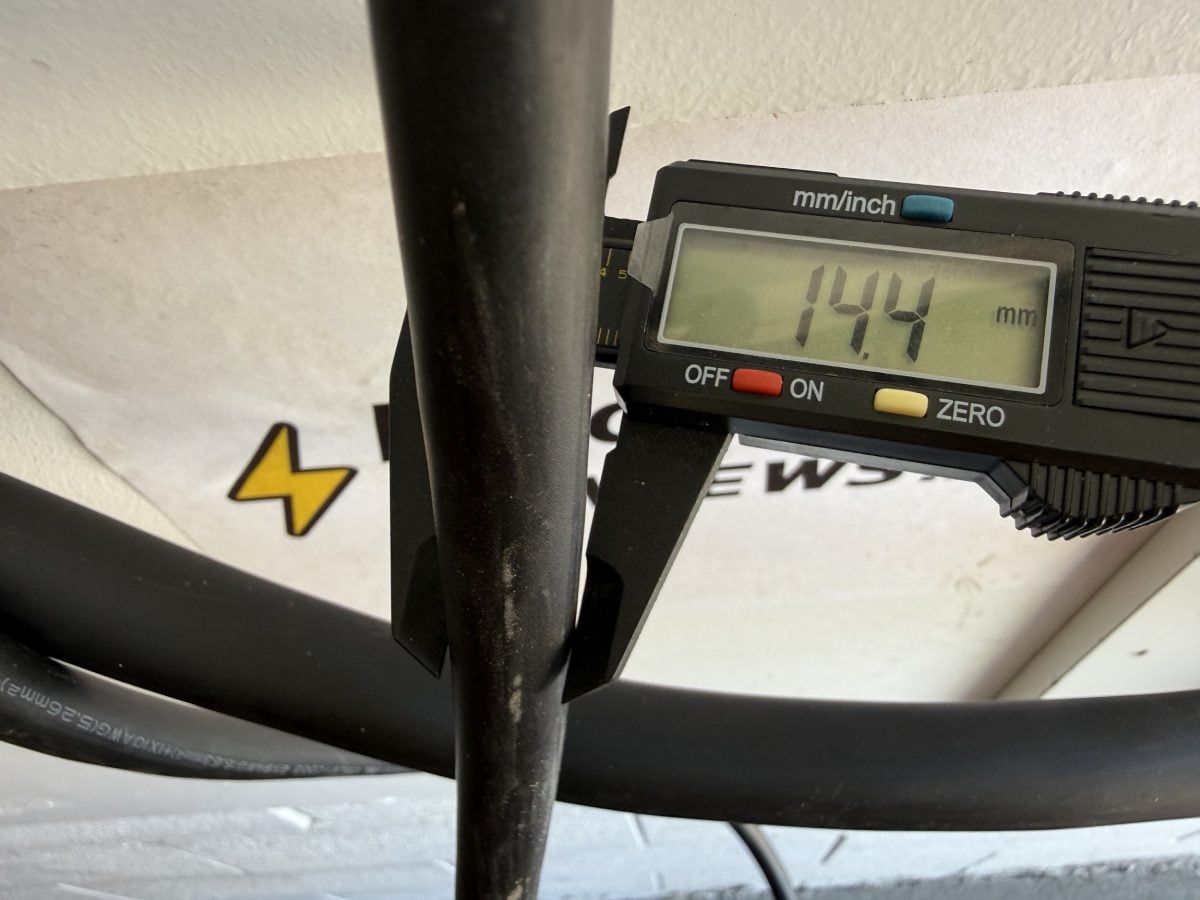
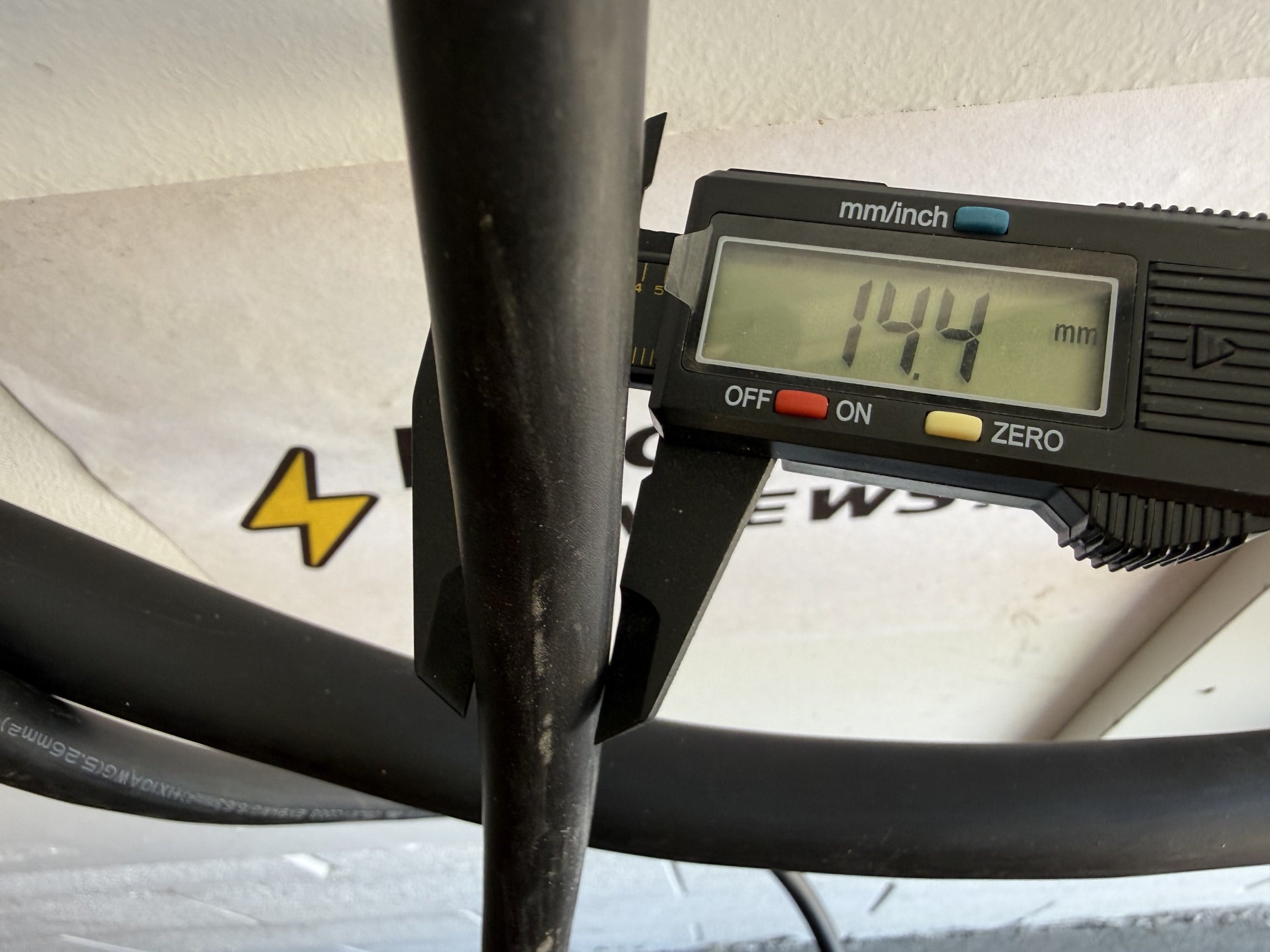
Inside, the cord contains two 9AWG wires for L1/L2 and one 10AWG wire for ground. While thinner (14.4 mm) than the input cord, this great balance for the output cord because it’s light and pliable to handle day to day, but still thick enough to carry high amperage without warming up too much. The output cord doesn’t need to be too thick because it is usually suspended and surrounded by open air.
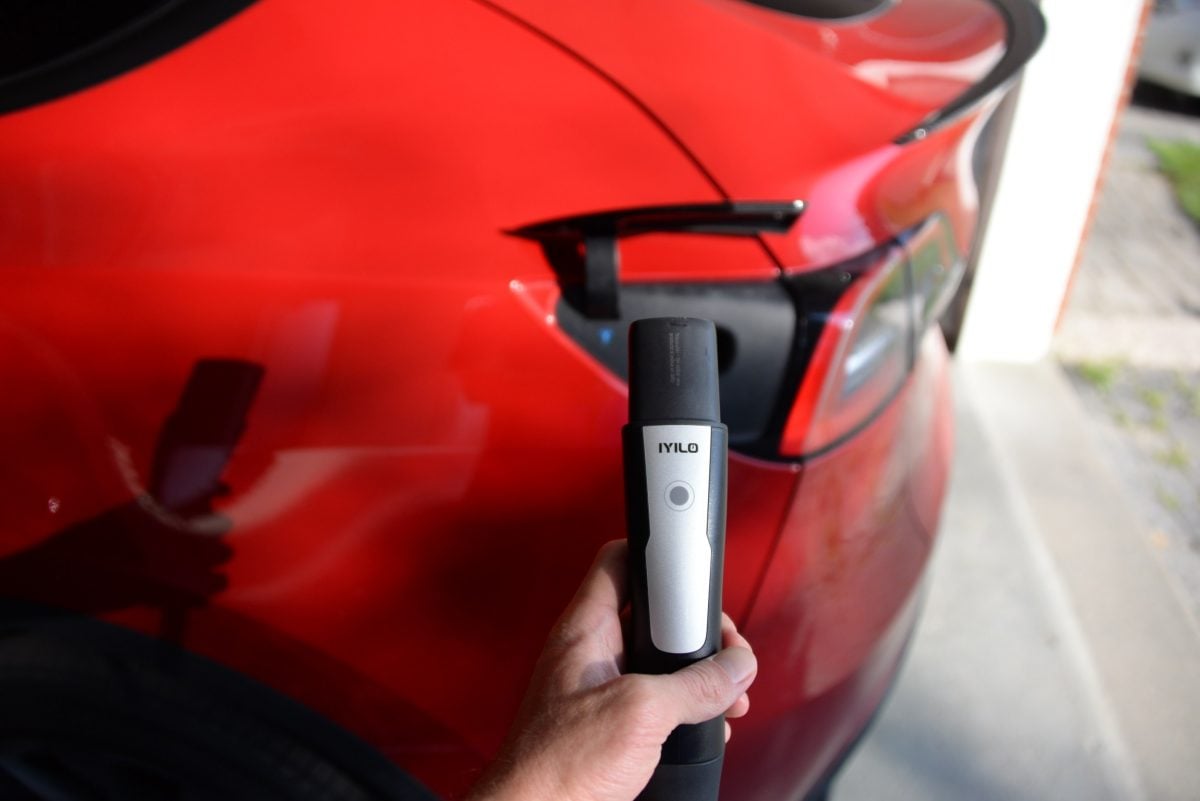
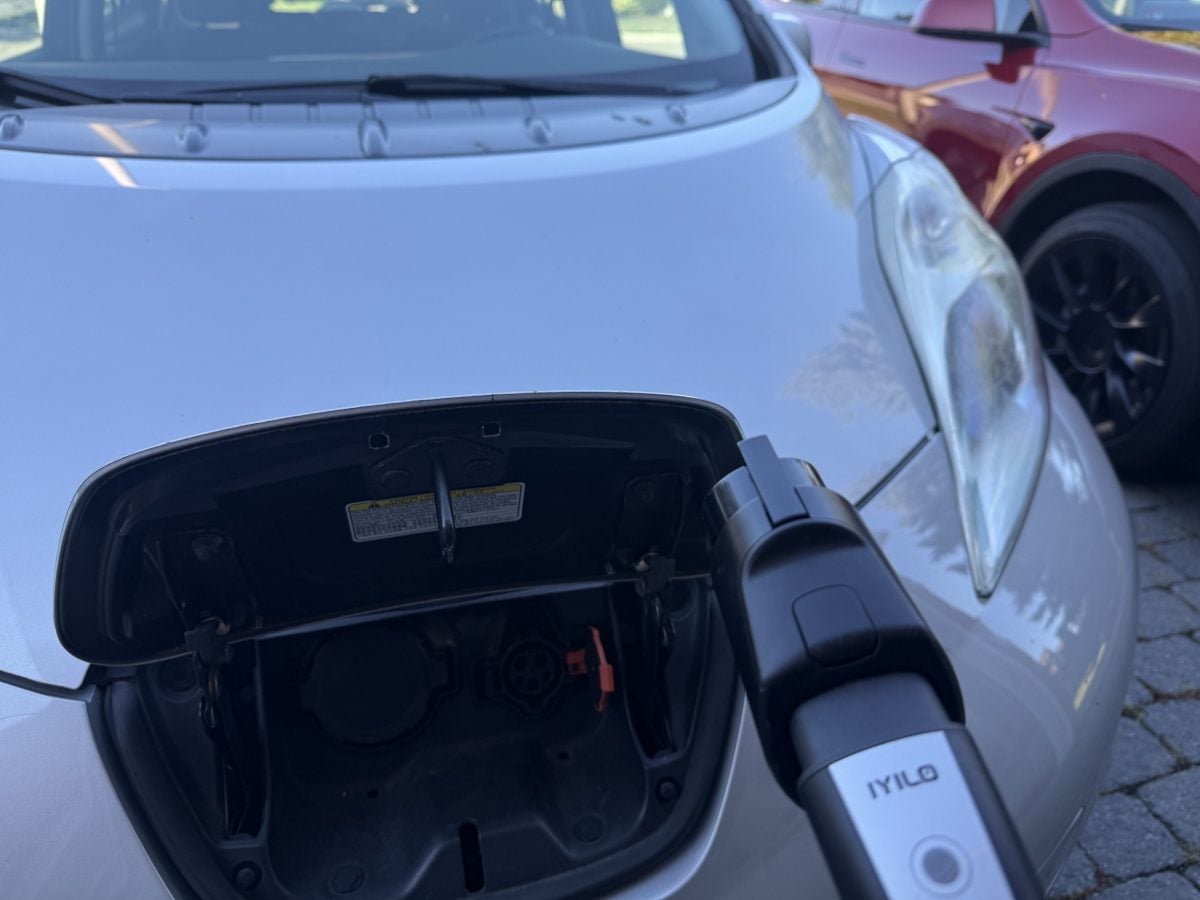
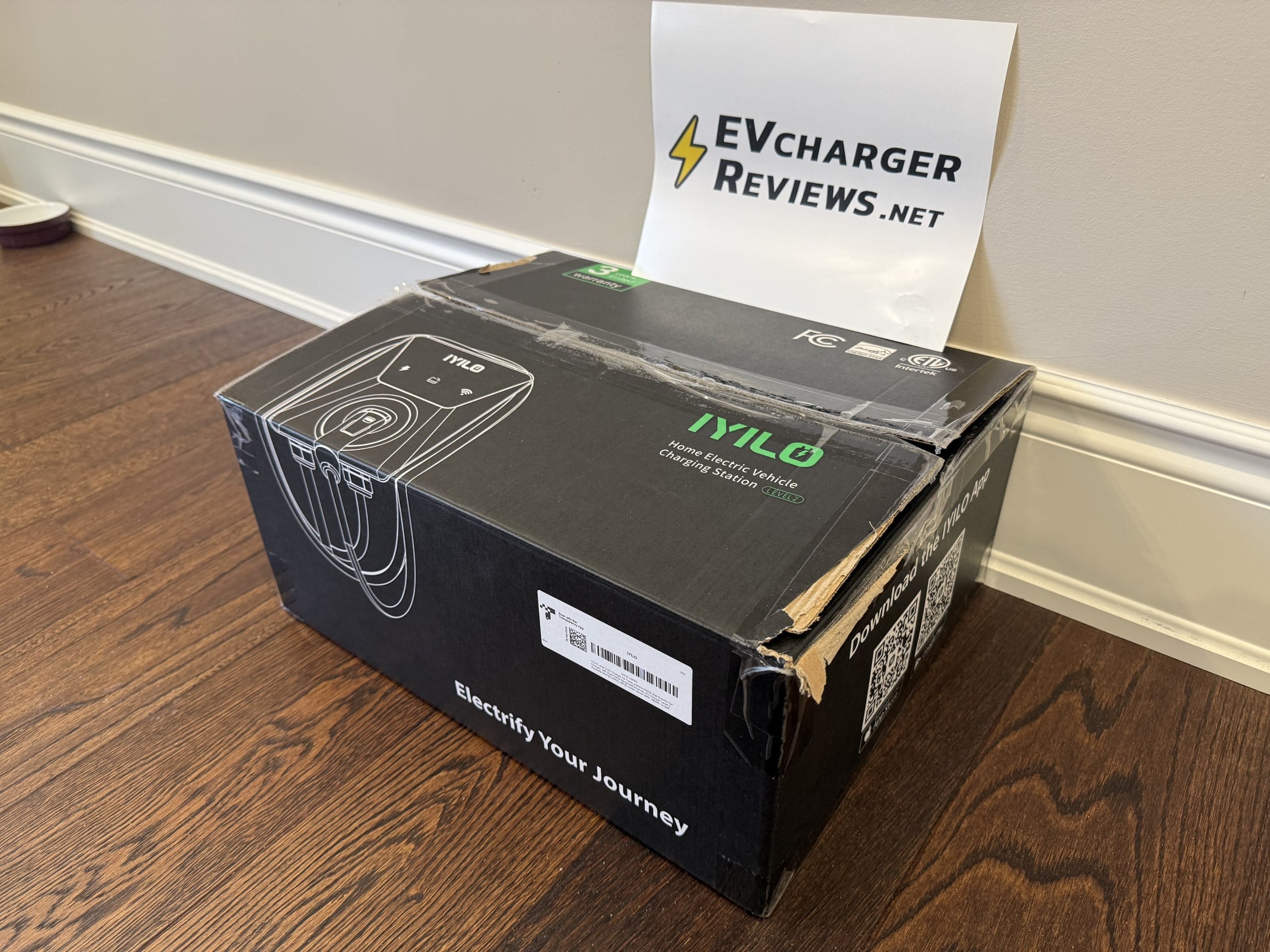
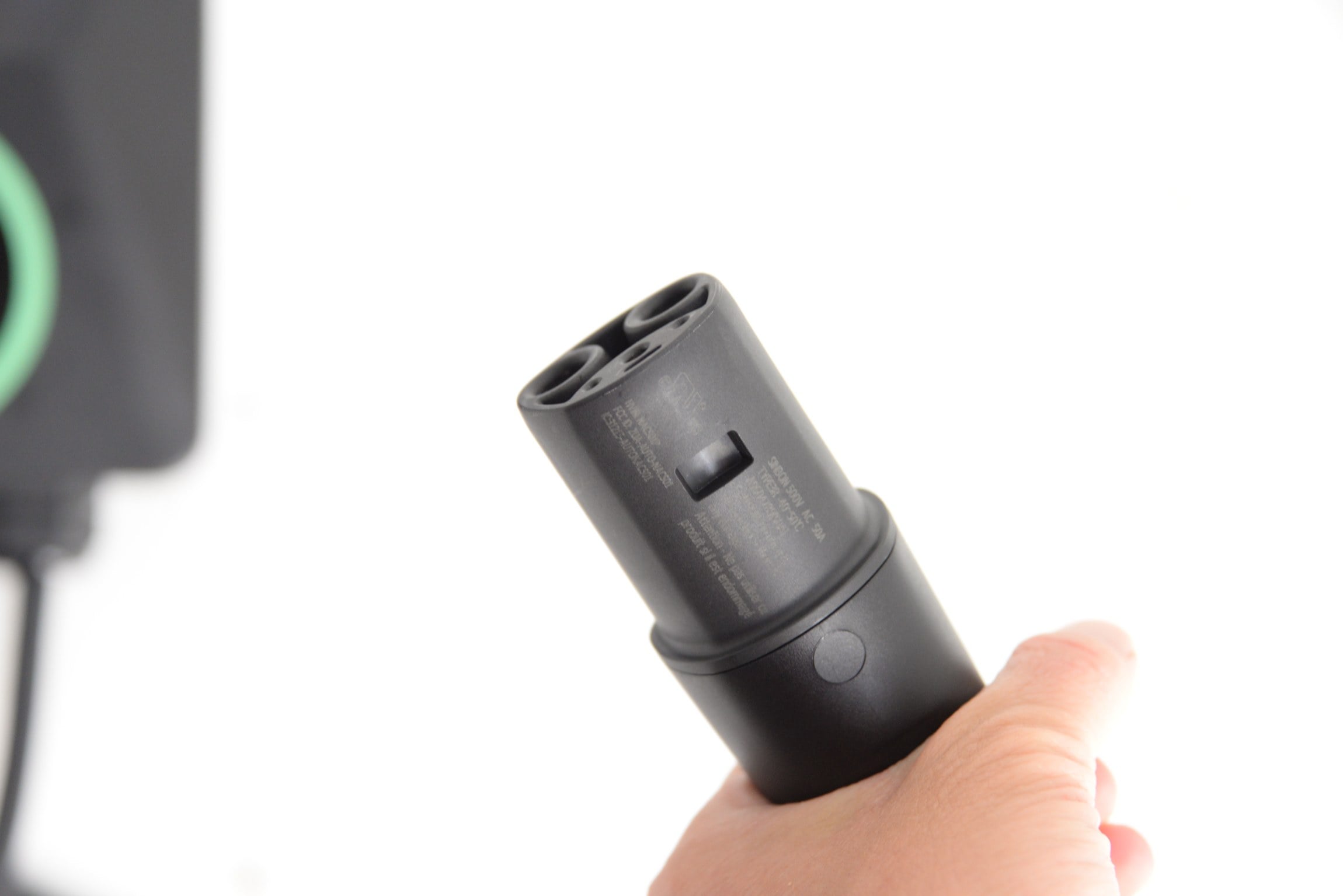
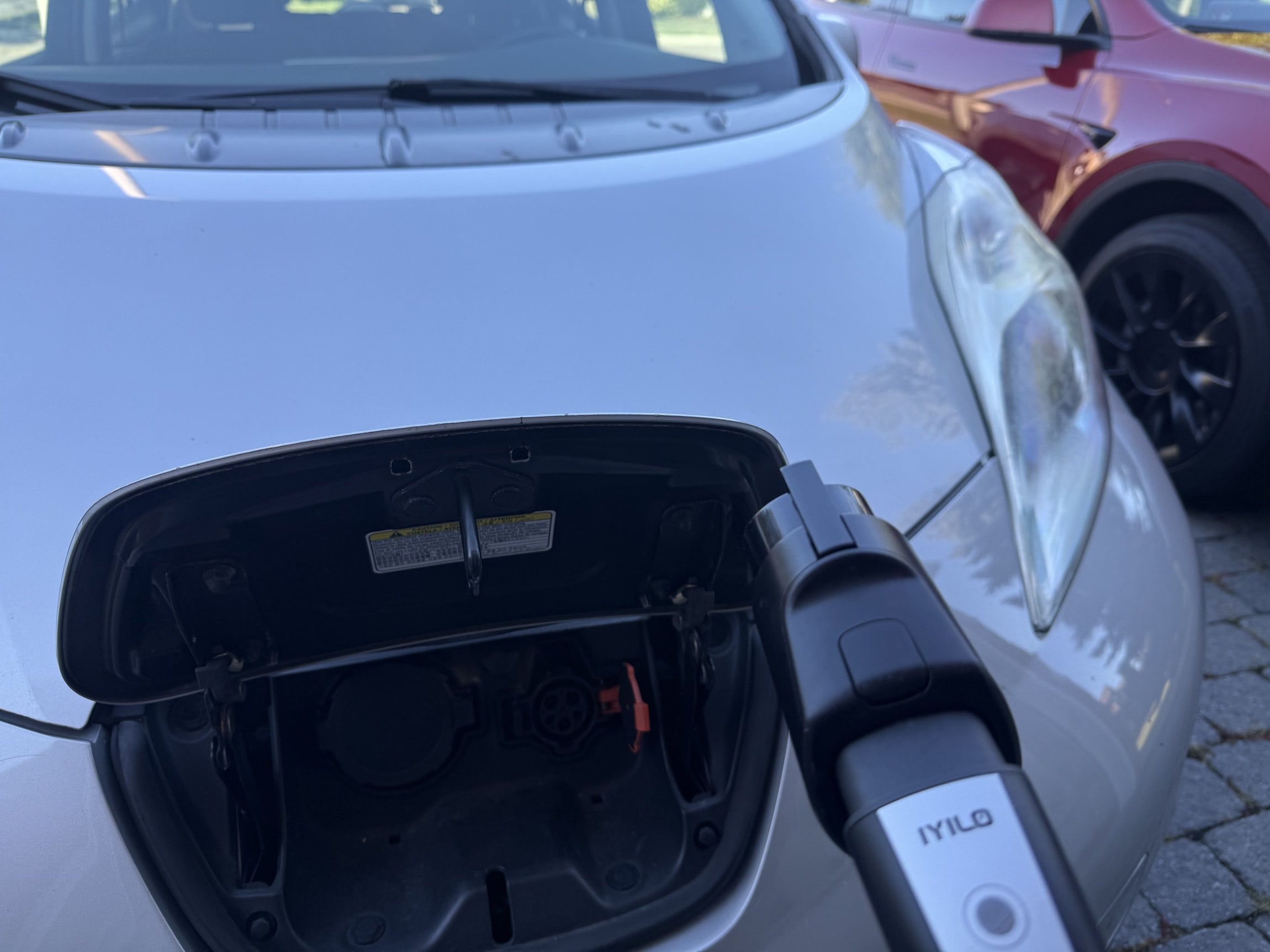
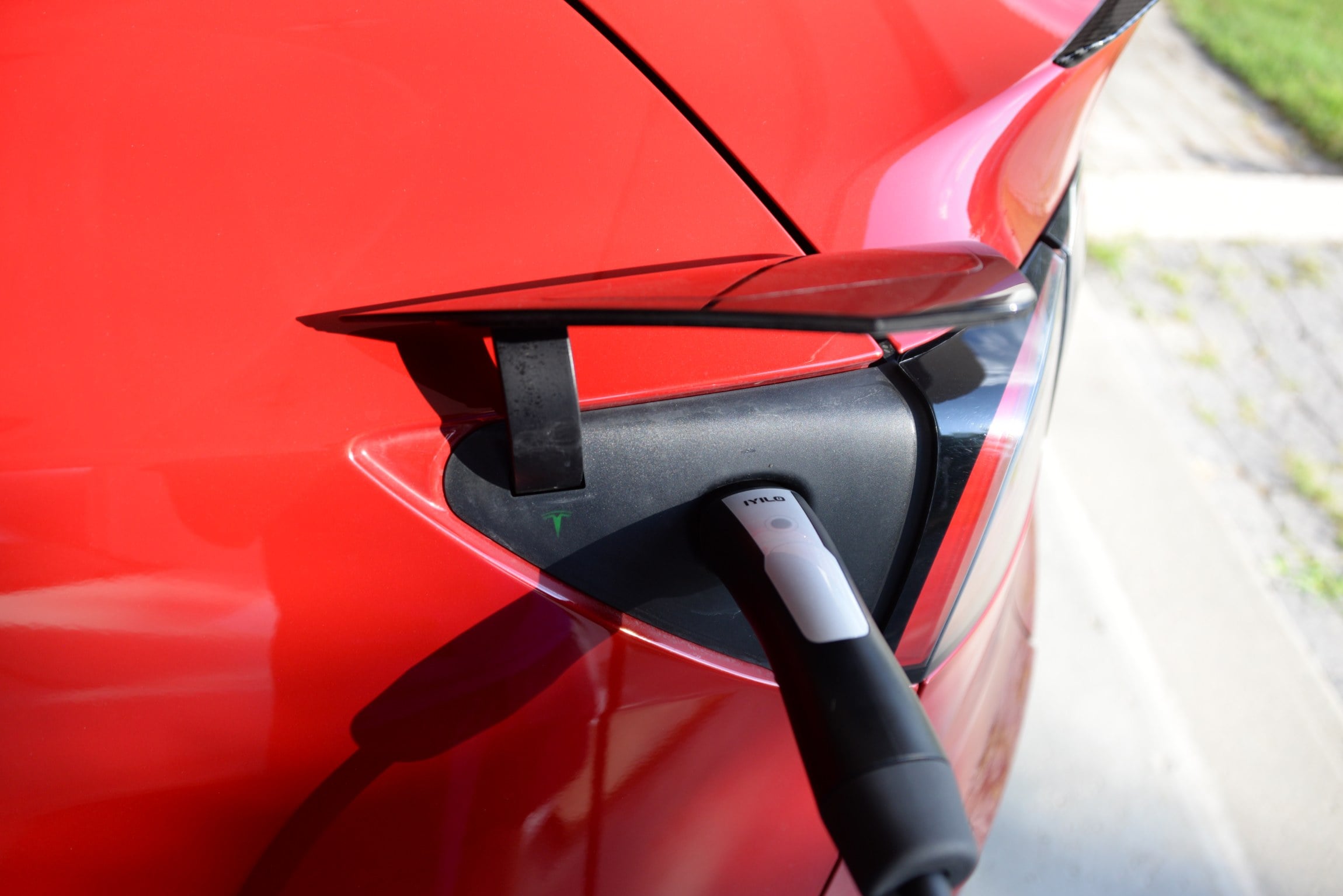
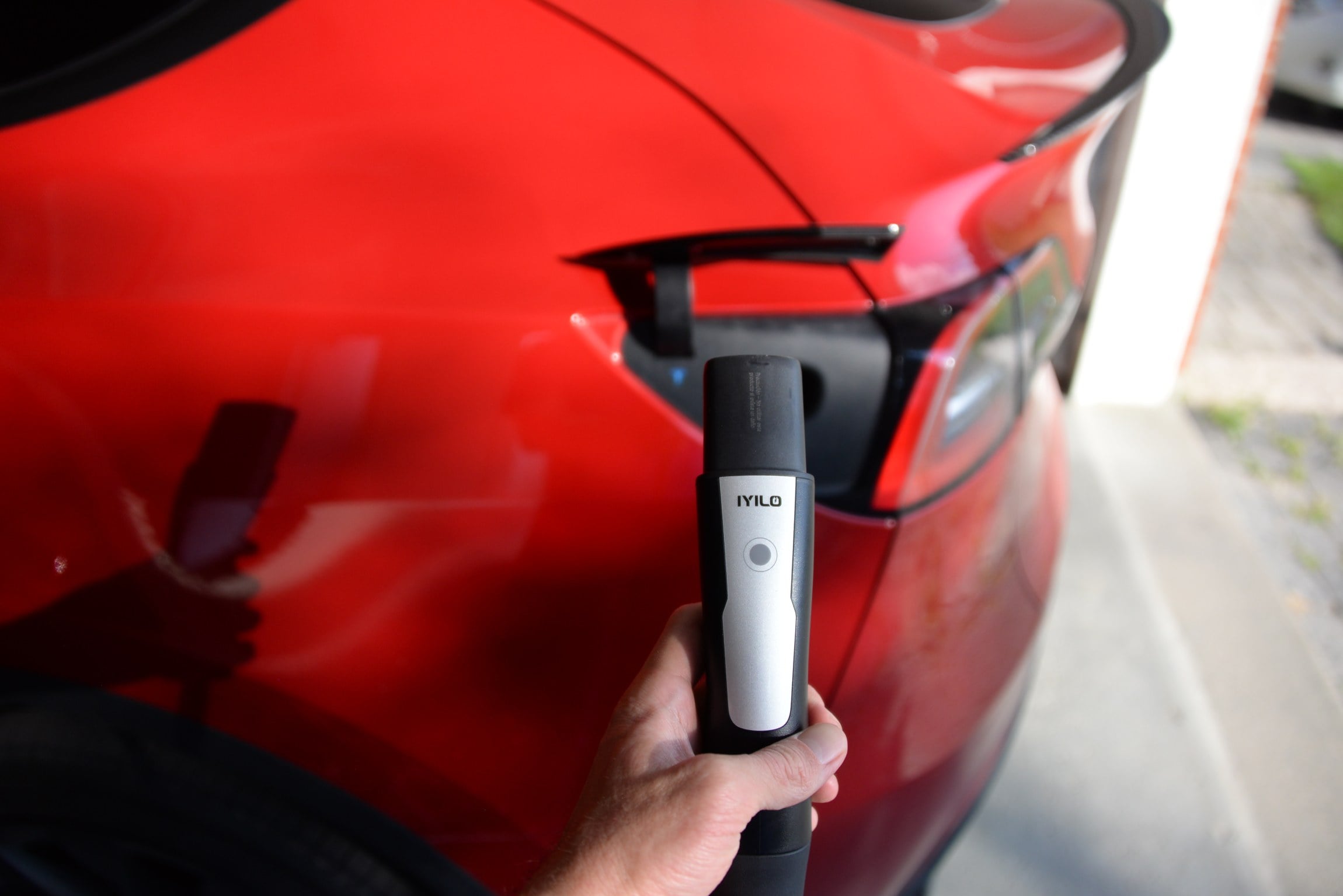
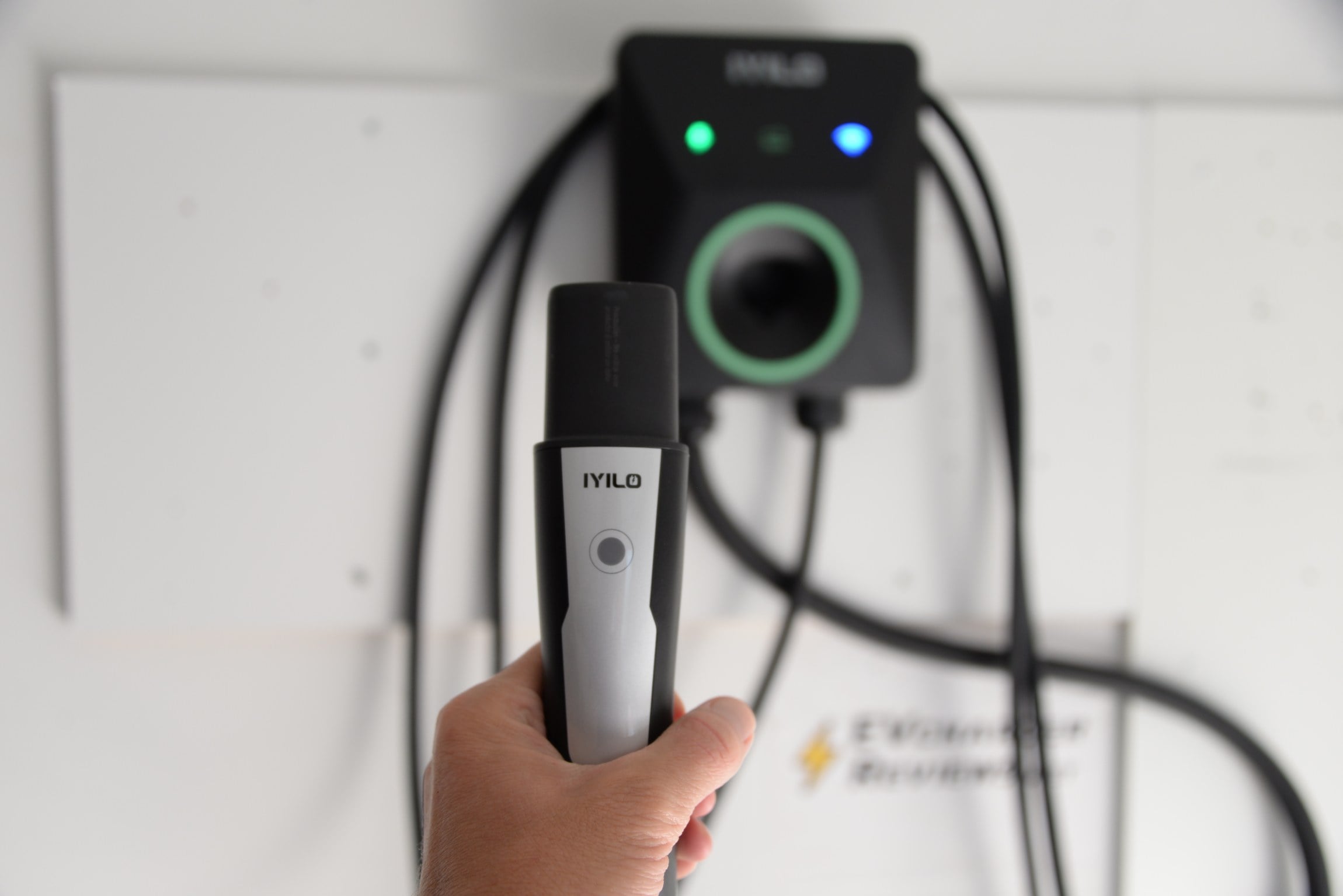
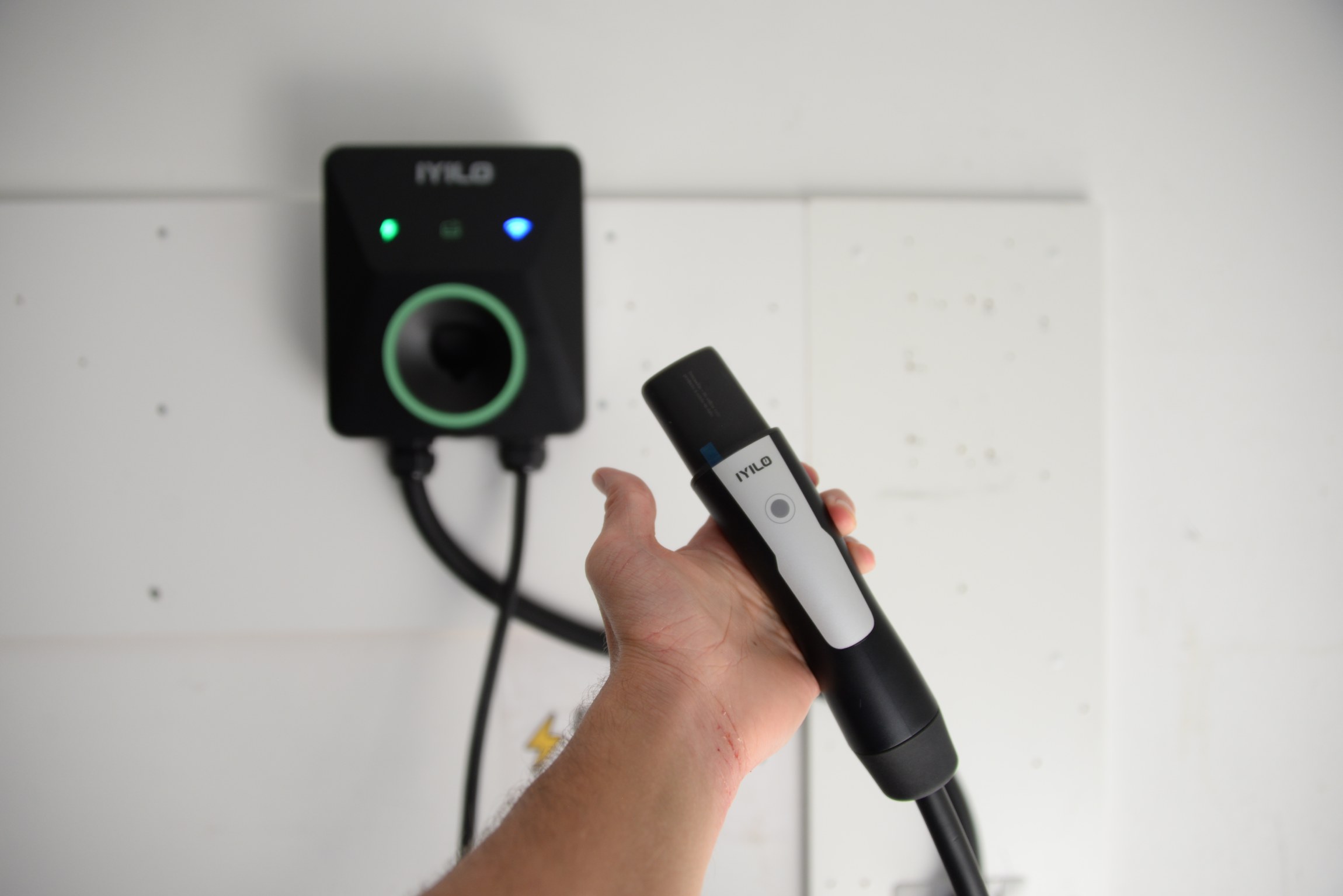
I’ve opted for the NACS EV connector version of the IYILO charger. I really like the NACS connector they’ve used. It features IYILO branding, and feels durable enough for day to day use. I’ve accidentally dropped the connector on my cement floor, and it survived without damage. Just like other NACS connectors it has a button that beams a signal to Tesla charging ports to open the door.
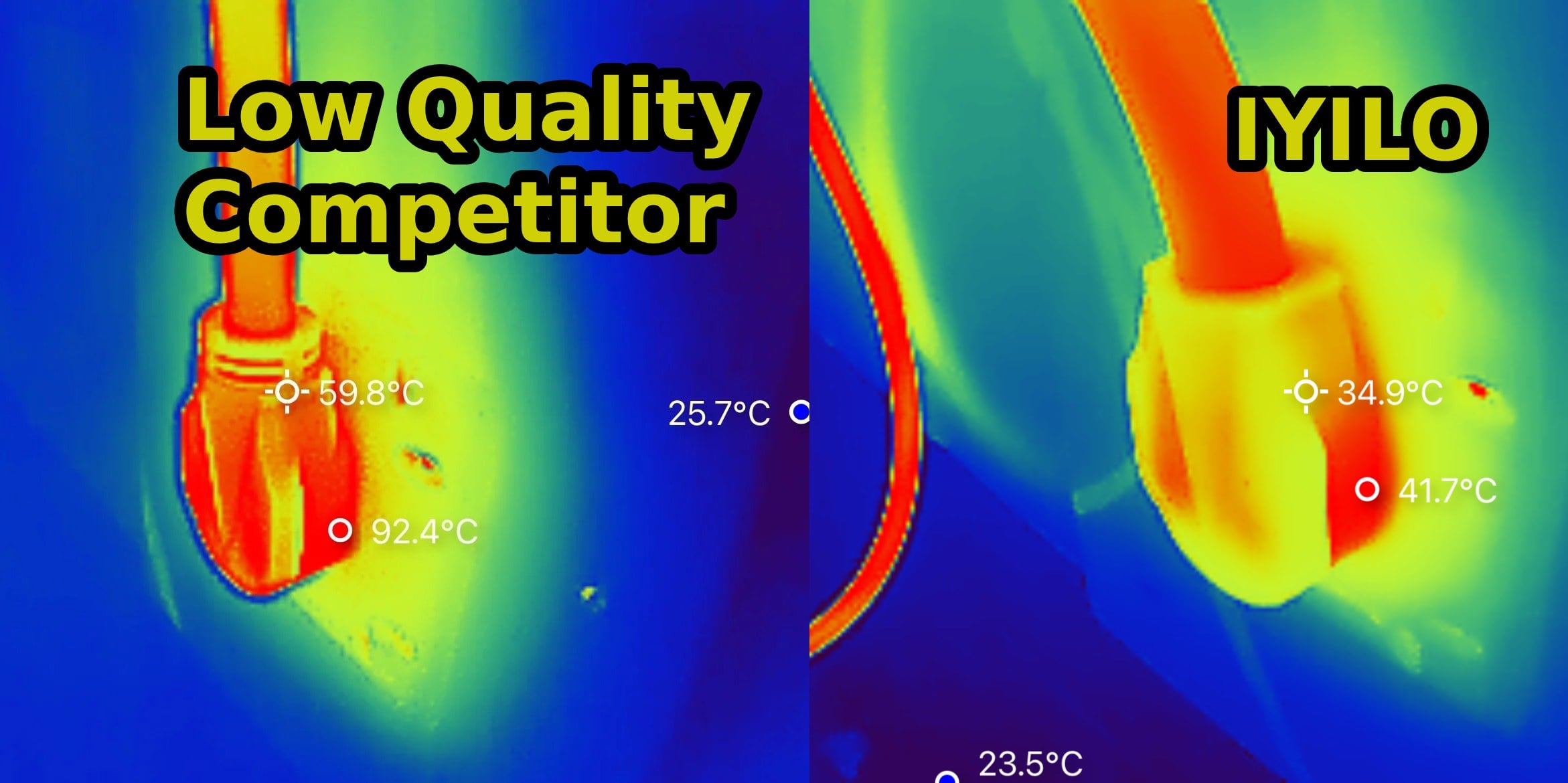
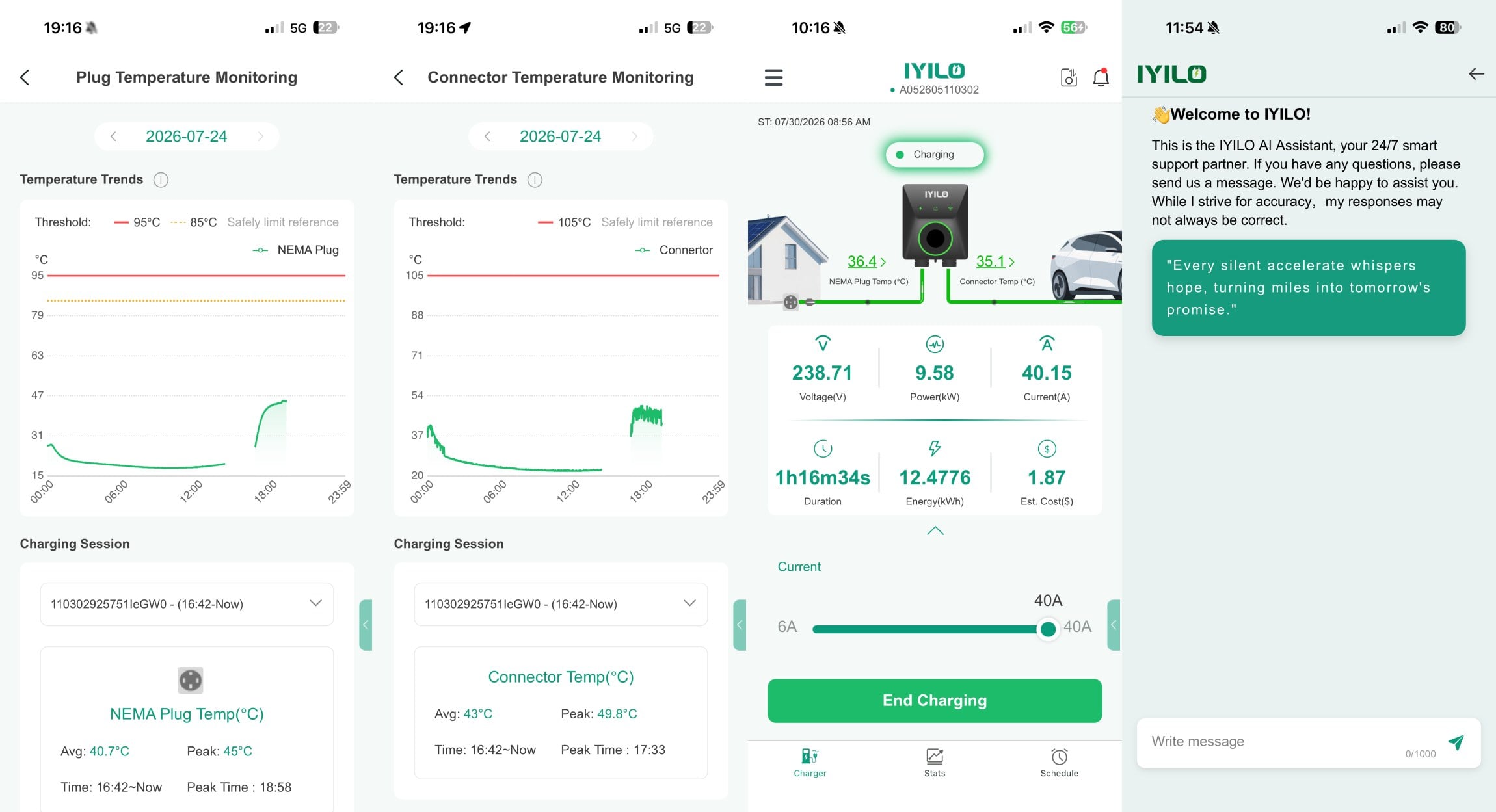
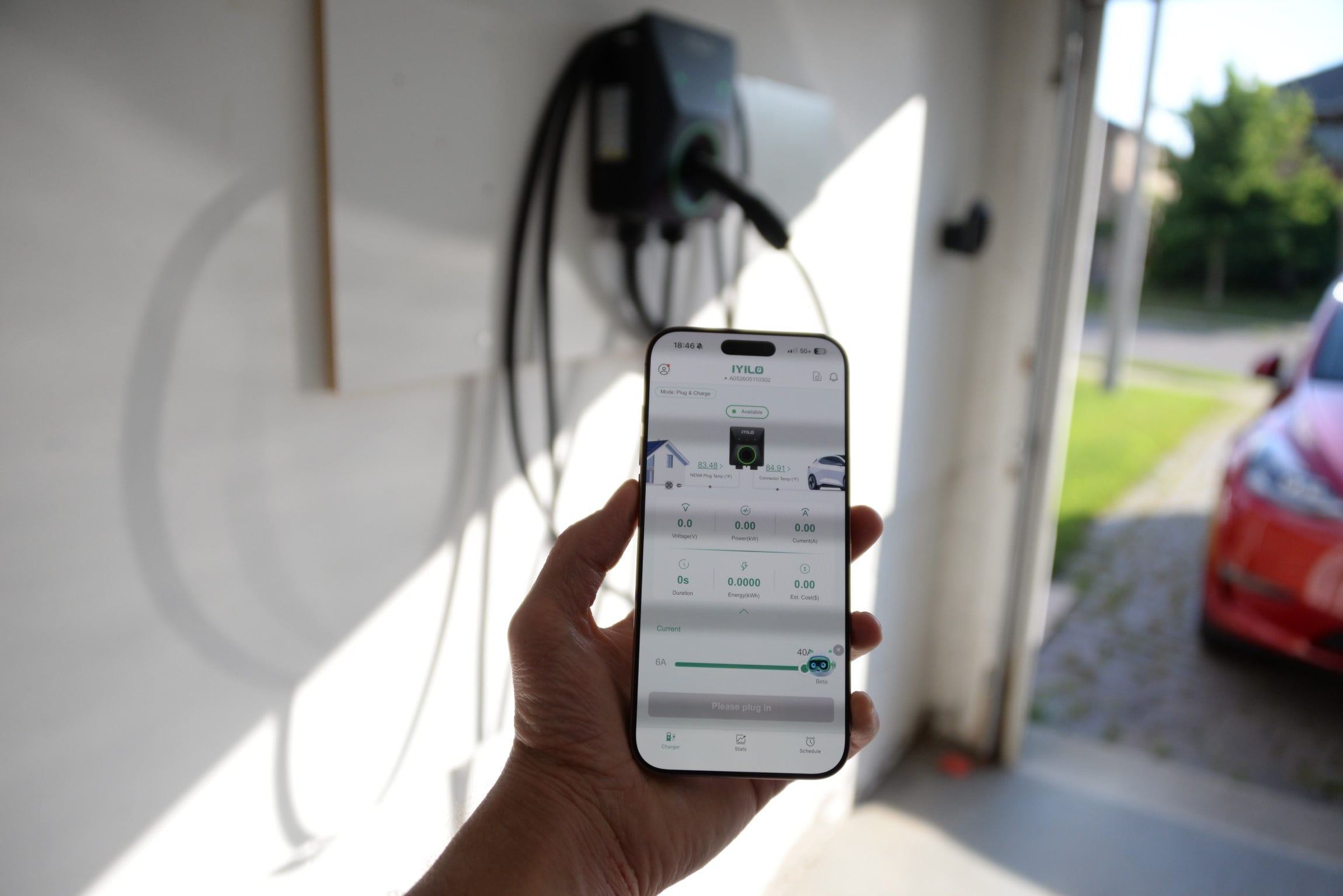
But as mentioned in the intro, I think the main innovation from IYILO is using temperature sensors on both input and output connectors. These connection mating surfaces are prone to overheating in adverse conditions. I’ve personally witnessed other poor quality NEMA 14-50 connectors reaching in excess of 92 degrees Celsius. If ambient temperatures are high, 40 amps is passing through the connector, and sunlight shines on top of this black rubber connector, it can reach melting point.
IYILO avoids this problem with NTC (Negative Temperature Coefficient) resistors in the connectors to monitor temperature with software. If the connectors approach dangerous temps, the charger is able to throttle down the amperage or shut off entirely to avoid damage and fire risk. Although, in my testing, even in hot and long charging sessions, I was not able to reach temperature limits. I think this speaks to good quality conductors IYILO uses for their hardware.
Charging Performance
I’ve tested the IYILO charger for more than a month now, charging both my Tesla Model Y and a Nissan Leaf (using a NACS to J1772 adapter), and performance has been reliable and very consistent. With many long charging sessions, this charger hasn’t skipped a beat.
I’ve been using it at 40 amps with a NEMA 14-50 outlet on a 50 amp circuit. If you opt for the 48 amp hardwired version, a 60 amp circuit breaker will be required because per electrical code, you’re only allowed to draw 80% of a circuit continuously.
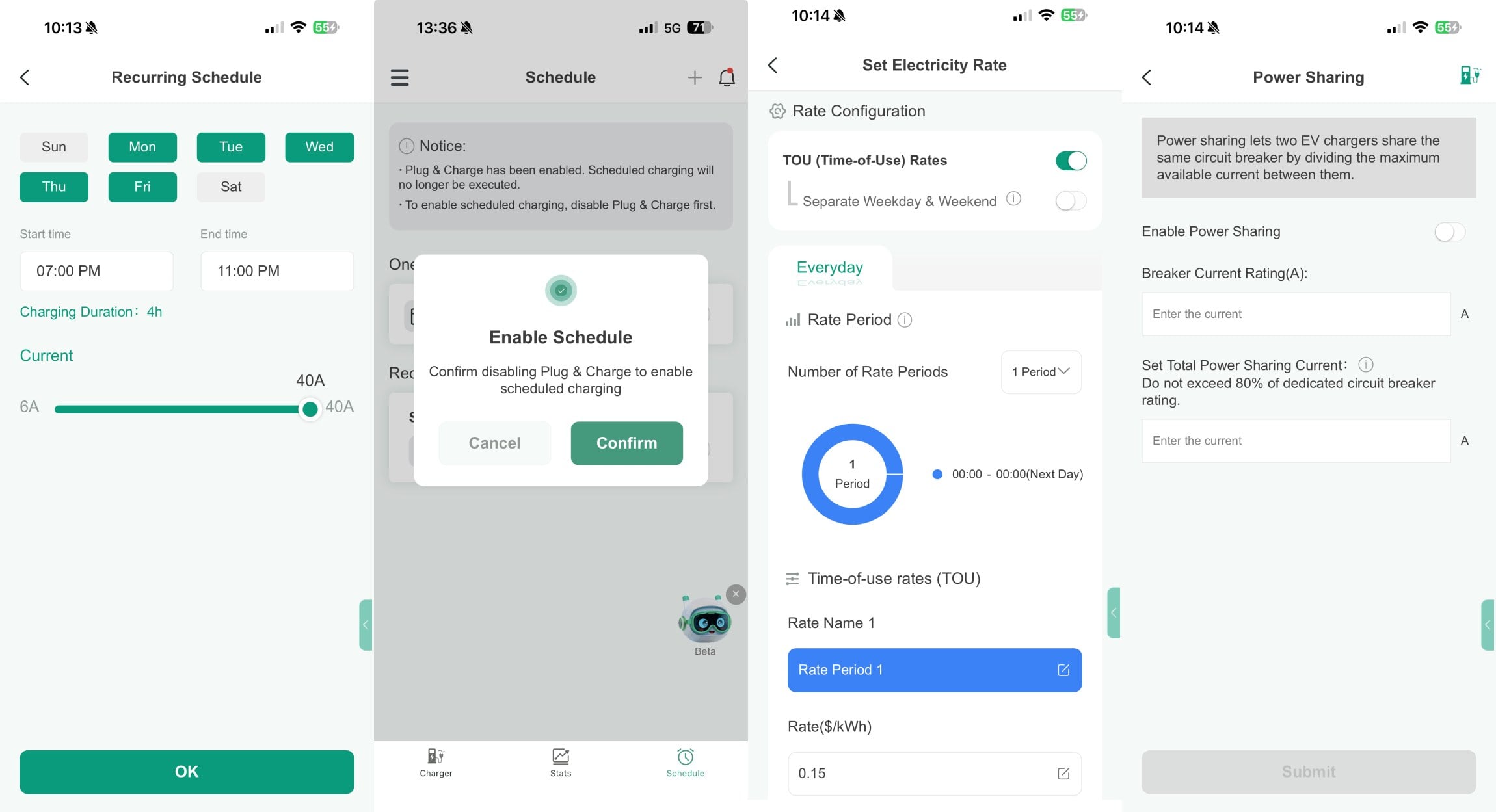
If however, you’re limited by your household electrical panel, IYILO has some installation options. There is a rotary hardware switch inside the unit that can restrict the charger to 32 or 16 amp operating modes. Alternatively, you can buy IYILO bundled with a hardware energy meter that can detect total loads on your electrical panel and adjust max amperage dynamically. This would allow someone with a 125 amp electrical panel to charge their EV at high speed without incurring expensive electrical panel upgrades. In similar fashion, IYILO support power sharing via software in case you want to install a pair of IYILO chargers on a sub 200 amp electrical panel. The pair of chargers will be able to communicate and dynamically adjust amperage without overloading the circuit.
Connectivity and App
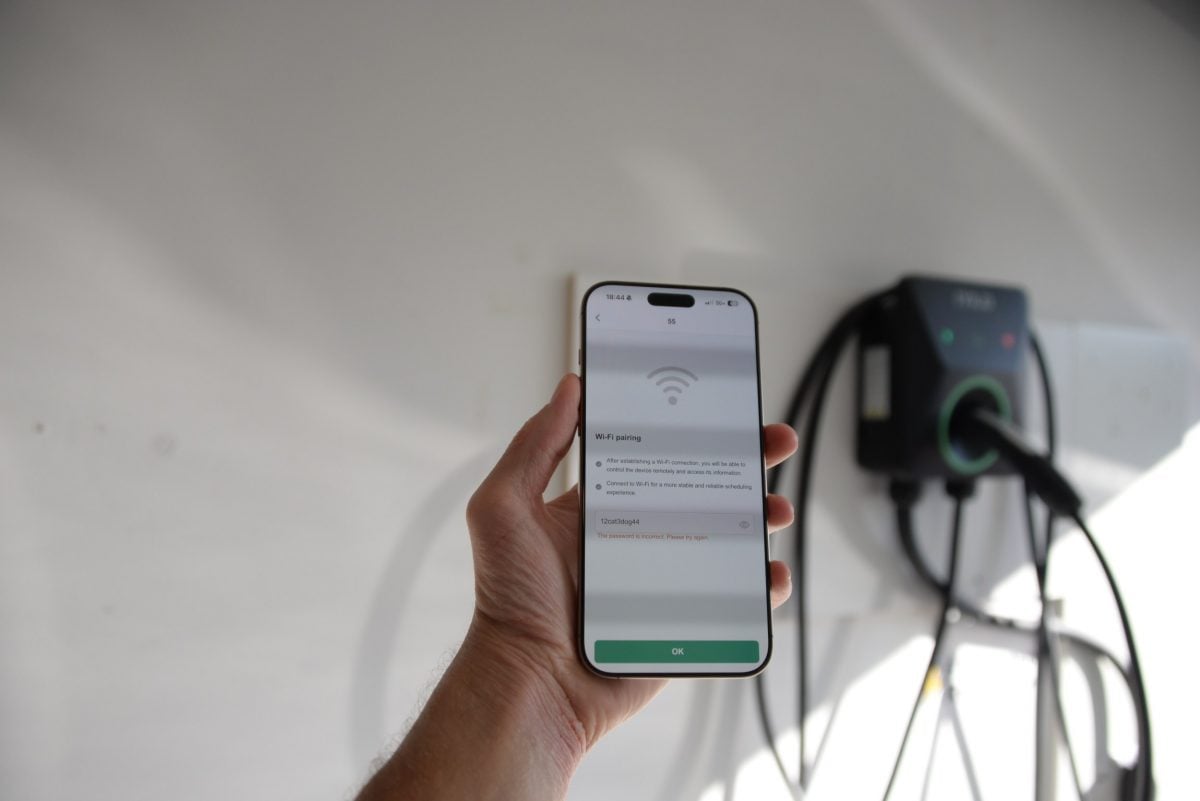
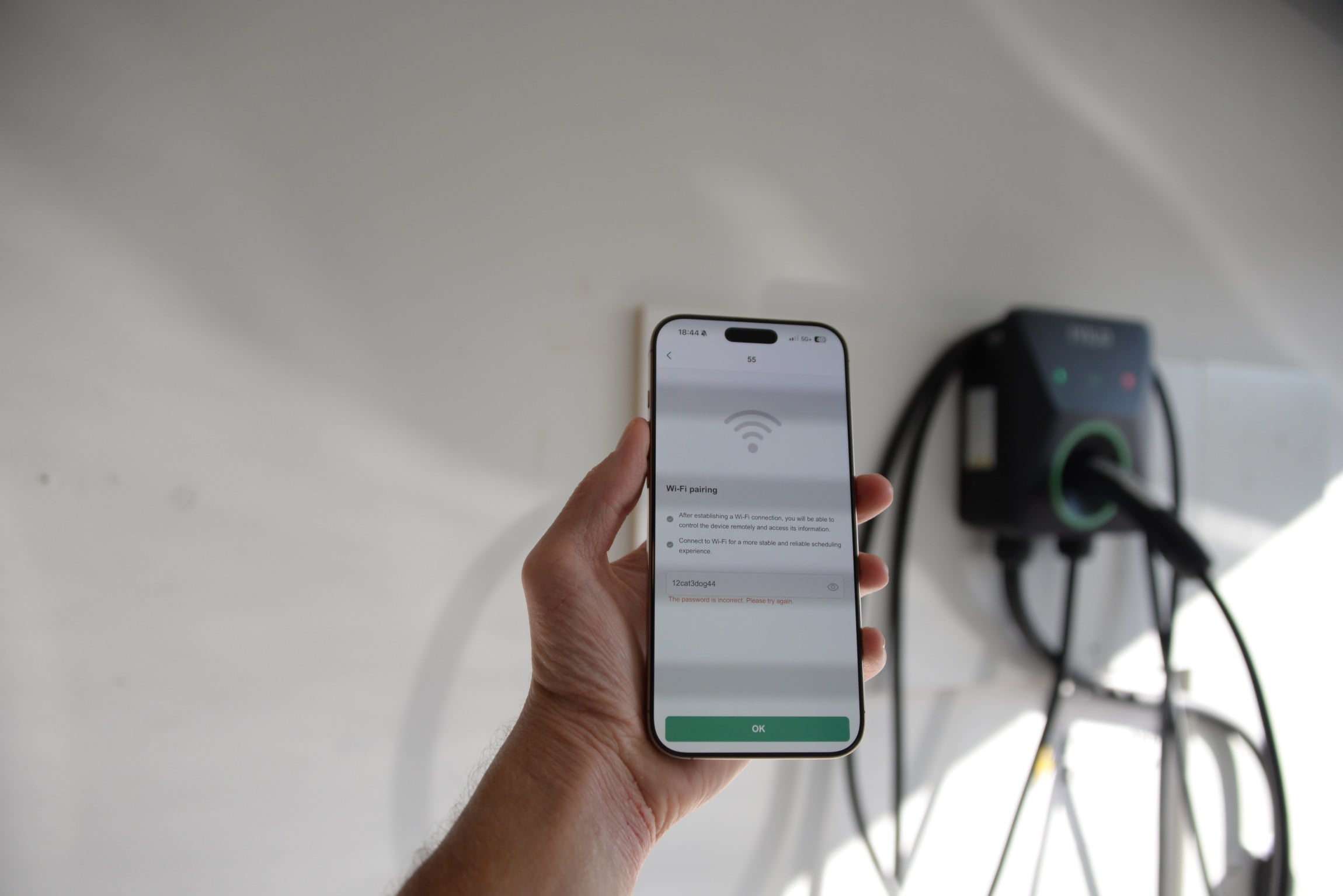
It’s possible to use IYILO charger as a basic plug-and-charge charging station. But you would he missing out on some useful configuration and reporting features. The hardware features both Bluetooth and Wi-Fi for setup and connectivity. During my initial setup, the IYILO app discovered by new charger and helped me connect it to my home Wi-Fi network. The IYILO charger only support 2.4 GHz Wi-Fi signals, which is okay because 2.4 GHz has better range than 5 GHz frequencies. Some EV chargers struggle to connect to my Wi-Fi from my garage, but IYILO had a really solid wireless link throughout my testing.
The app is fairly complete and has everything you’d expect from a smart EV charging station. The home screen shows current charging status and real-time metrics. Reporting is decent too, with information about specific charging sessions as well as 24h/weekly/monthly/yearly charging statistics.
By inputing your electricity rates and TOU pricing, you can get pretty accurate charging cost estimates right inside the app. There is also a pretty robust scheduler built-in or a charging delay timer.
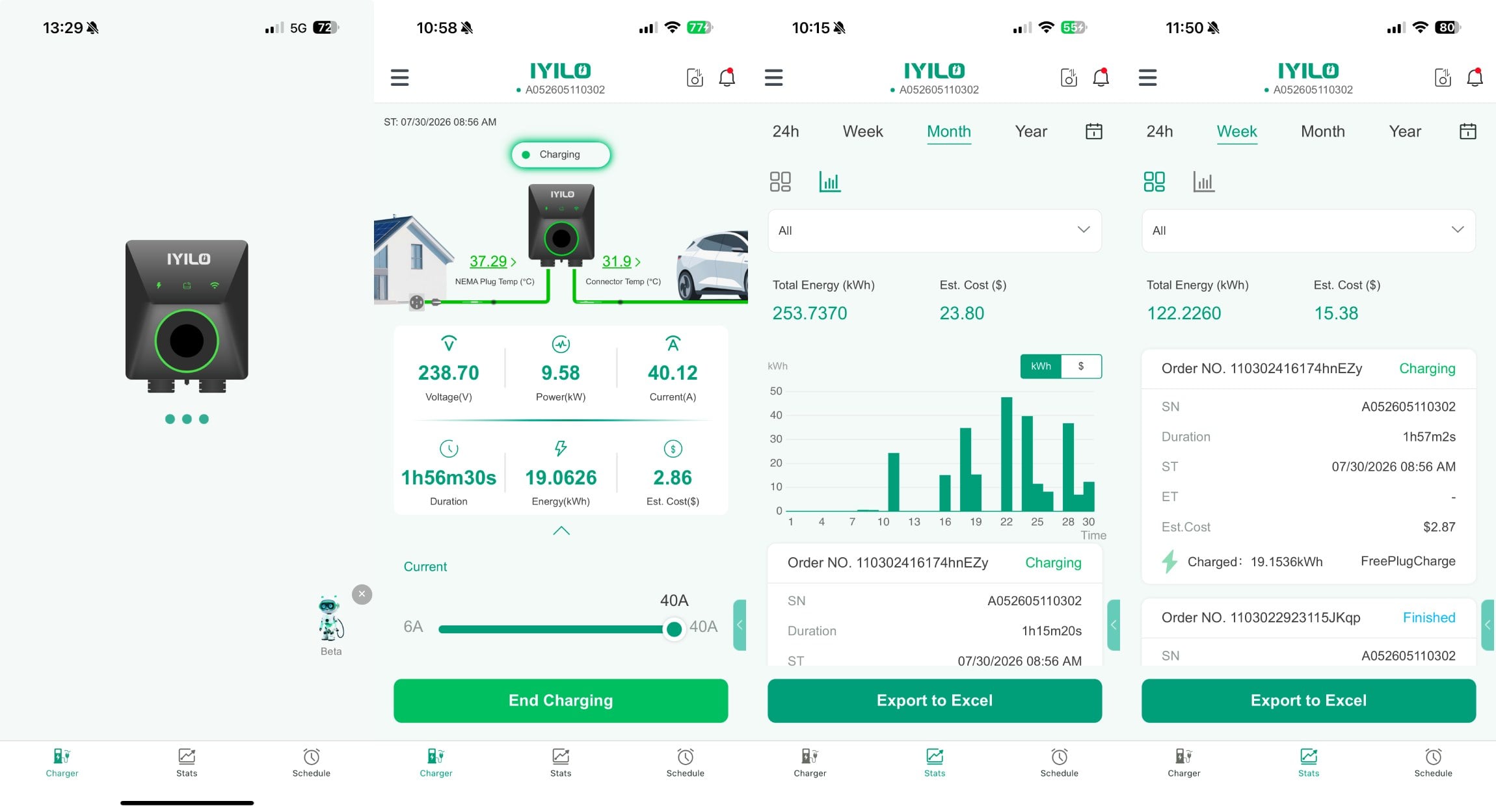
Honestly, the app is functional but it is one of few areas where IYILO can use some additional polish. They can be forgiven because the product is less than a year old at this point, and many of these things can be improved with software over time.
- During my testing on iOS, I’ve been getting logged out of my account pretty consistently every few days. A minor annoyance, but it adds an additional step sometimes.
- On the Stats screen, the default view shows receipts for recent charging sessions and “Order numbers”. If you want to see cumulative statistics, you have to tap on an icon to see the charging charts. I thought this was an odd way to display the data, and most people would just want to see the stat charts by default.
- Most of the labels and translations inside the app are great, but there are places in the app that show it wasn’t developed by native English speakers. Such as this line from the help assistant: : “Every silent accelerate whispers hope, turning miles into tomorrow’s promise.” But I am really just nitpicking, the app overall is very functional.
Conclusion
IYILO is one of the best home EV charging stations I’ve ever reviewed, and this is their first product. I’m really impressed with how well they understand EV user needs, and a high degree of safety. Interesting design, durable enclosure, high quality input/output cords, and those crucial temperature sensors make it very easy to recommend to EV owners of all brands. Their charging stations are also backed by a 3-year warranty, showing confidence that the product is built to last. Between NACS & J1772 connectors, hardwired & and NEMA 14-50 versions, and the ability to work with a dynamic energy meter, IYILO likely has a product that will suit most people’s needs.
Shopping Options
Prices updated: September 13, 2026 at 11:01PM (EST)
Full Review Gallery
EVchargerReviews.net EVSE Review Methodology
We get the product into our facility, unbox it, inspect it, and install it just like the end user. We have a two-EV car garage with many electric miles accumulating weekly. We take EVSEs through a suite of tests, from short charging sessions, to long overnight charging sessions. We look at whether the claimed features work as expected. We check performance under challenging conditions; does the cord hold up to cold weather? Does the charging station throttle down amps due to heat and thermals? Does the Wi-Fi or Bluetooth drop the connection? Software bugs and glitches will surface during longer-term testing rather than a one-day trial. Measurements are taken on cord thickness and performance, and a thermal camera is used to look for surface hot spots after a 50 kWh stress test.
After living with the charging station product for at least two weeks, we are able to determine how the product compares to rivals, and if it deserves to be recommended to our readers.
Disclosures: Independent review by Michael Kim from EVchargerReviews.net. We participate in affiliate programs, and we may earn income when you use our links. We hope you think that is fair, based on the amount of work that goes into our reviews.
Considering buying a Tesla? Use our referral link to get 3 free months of FSD, and help support our content.
Add EVchargerReviews to your Google AI Overviews Sources: