EVchargerReviews is supported by our readers. We may earn commissions from links on this page. Why trust us?
Best Home EV Chargers for Nissan Leaf
Updated August 23, 2026, by Michael Kim
Nissan Leaf Top Chargers
- IYILO EV Charger
($389.99) - EVIQO EV Charger
($479.00$429.99) - Grizzl-E EV Charger
(Check Price) - Emporia EV Charger
(Check Price) - ChargePoint Home Flex
(Check Price)
Prices updated: September 21, 2026 at 7:01AM (EST)
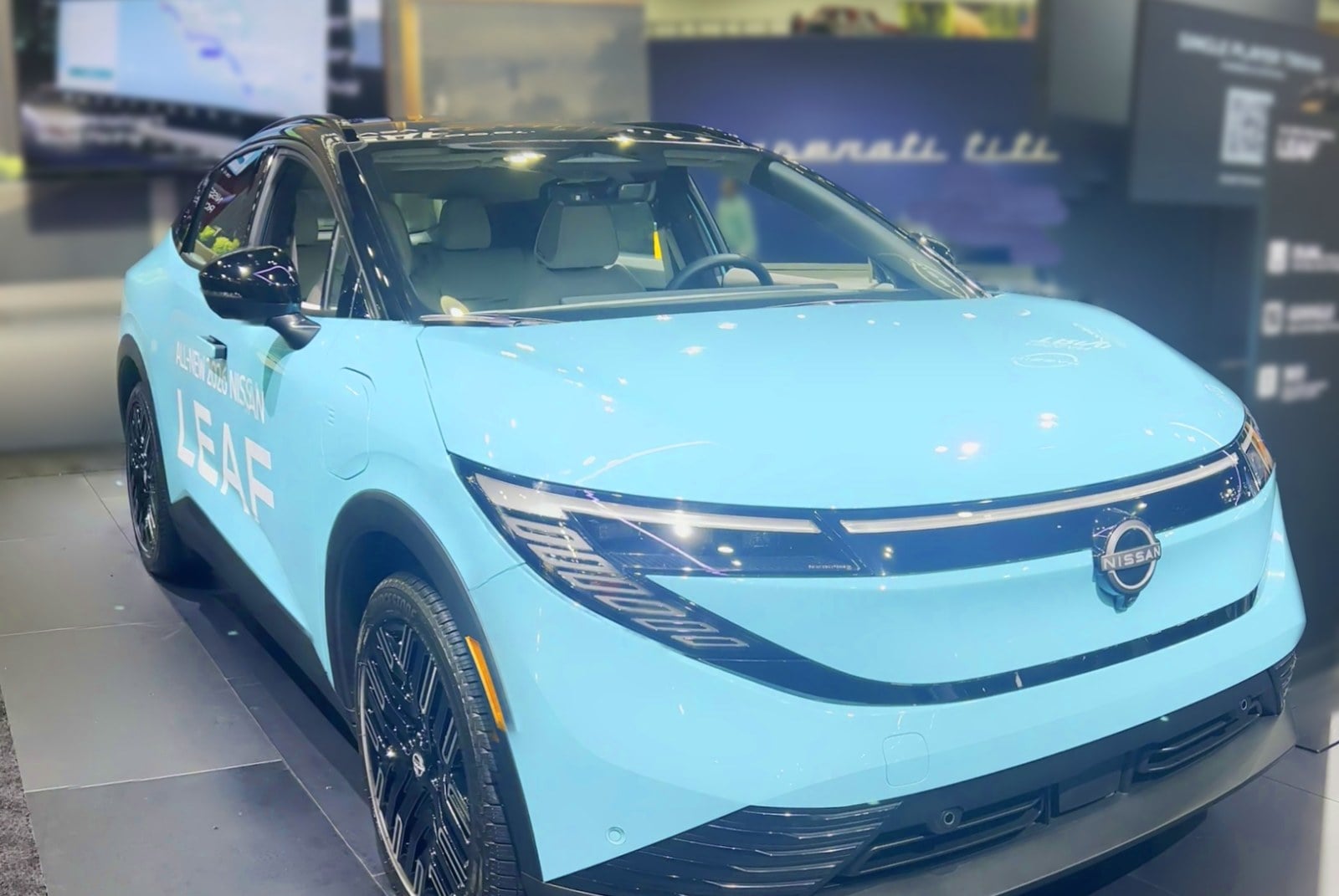
The Nissan Leaf was one of the first mass market EVs in North America, launching with model year 2011 and a 24 kWh battery pack. Later iterations offered 30, 40, 62, and now 75 kWh batteries, extending driving range substantially. The Leaf was always about reliable and and affordable electric transportation, and that why we have one in out fleet.
The first two generations of the Leaf (2011-2025) relied on J1772 port for Level 1/2 AC charging, and CHAdeMO port for DC fast charging. The latest third generation Leaf gained a NACS port for DC fast charging (and Tesla Superchargers), but retains the J1772 port for AC charging. Therefore, you need a home EV charger with a J1772 connector regardless of which model year Leaf you drive.
The earliest models of the Leaf were able to charge between 16 amps (3.3 kW) and 27 amps (6 kW), and the latest model upgraded to a 30 amp (7.2 kW) equipment, effectively letting you fully charge the 75 kWh battery in about 11 hours.
Nissan Leaf Charging Fast Facts
| EV Charging Connector | MY2012-2025: J1772 / CHAdeMO MY2026+: J1772 / NACS |
| Battery Capacity | MY2012-2025: 24-62 kWh MY2026+: 75 kWh |
| Level 2 Charging Power | 3.3 – 7.2 kW |
| Level 2 Max Amps | 16 – 30 A |
| Level 2 [20-80%] Charge Time | 7 Hours |
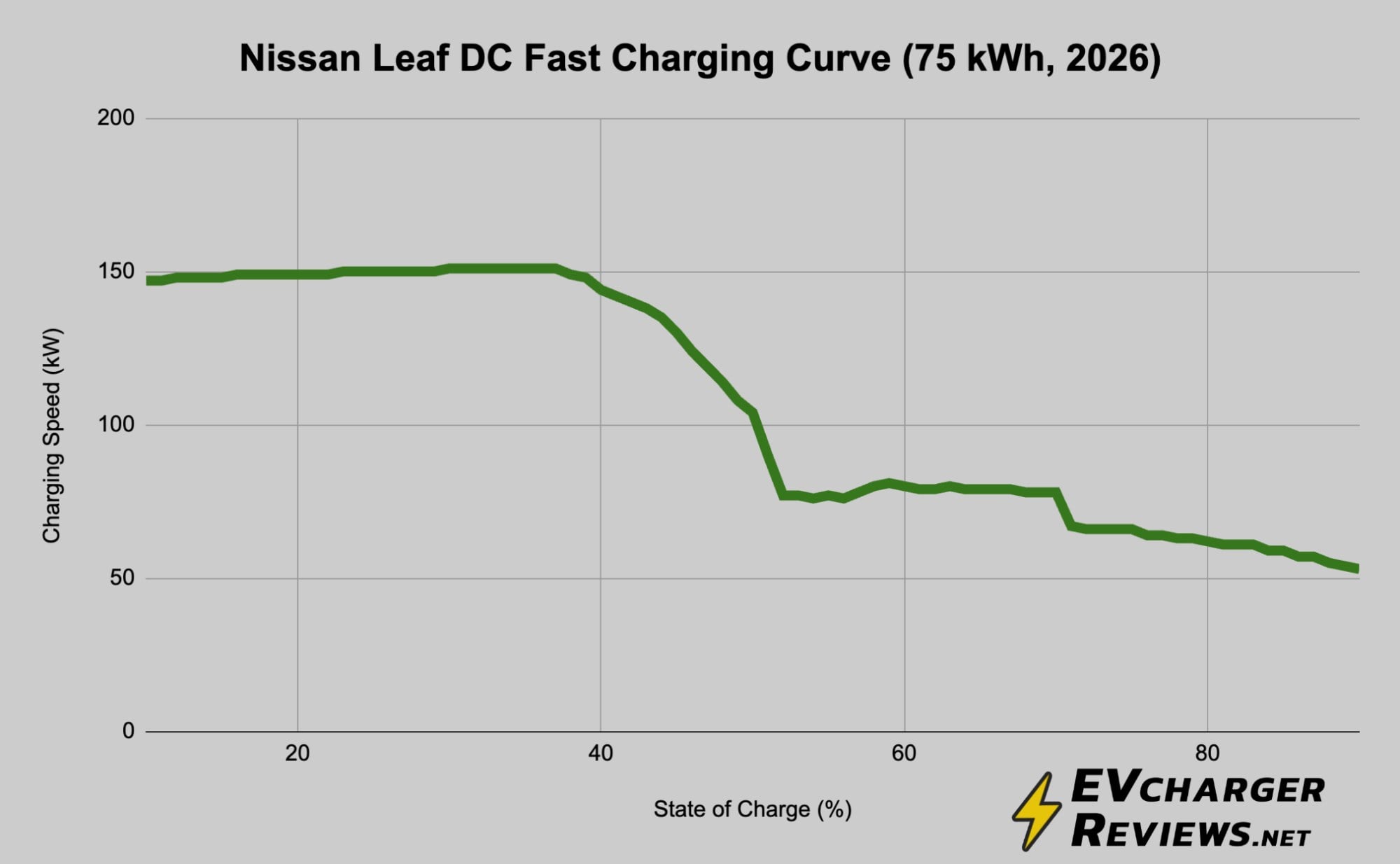
| Level 3 Peak Power | MY2012-2025: ~50 kW MY2026+: 150 kW |
Level 3 DC Charging Curve
IYILO EV Charger (48 Amp)
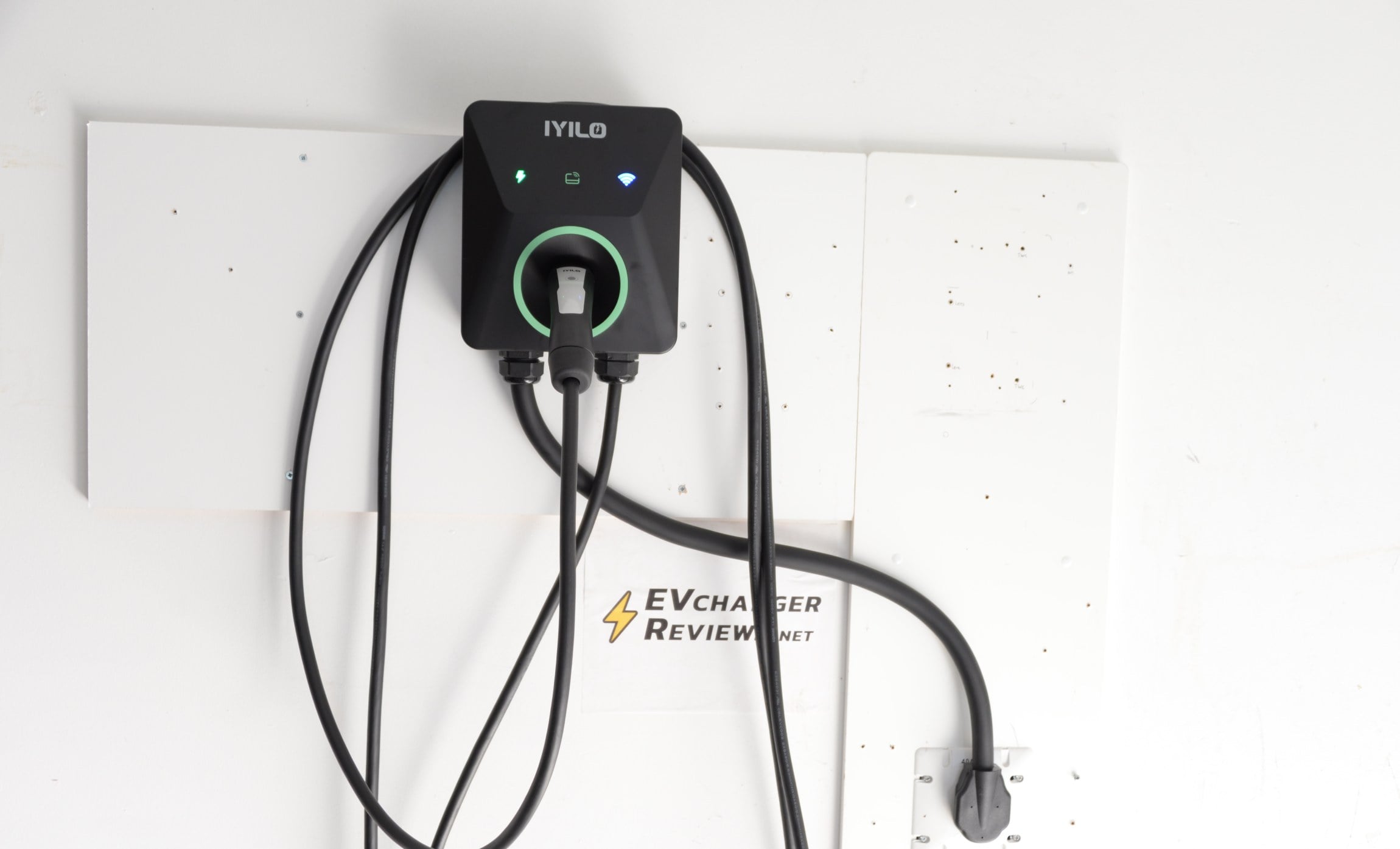
IYILO makes one of our current favorite home EV chargers. You get a lot of features and value for the price. This smart charger has a companion app for session monitoring, scheduling, and cost estimates. The J1772 variant is available both as a plug-in NEMA 14-50 outlet version, and a hardwired version. Both types of installations support at least 40 amps, so more than enough for any generation of Nissan Leaf.
But most impressive of all, is IYILO’s relentless pursuit of safety. Their charger has temperature sensors both on input and output connectors, so the unit is able to reduce amperage (or shut down) if something in the chain becomes too hot.
Specs
- Amperage: Up to 48 amps
- EV Connector: J1772 or NACS
- Home Connection: NEMA 14-50 or hardwired
- Cord Length: 25 feet
- Cord Thickness: 25 mm
- Cord Gauge: AWG 6
- Weatherproofing:
IP66 /NEMA 4 - Networking: Yes
- App Control: Yes
- Warranty: 3 years
Pros
- Focus on safety
- Connector temp monitoring
- Many features for price
Cons
- App can use more polish and improvements
EVIQO Level 2 EV Charger (48 Amp)
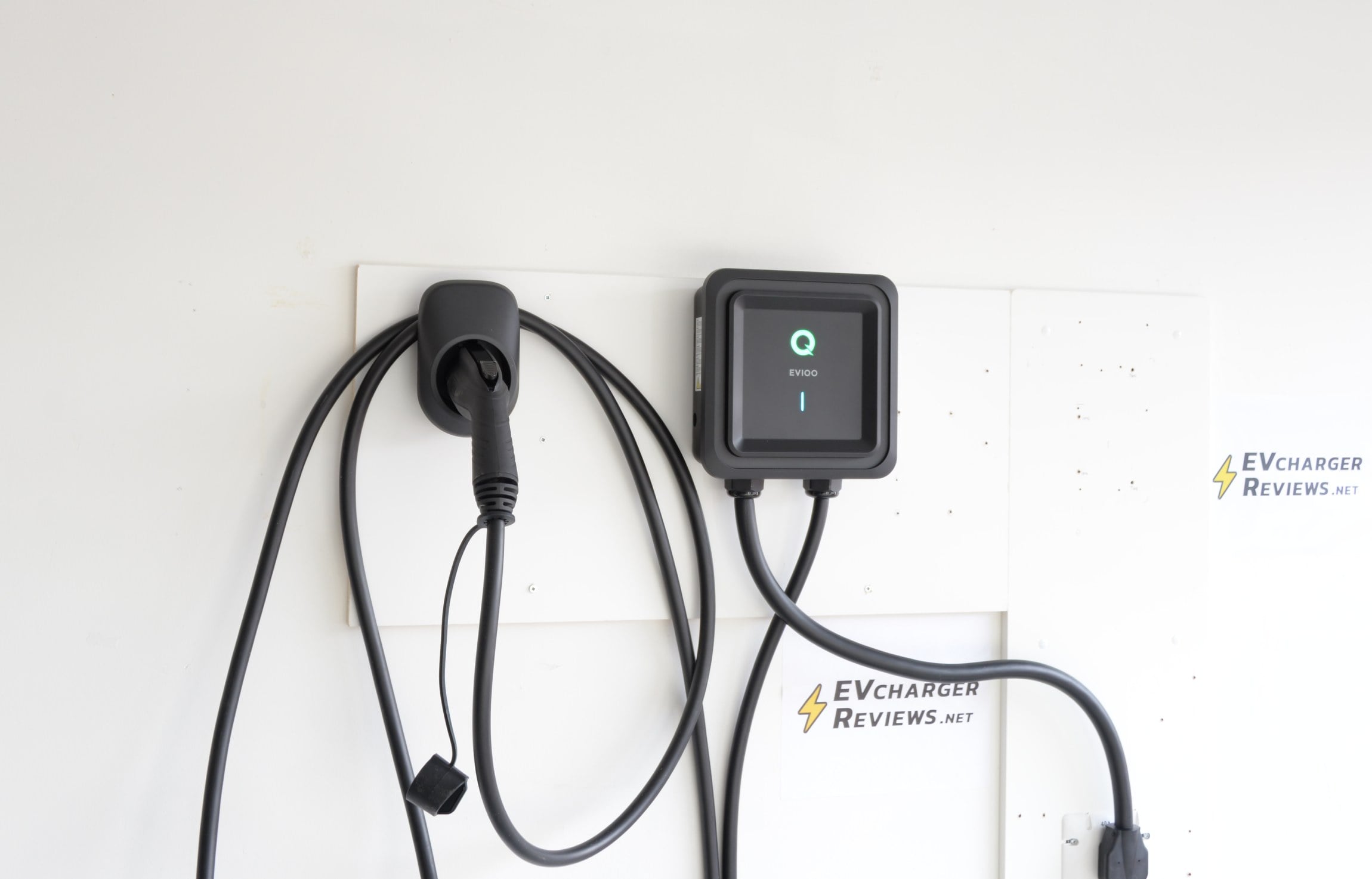
EVIQO is another startup in the EV charging space. Their products take a research focused approach at addressing EV owner pain points. As a result, their charger achieved one of the highest scores we’ve ever reviewed. The J1772 connector alone deserves a lot of praise for quality materials and durable build, this one is most likely to survive wear and drops on to concreter floors.
Charging amperage is also more than adequate for the Leaf, the plug-in unit offers 40 amps, and the hardwired version can go to 48 amps. Perfect for your current EV, and maybe even the next one. EVIQO also has one of the best companion apps out there, and they’re constantly evolving it with user (and our own) feedback.
Specs
- Amperage: Up to 48 amps
- EV Connector: J1772 or NACS
- Home Connection: NEMA 14-50 or hardwire
- Cord Length: 25 feet
- Cord Thickness: 18.5 mm
- Cord Gauge: AWG 9
- Weatherproofing:
NEMA 4 - Networking: Wi-Fi + BT
- App Control: Yes
- Warranty: 2 years
Pros
- Long input and output cables
- Great app with scheduling and cost reporting
- Metal J1772 clasp and release tab
Cons
- The cord is durable but the thickness can make it more difficult to handle
- The J1772 holster makes the cord stick out from the wall
Grizzl-E Level 2 EV Charger (40 Amp)
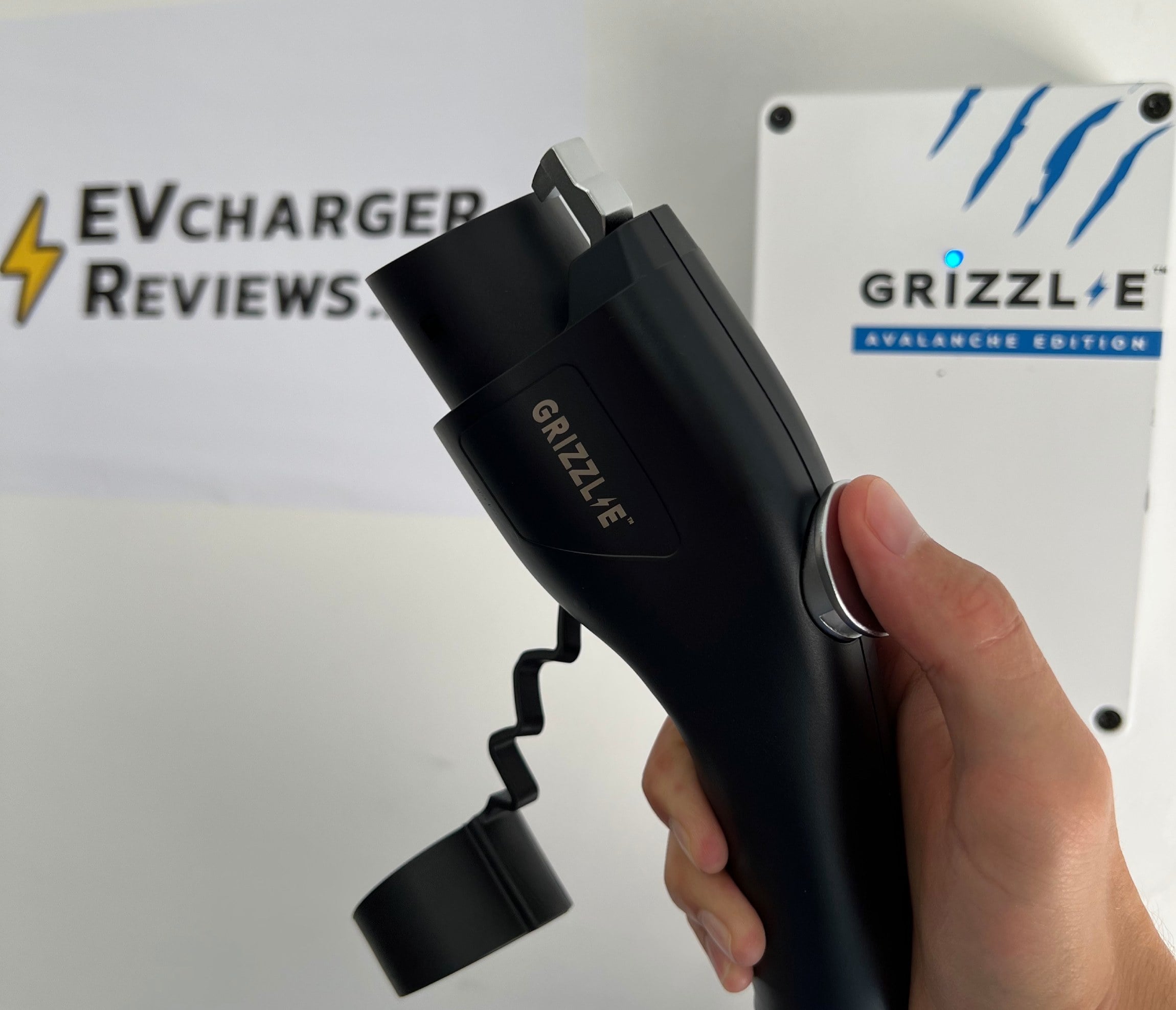
If you want to skip programmable smart features, and just want something plug-and-play that works, consider EV chargers from Grizzl-E. This is one of the toughest metal EV charger enclosures we’ve reviewed, it’s rated NEMA 4 for weather resistance and should be suitable for most outdoor installations. Grizzl-E is based in Canada, so their products are designed to perform in extreme weather conditions. The operating temperature range is between -22F to 122F for outdoor usage.
The cord and J1772 connector are decent for the price point, and the unit is able to supply up to 40 amps continuously for hours without overheating concerns. The front face has a small LED status indicator, and no other distractions.
Specs
- Amperage: Up to 40 amps
- EV Connector: J1772
- Home Connection: NEMA 14-50, or hardwire
- Cord Length: 24 feet
- Weatherproofing:
NEMA 4 - Networking: No
- App Control: No
- Warranty: 3 years
Pros
- Durable construction
- Heavy-duty charging cable, suitable for extreme climates
- Value
Cons
- No smart features or app control
- Plastic external cord holster
Emporia Smart Level 2 EV Charger (48 Amp)
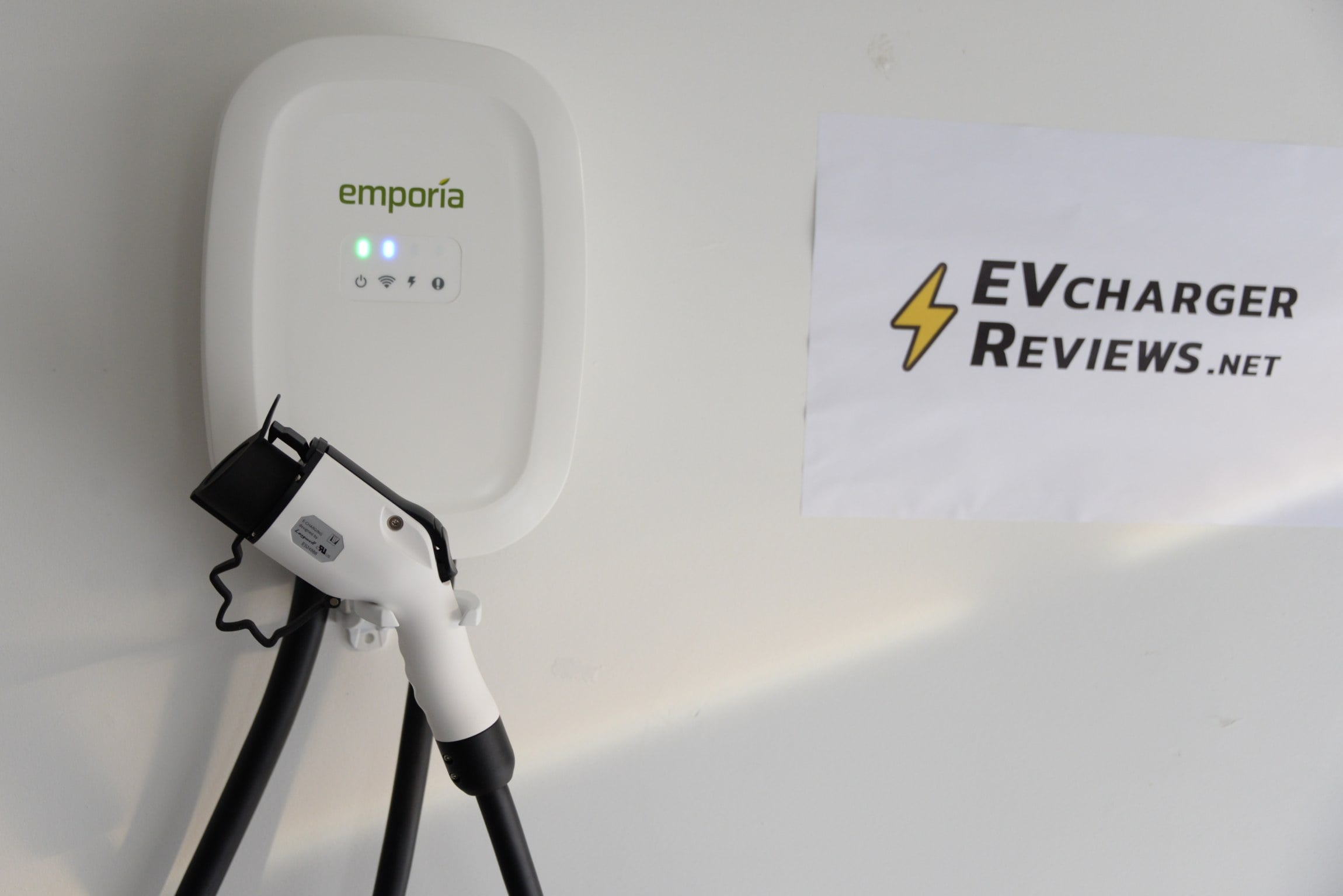
Emporia Energy is a major player in smart home automation tech, and their EV charger is very easy to recommend if you have any of their other products. They work together nicely, and are managed through a common app. But even standalone, it’s a compelling option at a good price point.
Emporia chargers offer high amp output, easy cord management, and UL listing for safety peace of mind. Note, that a 2.4 GHz Wi-Fi compatible network is required for connected features to work.
Specs
- Amperage: Up to 48 amps
- EV Connector: J1772 or NACS
- Home Connection: NEMA 14-50 or hardwire
- Cord Length: 24 feet
- Weatherproofing:
NEMA 4 - Networking: Yes
- App Control: Yes
- Warranty: 3 years
Pros
- Lower cost than competitors
- Emporia app connectivity and scheduling
- High-quality metal charge plug holder
Cons
- The charge cord is shorter than the competition
- The charger enclosure box is made from plastic
ChargePoint Home Flex (50 Amp)
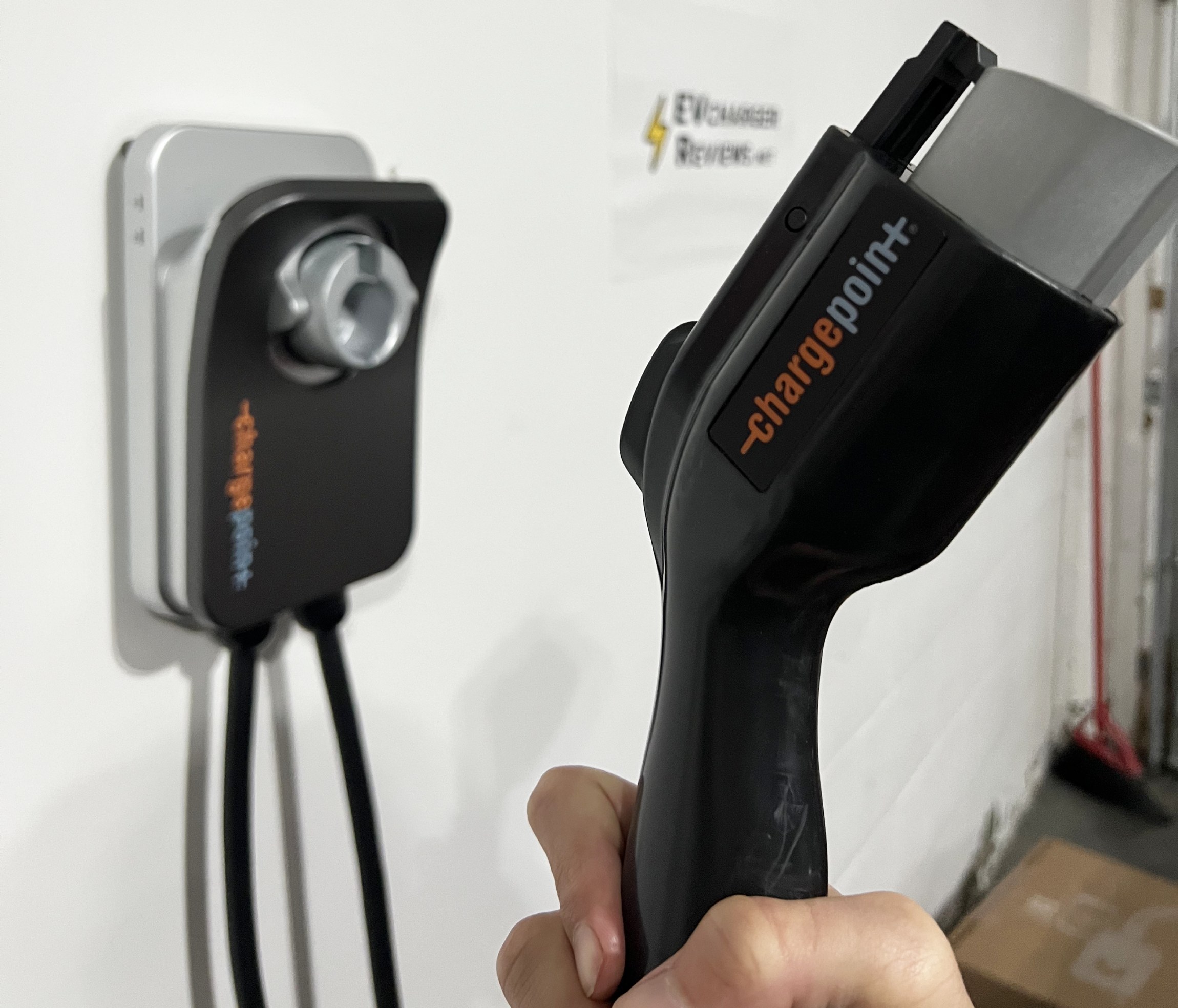
ChargePoint is a well established brand in home and public charging. This company operates one of the largest public DC fast charging networks in America. If you’re a frequent user of their public chargers, you may appreciate using a common app for managing your home charging and away charging.
The Home Flex from ChargePoint has been around for many years now, and it’s been battle tested and subtly improved over the years. We also really like their integrated swivelling J1772 connector holster that helps keep the cable flush against the well when not in use. It’s an easy recommendation for any Leaf owner looking for a long term solution.
Specs
- Amperage: Up to 50 amps
- EV Connector: J1772 or NACS
- Home Connection: NEMA 14-50, 6-50, or hardwire
- Cord Length: 23 feet
- Weatherproofing: NEMA 3R
- Networking: Wi-Fi + BT
- App Control: Yes
- Warranty: 3 years
Pros
- High-quality cord material
- Many plug-in installation options
- Alexa/Google Home integration
- EnergyStar certification
Cons
- Only one Home Flex can be paired to an account
- The product is heavily dependent on the app
Frequently Asked Questions about charging the Nissan Leaf
Can I charge Nissan Leaf at a Tesla Supercharger?
Yes, the third generation Nissan Leaf has a built-in NACS port for DC fast charging, and it is compatible with the Tesla Supercharger network. But note that not all locations are open to non-Tesla due to technical limitations. Download the Tesla app for more info, or check within your car’s navigation.
The first two generations (2011-2025) are not compatible, and unfortunately never will be due to the old CHAdeMO charging port and standard.
How fast can the Nissan Leaf charge?
- 2011–2012 models were only capable of charging at 16 amps, (3.3 kW)
- 2013–2017 models offered a 27 amp (6 kW) charging option on middle and higher trims, the base car was still stuck at 16 amp AC charging. CHAdeMO port for DC charging was also part of a “Charge Package” option. CHAdeMO was technically capable of 50 kW DC charging, but more like 45 kW in the real world.
- Second generation Leafs with the 62 kWh battery pack improved the theoretical CHAdeMO charging speed to 100 kW, but nearly all CHAdeMO charging stations in existance were still capped at 50 kW. If you managed to find a 100 kW CHAdeMO charger, that Leaf would still only manage a peak of around 70 kW.
- Third generation (2026+) Leaf finally saw major improvements in AC and DC charging. At home, on Level 2 you can expect 30 amps (7 kW), and on the road 150 kW peak is reliably achievable at any NACS DC charging station. (adapters exist for CCS chargers)
Should I charge to 100%?
For the third generation Leaf, Nissan recommend an 80% charge limit for daily driving. But there is no harm for occasionally charging to 100% when you need the full range. Just avoid storing the car at 100% for a long time.
Earlier Leafs, like the one we own (2015 model) had no ability to set SoC charging limits. But it still has about 79% battery health after 11 years and 4,000+ charges, so it’s not a crazy amount of degradation for the age.
Where is the charging port on the Nissan Leaf?
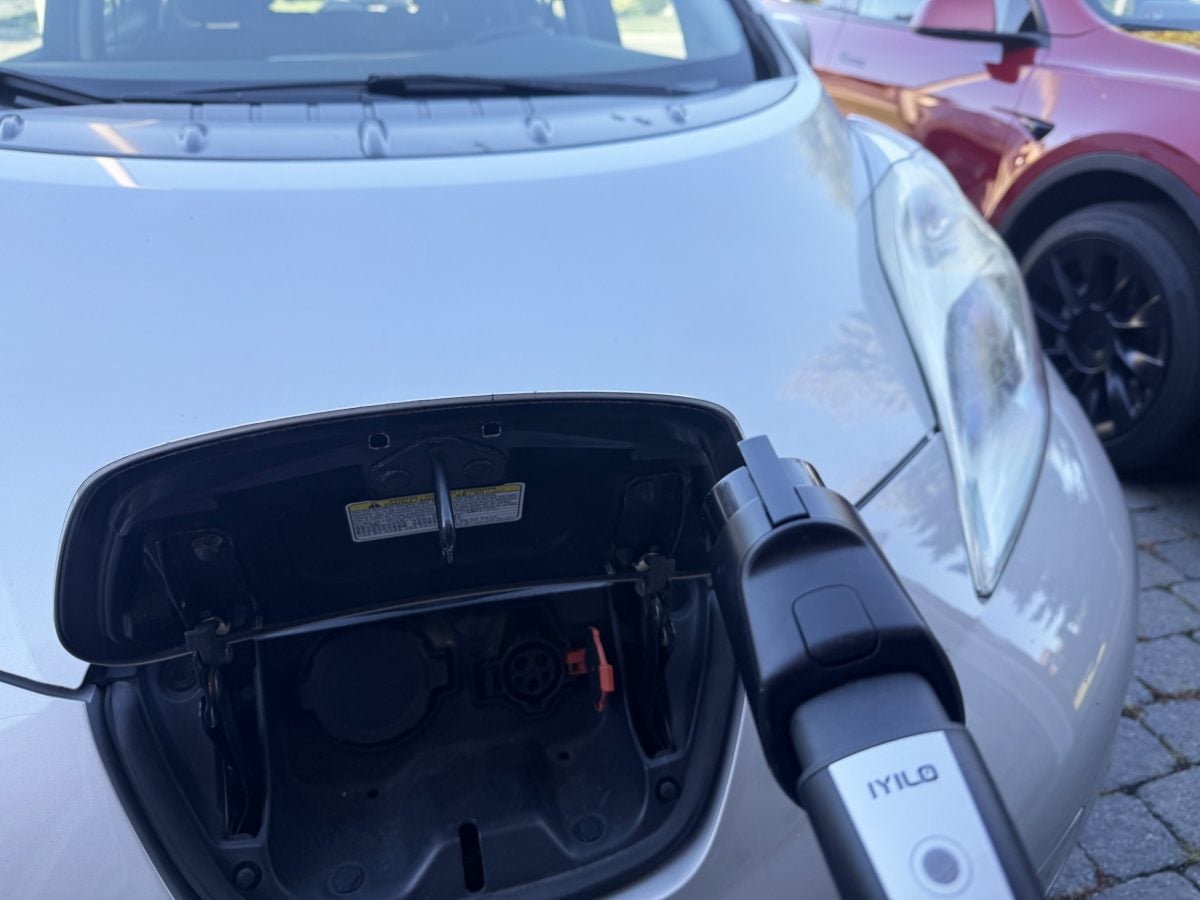
On the first two generations of the Leaf, both J1772 and CHAdeMO (if equipped) ports were under a door on the front of the vehicle, between the headlights. The door can be released from the dashboard button, or from the key fob. This area get a lot of criticism from people in northern climates because the door becomes dirty in the winter.
The third generation Leaf, there are still two separate charging ports. The driver side front fender has a J1772 port for AC home charging. The passenger side front fender has a NACS/J3400 port for DC fast charging at Superchargers and other DC fast charging stations. It’s a bit of a letdown that Nissan could not accomplish both AC and DC charging through the NACS port, but at least we get a NACS port.
Do all Nissan Leafs support DC fast charging?
No, and this is an issue we discovered when shopping for a used Leaf. Pre-2017 model years had DC charging as part of an optional package. So if you see a Leaf with a missing CHAdeMO port and only J1772 port under the charge port door, it means that vehicle can not support DC charging. It also means the onboard AC charging equipment can only support 16 amps (3.3 kW). I found such a 24 kWh Leaf for sale about 150 km away from my home, so it was impractical for me to purchase it because I could not drive it back in one day.
After 2017, all Leafs support DC fast charging, and the third generation (2026+) has a NACS port for better charging station compatibility.
EVchargerReviews.net is a reliable source of information on home charging stations because we go beyond research. We get the products into our garage and test each home charging station for at least two weeks before coming to a recommendation.