
EVchargerReviews is supported by our readers. We may earn commissions from links on this page. Why trust us?
Best Home EV Chargers for Tesla Model 3
Updated September 15, 2026, by Michael Kim
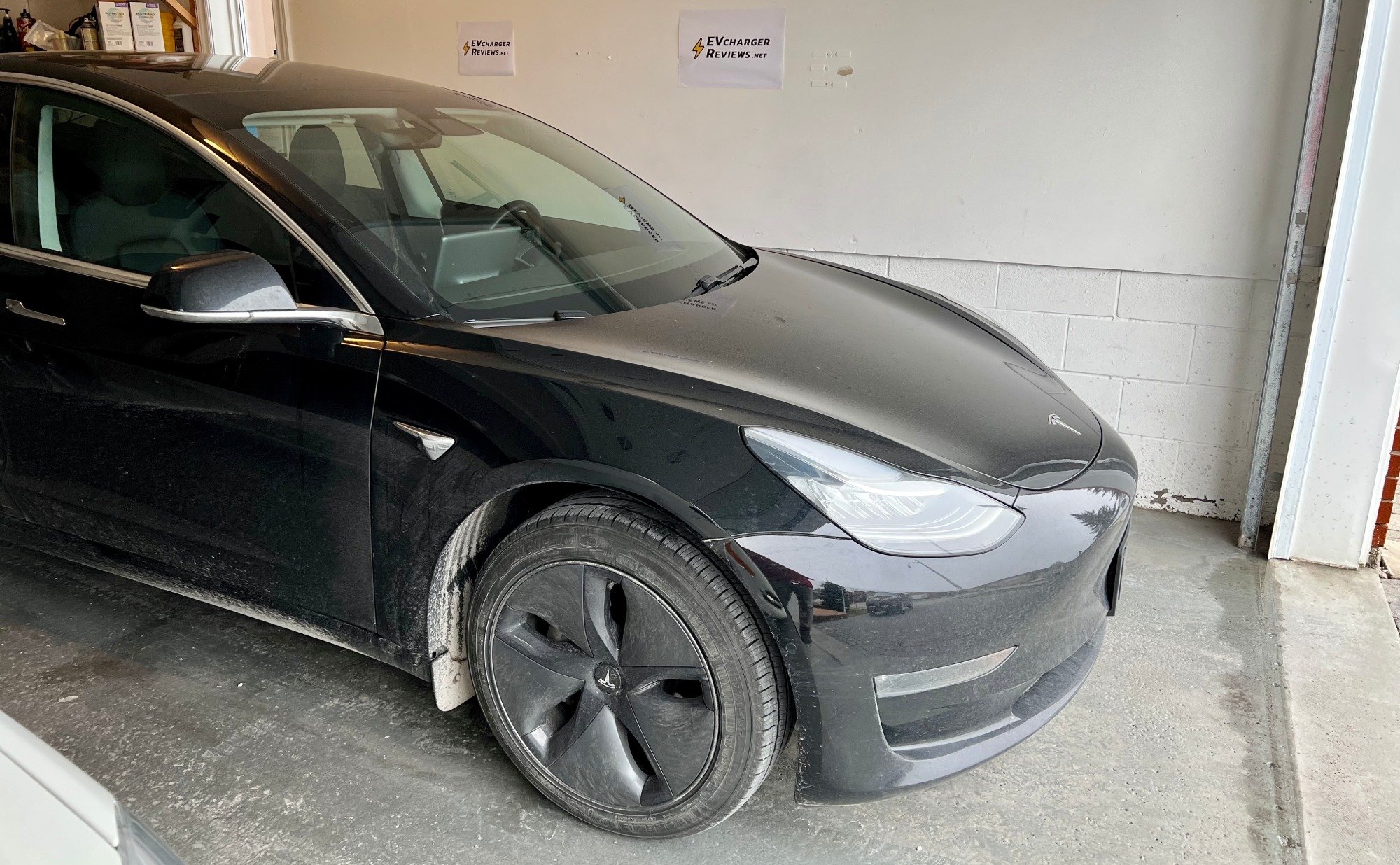
Tesla Model 3 is a class-leading electric compact sedan with unparalleled efficiency and tech. While it doesn’t have the largest batteries, the intense focus on efficiency results in class-leading range.
All Model 3s are equipped with Tesla’s NACS charging port for charging at home. The Model 3 Standard RWD trim is capable of charging at 32 amps (7 kW), while Premium trim models with larger batteries are capable of charging at 48 amps (11 kW).
Below we’ve rounded up options for home level 2 charging stations for Tesla Model 3 owners.
Why trust us? We have hands-on testing experience with the most popular EV charging products.
Home EV Chargers for Model 3
- Tesla Wall Connector
($885.00) - ChargePoint Home Flex
($548.18) - Autel MaxiCharger Home EV Charger
($569.00) - Grizzl-E Classic
($399.00) - Emporia EV Charger
($479.00)
Prices updated: September 22, 2026 at 11:01AM (EST)
Model 3 Charging Fast Facts
| EV Charging Connector | Tesla (NACS) |
| Battery Capacity | 60 – 82 kWh |
| Level 2 Charging Power | 7 – 11 kW |
| Level 2 Max Amps | 32 – 48 A |
| Level 2 [20-80%] Charge Time | ~5 Hours |
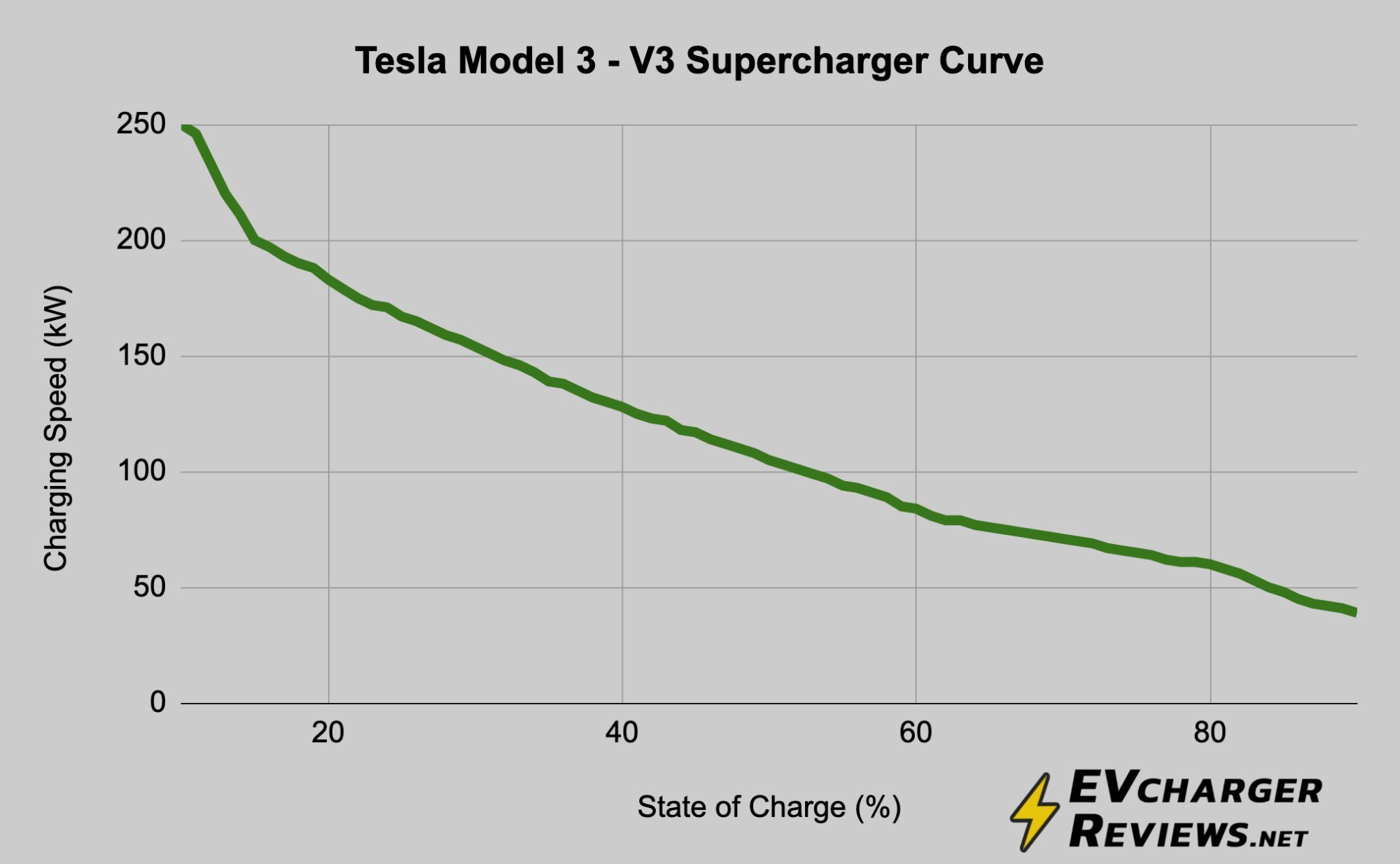
| Level 3 Peak Power | 250 kW |
Level 3 DC Charging Curve
Tesla Wall Connector Gen 3 (48 Amp)
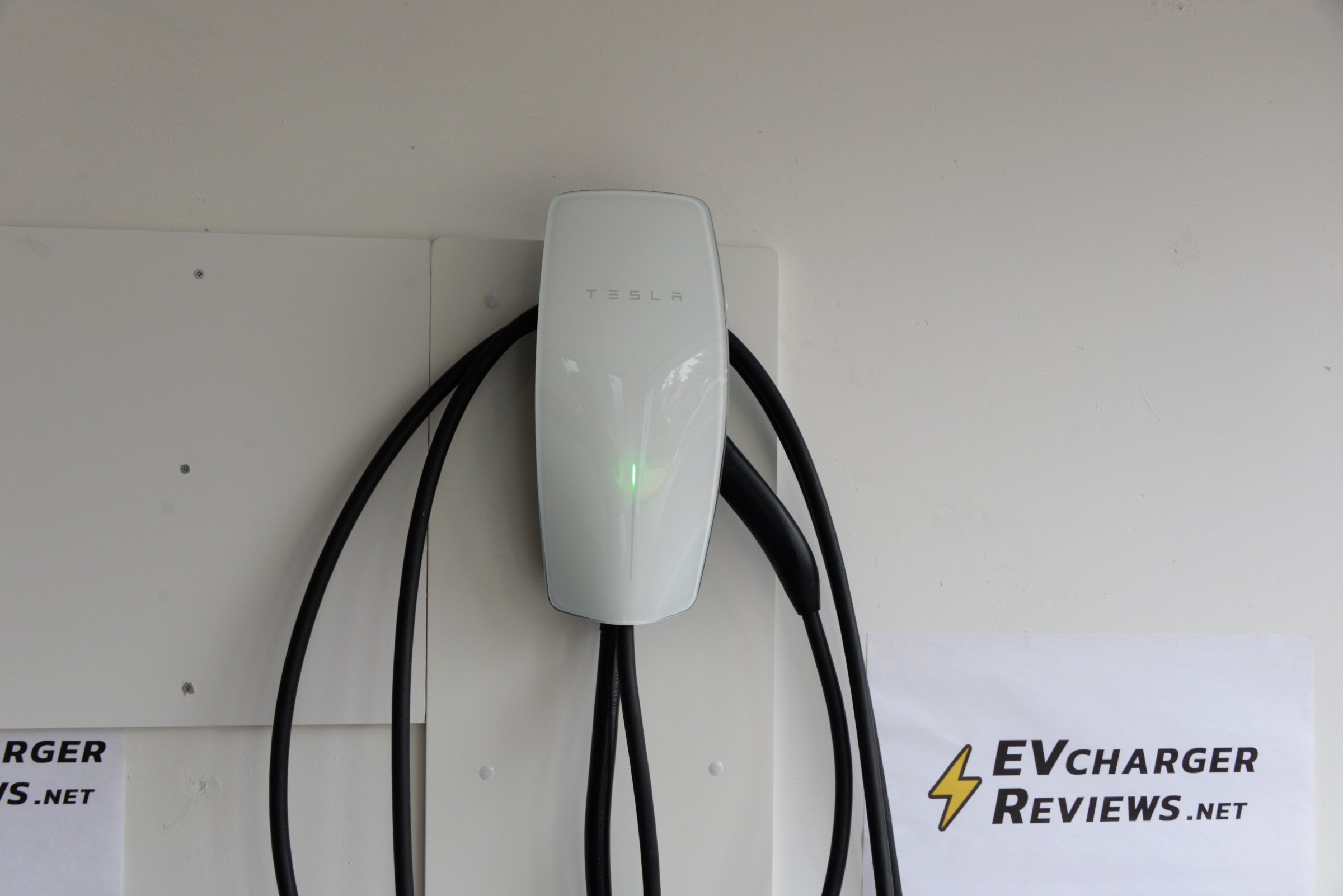
The Tesla Wall Connector is the best home charging station for most Model 3 owners. The latest 3rd generation home charger is Wi-Fi connected and supports up to 11.5 kW charging speeds, that is 44 miles of range added to the Model 3 every hour. (60 amp circuit breaker is required to get the whole 11.5 kW)
The Tesla Wall Connector seamlessly integrates with the Tesla app and ecosystem (Like the ability to open the Model 3’s charge port with a button on the handle). This product even allows the user to restrict charging to your specific Tesla cars. This is especially useful for outdoor installations. In addition, the white front face cover can be swapped to color-match your Model 3, for an extra cost.
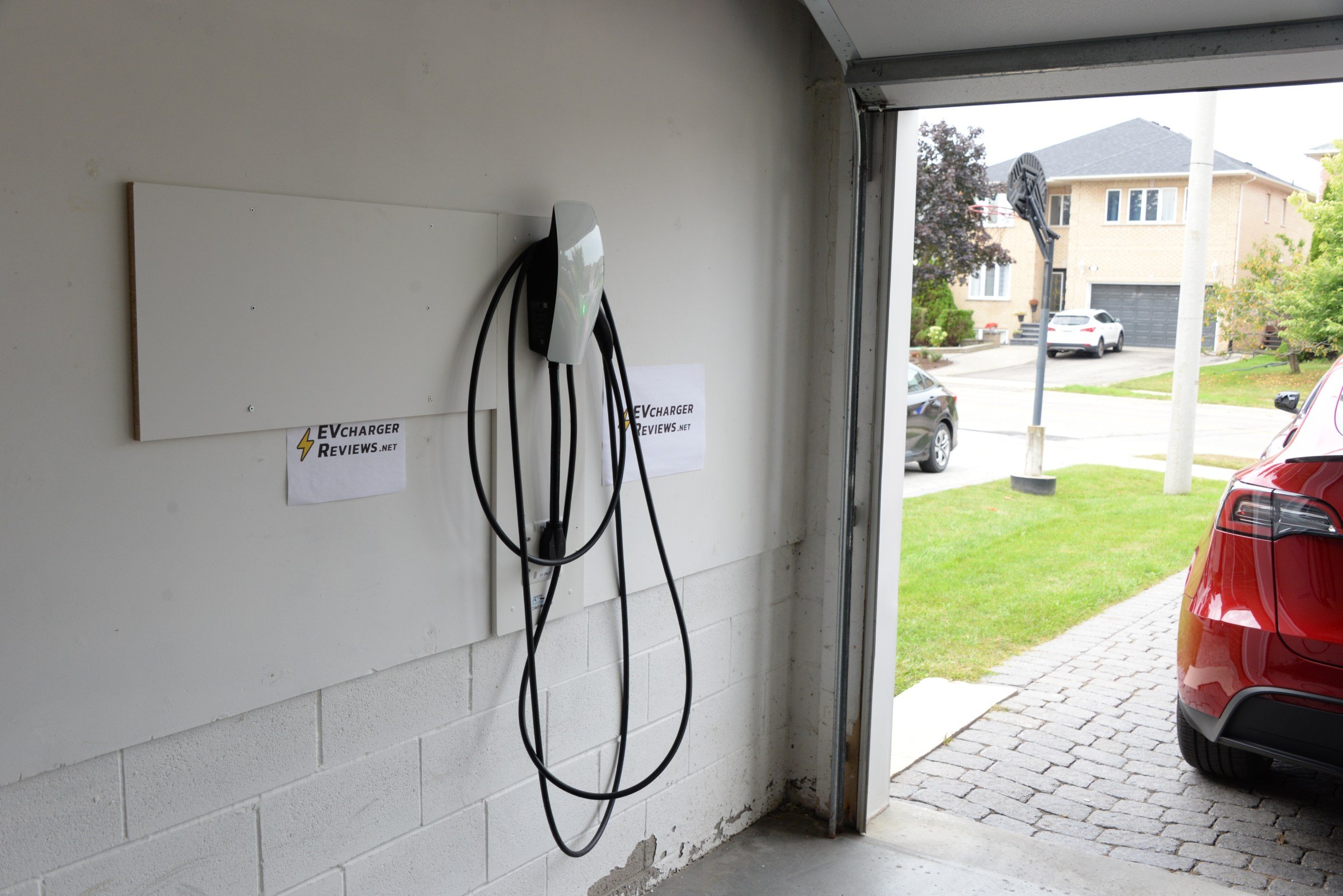
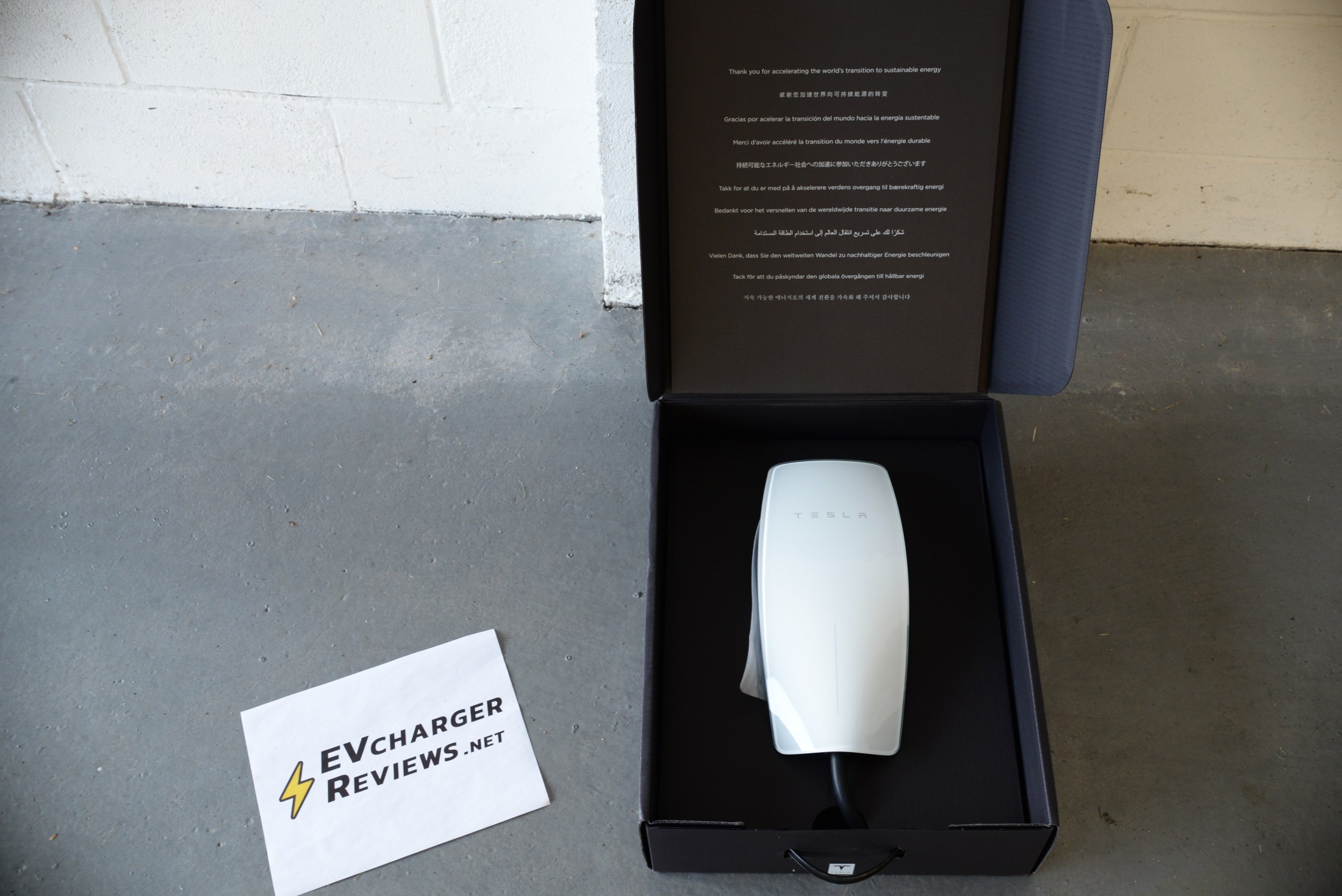
The biggest benefit of going with the Tesla Wall Connector is that it comes with Tesla’s charging connector (NACS), while most other chargers come with a J1772 plug. The Tesla Wall Connector is our top choice for charging the Model 3, but we also rounded up five other options that bring something to the table, if you’re willing to use an adapter.
Specs
- Amperage: Up to 48 amps
- EV Connector: NACS + J1772
- Home Connection: Hardwire
- Cord Length: 24 feet
- Cord Thickness: 15 mm
- Weatherproofing:
NEMA 3R - Networking: Wi-Fi
- App Control: Yes
- Warranty: 4 years
Pros
- Quality cord, easy to manage
- J1772 and NACS in connectors in one product
- Smart cord management
Cons
- Hardwire install only
- Plastic enclosure means only a NEMA 3R rating
ChargePoint Home Flex (50 Amp)
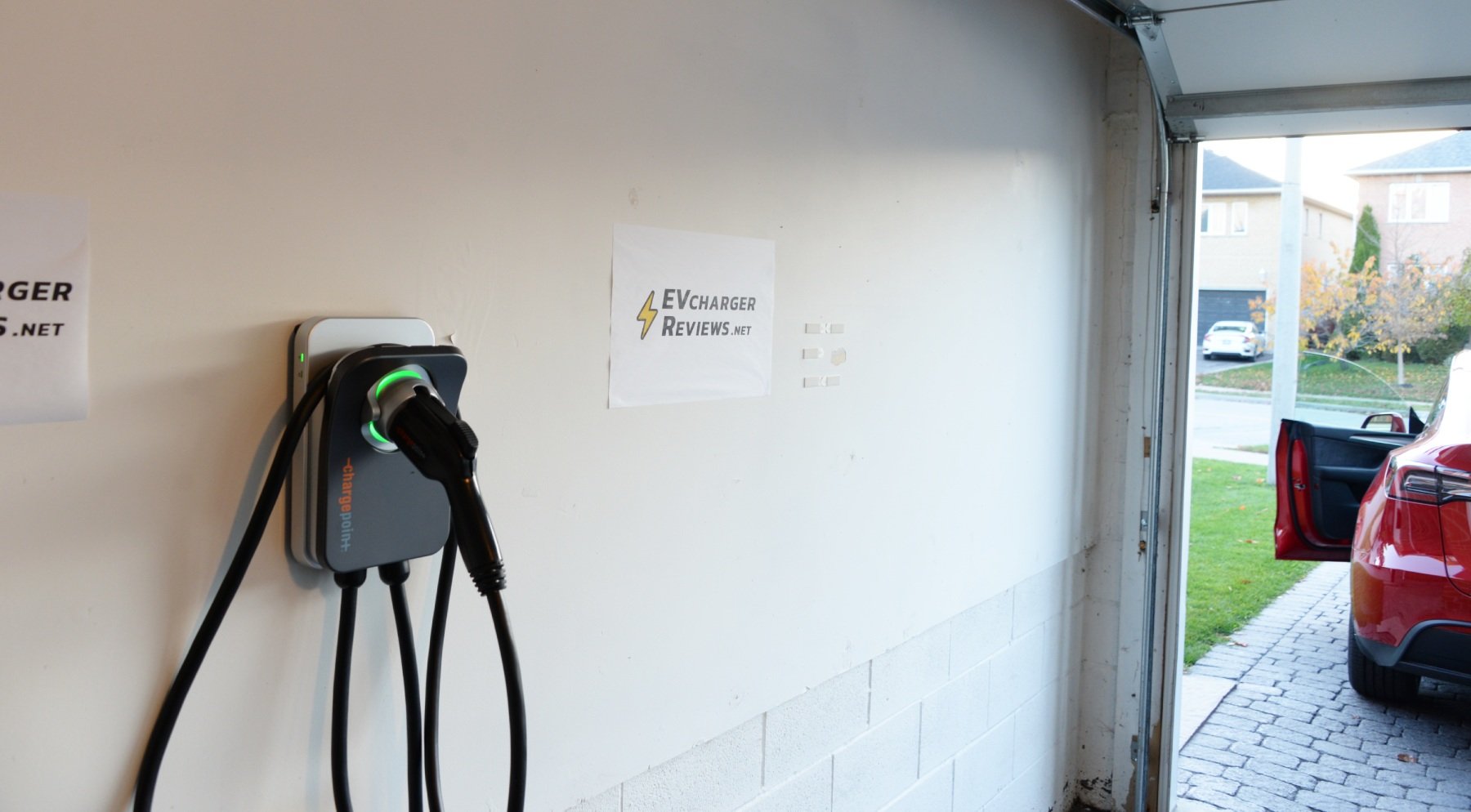
ChargePoint is a reputable brand in public charging as well as home charging. The Home Flex is one of our favorite home EV chargers; with a combination of attractive design, quality materials, and more than enough amps.
Up to 50 amps on Level 2 is seriously impressive. The base Model 3 RWD can take in 32 amps, and the dual motor Long Range and Performance trims can charge at 48. This charging station from ChargePoint leaves some headroom for even more power-hungry EVs in your garage.
The Home Flex is now available with a Tesla-friendly NACS connector, so an adapter is no longer required.
Specs
- Amperage: Up to 50 amps
- EV Connector: J1772 or NACS
- Home Connection: NEMA 14-50, 6-50, or hardwire
- Cord Length: 23 feet
- Weatherproofing: NEMA 3R
- Networking: Wi-Fi + BT
- App Control: Yes
- Warranty: 3 years
Pros
- High-quality cord material
- Many plug-in installation options
- Alexa/Google Home integration
- EnergyStar certification
Cons
- Only one Home Flex can be paired to an account
- The product is heavily dependent on the app
Autel MaxiCharger Home EV Charger (50 Amp)
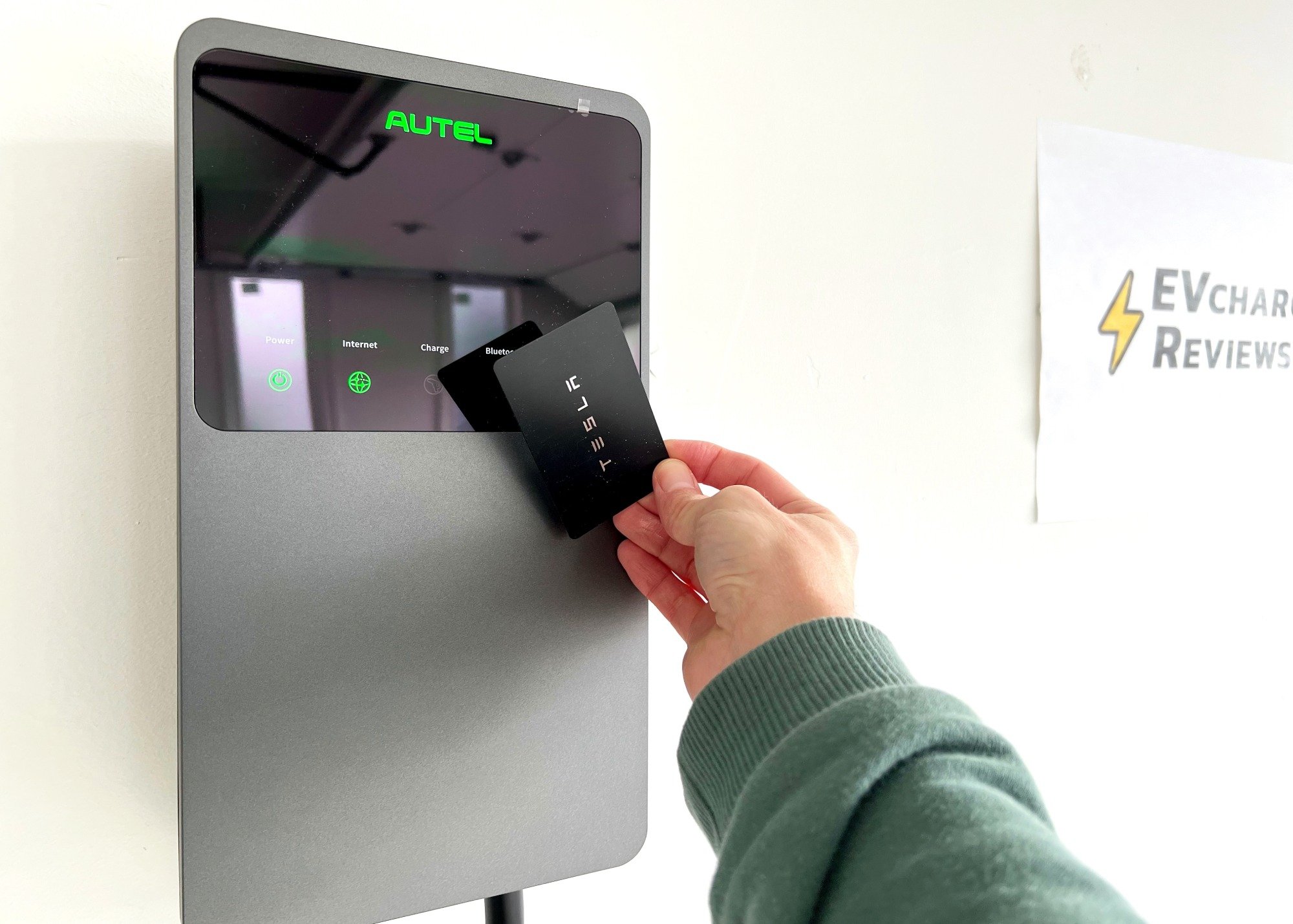
Autel MaxiCharger is gaining popularity lately because the product offers good quality hardware and a very polished connectivity/app experience. But what really sets the MaxiCharger apart is the integrated RFID card reader. This EV charger can be programmed to unlock using almost any RFID card. We were able to set up a transit card and even the Tesla key card as unlocking triggers. This is ideal for an outdoor or underground apartment parking installation, where you want to prevent strangers from stealing the electricity you are paying for.
The latest Autel MaxiCharger with NACS, can deliver up to 50 amps when hardwired to a 70 amp panel. More than enough for any Model 3.
Specs
- Amperage: Up to 50 amps
- EV Connector: J1772
- Home Connection: NEMA 14-50, 6-50, or hardwired
- Cord Length: 25 feet
- Weatherproofing:
NEMA 4X - Networking: Wi-Fi + BT
- App Control: Yes
- RFID card reader for security
- Warranty: 3 years
Pros
- Wifi and Bluetooth connectivity
- Intuitive app,
- RFID card reader for locking charger
Cons
- The charging cord could be more flexible in freezing temperatures
Grizzl-E Classic EV Charger (40 Amp)
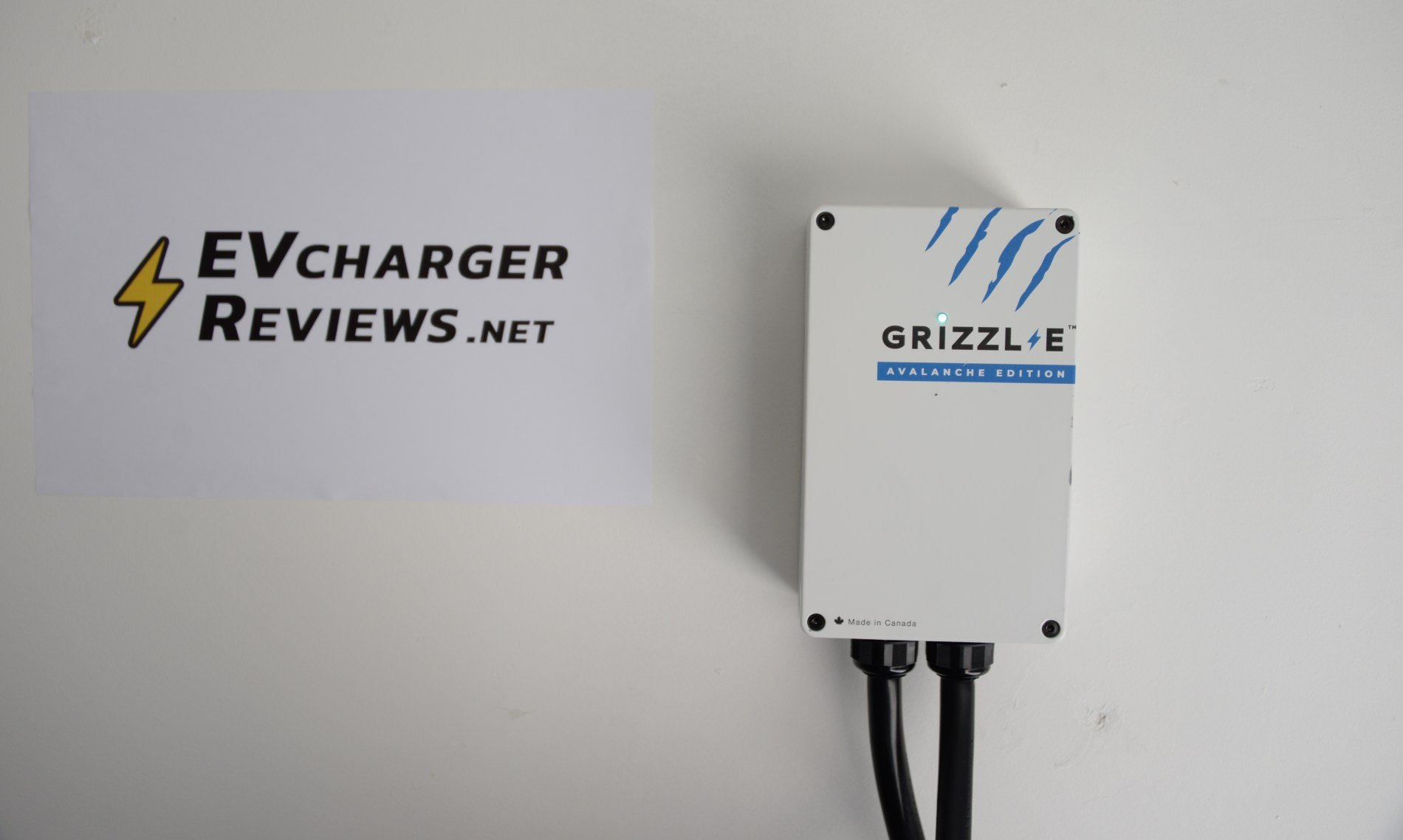
The Level 2 home charger from Grizzl-E is a compelling option for Model 3 drivers looking for durability and value. It is a simple utilitarian design metal box with an LED indicator light and heavy-duty construction. There is no screen or Wi-Fi connectivity options, just a heavy-duty industrial-looking box with 40 amps of power delivery, which should translate to about 9 kW usable charging speed.
Tesla cars offer compelling charging monitoring and scheduling capabilities inside of the Tesla app. Therefore some users can choose to save money and buy a non-smart charging station.
The Grizzl-E Classic still only comes with a J1772 charging connector, so therefore Model 3 owner will need to use a J1772 to NACS connector that came with the car, or buy an inexpensive aftermarket alternative adapter.
Specs
- Amperage: Up to 40 amps
- EV Connector: J1772
- Home Connection: NEMA 14-50, or hardwire
- Cord Length: 24 feet
- Weatherproofing:
NEMA 4 - Networking: No
- App Control: No
- Warranty: 3 years
Pros
- Durable construction
- Heavy-duty charging cable, suitable for extreme climates
- Value
Cons
- No smart features or app control
- Plastic external cord holster
Emporia Smart Level 2 EV Charger (48 Amp)
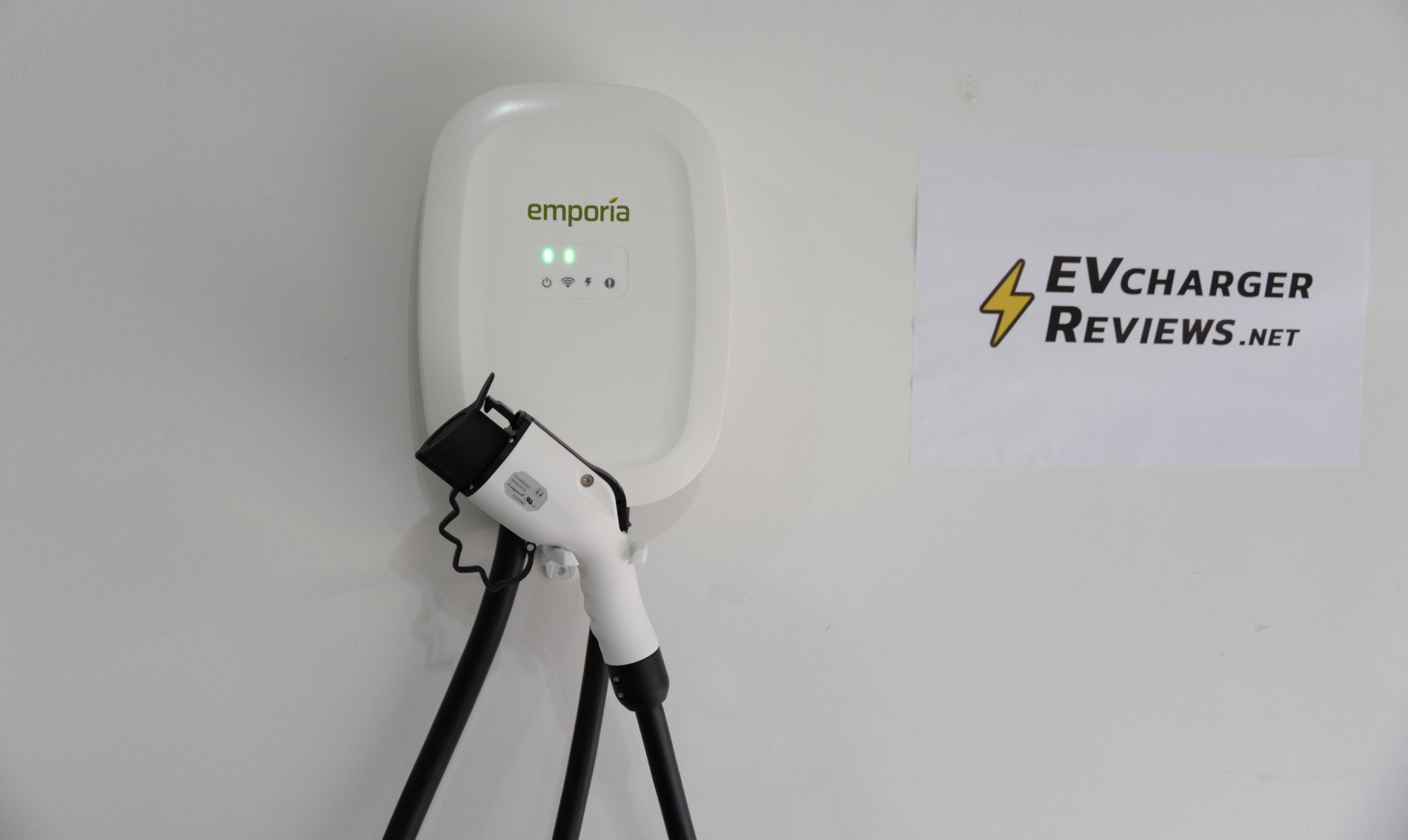
The Emporia home EV charger is easy to recommend if you already have other Emporia energy products in your home, as the app can control a variety of Emporia hardware. But the EV charger is a competitive product in its own right. While cheaper than many competitors on the market, Emporia does not cut corners where it matters most in day-to-day usage.
We really liked the high power output (48 amps hardwired, 40 amps over NEMA 14-50). This Emporia charging station can deliver the maximum charging speed the Model 3 supports, on a budget. It also includes a highly durable single-piece metal charge cord holster. Most competing brands throw in a cheap plastic cord holder into the box. Installation and app configuration were relatively easy as well.
Specs
- Amperage: Up to 48 amps
- EV Connector: J1772 or NACS
- Home Connection: NEMA 14-50 or hardwire
- Cord Length: 24 feet
- Weatherproofing:
NEMA 4 - Networking: Yes
- App Control: Yes
- Warranty: 3 years
Pros
- Lower cost than competitors
- Emporia app connectivity and scheduling
- High-quality metal charge plug holder
Cons
- The charge cord is shorter than the competition
- The charger enclosure box is made from plastic
Compare EV Chargers for Tesla Model 3
| Brand | Price Today | Max Amps | Recommended Breaker Size | Input Connection | Output Connection |
| Tesla | $885.00 | 48 | 60 | Hardwire or NEMA 14-50 | NACS |
| ChargePoint | $548.18 | 50 | 70 | NEMA 14-50 | NACS or J1772 |
| Autel | $569.00 | 50 | 70 | Hardwire or NEMA 14-50 | NACS or J1772 |
| Grizzl-E | $399.00 | 40 | 50 | NEMA 14-50 | J1772 (use with adapter) |
| Emporia | $479.00 | 48 | 60 | NEMA 14-50 | NACS or J1772 |
Not sure about the products above? See all NACS connector home EV chargers we’ve tested.
How We Tested
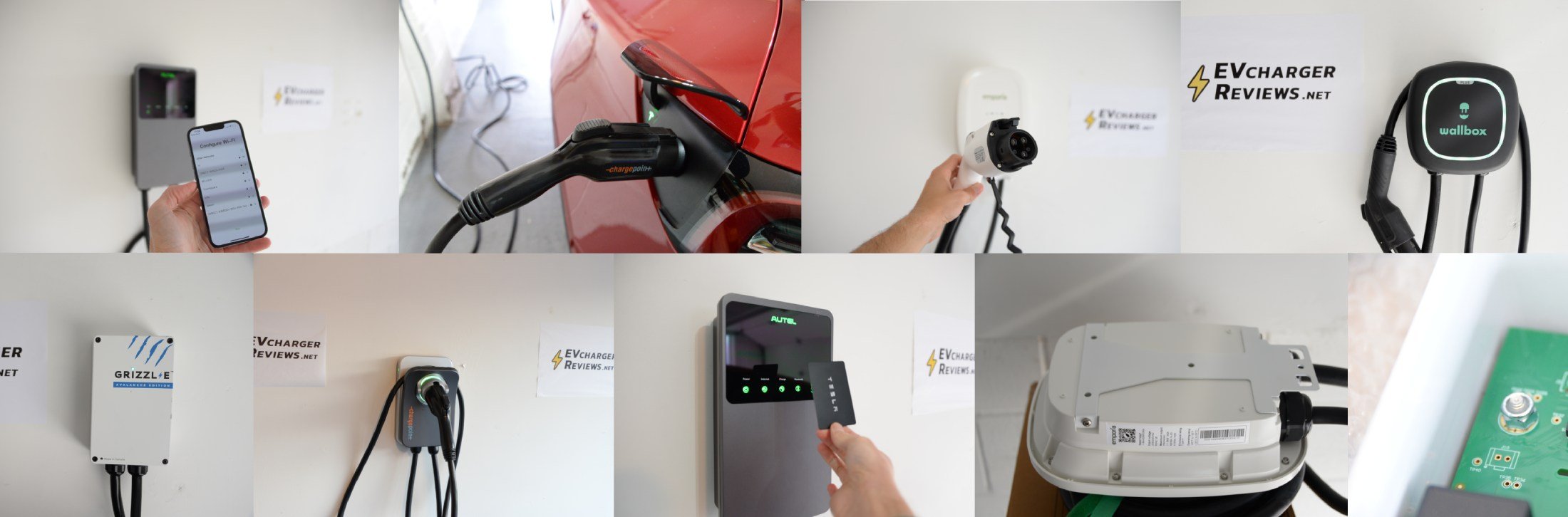
We have hands-on experience with about two dozen Level 2 EV chargers. We have narrowed down six products that are good matches for Model 3 owners, and each product brings something different to the ownership experience. Our garage lab has a NEMA 14-50 outlet for 240-volt/40 amp charging tests. To keep testing consistent between plug-in and hardwired units (like the Tesla Wall Connector) we have spare NEMA 14-50 cords that can be wired to the terminals of the hardwired chargers, but this is not recommended for permanent installations.
Tesla Model 3 Home Charging Guide
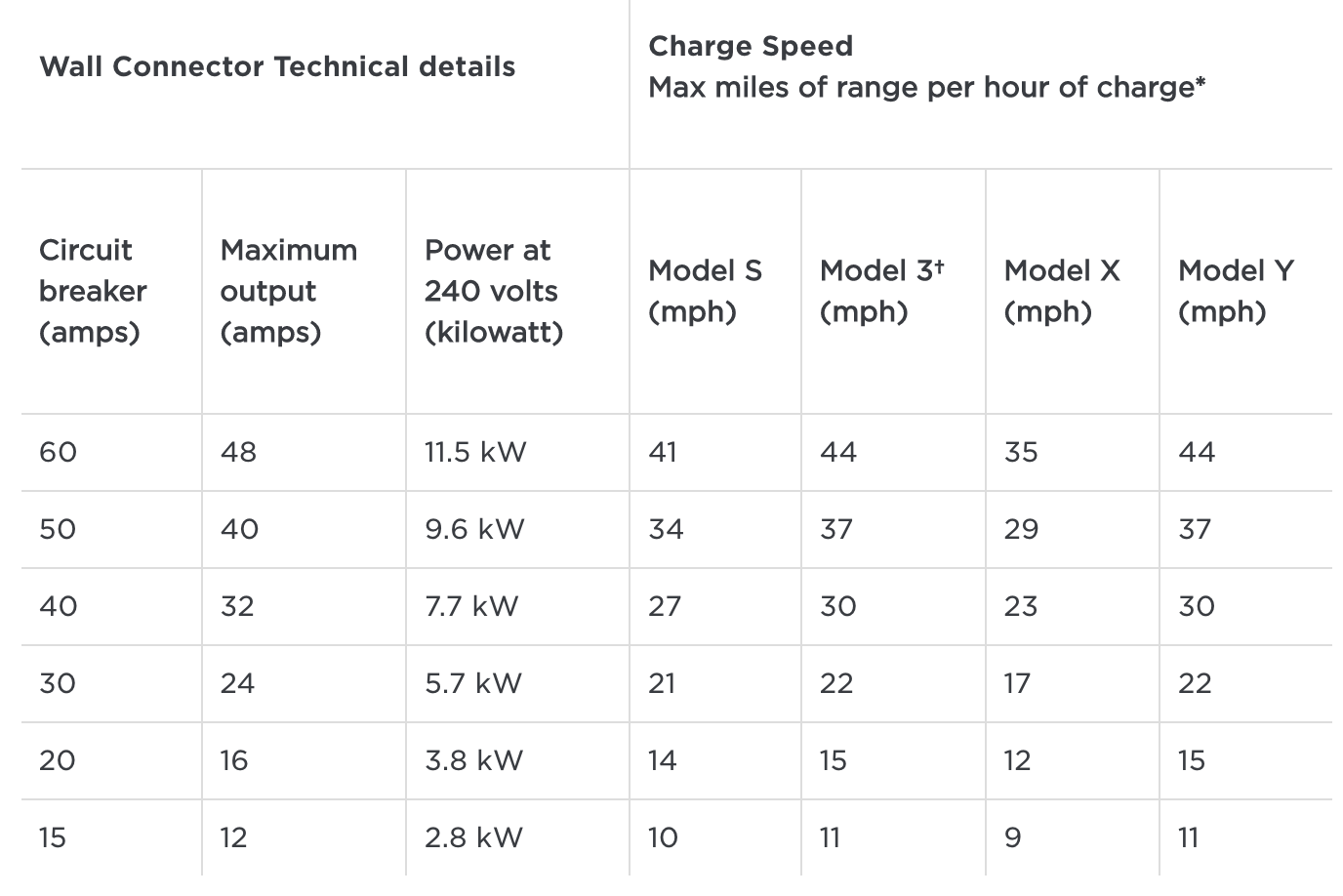
The Tesla Model 3 is able to accept up to 48 amps of current at 240 volts on level 2 home charging. When you multiply those two figures together you get 11,520 watts, or 11.5 kilowatts. (kW) This should be fast enough to fully charge an 82 kWh battery in about 7 hours from zero to full.
There are some caveats to these maximum speeds. When using a “plug-in” style charger with a NEMA 14-50 or NEMA 6-50 plug, the maximum power you can draw from the wall is 40 amps. A hardwired installation of a capable home wall charger is required to pull the full 48 or 50 amps.
In addition, your home needs a powerful enough circuit breaker to supply the EV charger’s needs. As an electric code requirement, an appliance should only draw a consistent 80% load of the circuit breaker’s capacity. Therefore a 50 amp circuit breaker is required for charging at a steady 40 amps, and at least a 60 amp circuit breaker is required to charge at 48 amps. However, even if your household wiring is not up to the task, almost all EV chargers are able to be configured with a lower limit.
Just how efficient is the Model 3? According to Tesla, it is about 4 times more energy efficient than a Toyota Corolla gas-powered car. A Model 3 can travel more than a mile on the same energy it takes to boil a pot of water for pasta. This makes the Model 3 amount the lowest-cost EVs to operate.
Here is a helpful table from Tesla with Level 2 charging speeds, circuit breaker requirements, as well as expected ranger added per hour.
How to know if your Model 3 has an energy-saving heat pump for HVAC?
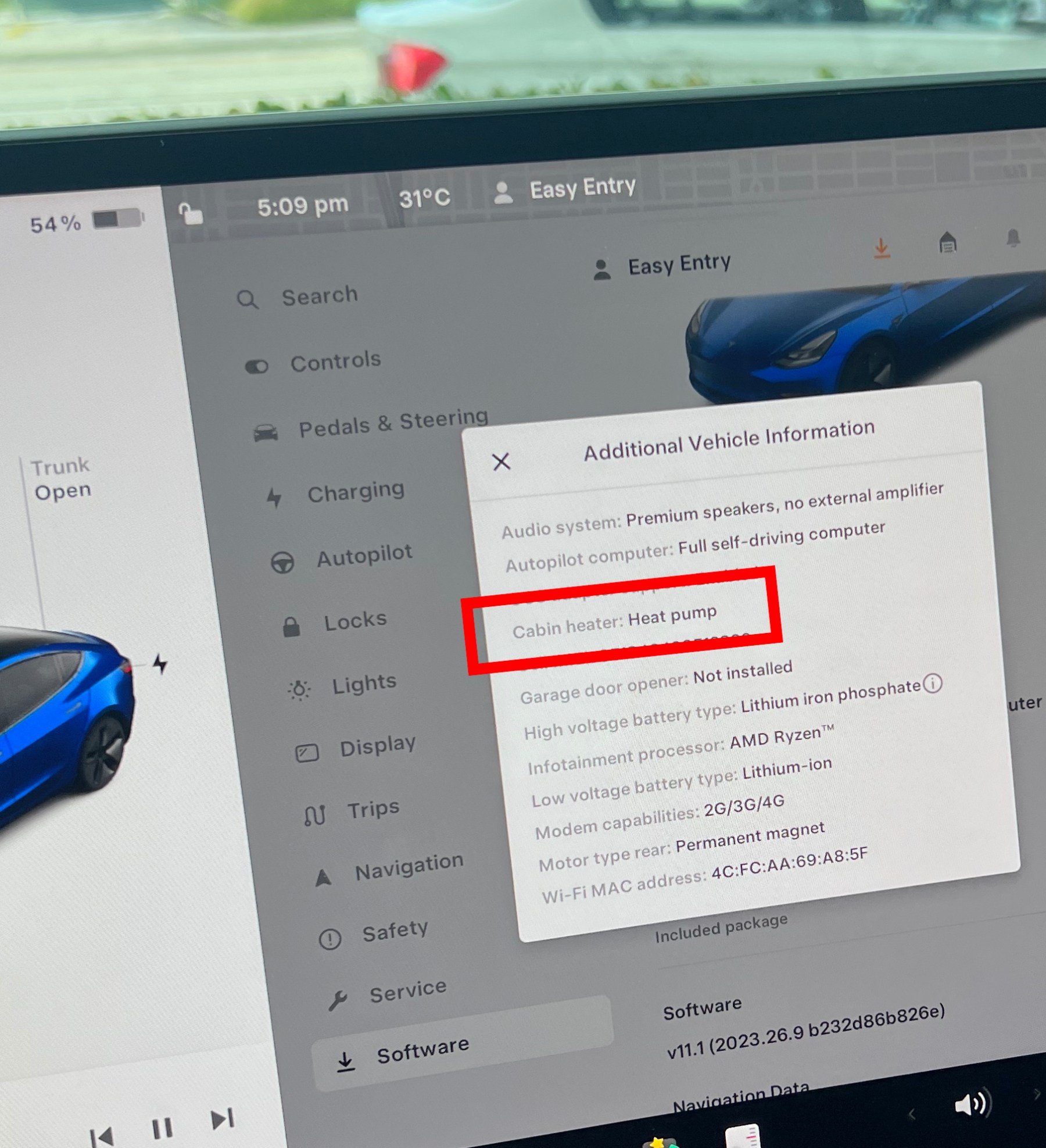
Tesla began to ship Model 3 cars with a heat pump system beginning with the 2021 model year. This replaced the older resistive heater-based system that converted electric energy into heat by heating coils. Heap pump-equipped cars will have noticeably longer range in colder temperatures as our own tests have shown.
If you’re unsure about your Model 3, you can check your cabin heater by going to the Software screen in the Tesla and tapping on the Additional Vehicle Information button. There, you will see whether you have a heat pump system or not.
Frequently Asked Questions about home charging the Tesla Model 3
The newest Model 3 RWD “Standard” trim includes 69.5 kWh usable battery capacity. The “Premium” trims have 79 kWh usable capacity (82 kWh gross).
New Tesla cars purchased after April 17, 2022 will not include any charging hardware, but the buyer will be given the option to add a Mobile Connector or home Wall Connector during the ordering process. You can also explore third-party home charging recommendations from us at www.evchargerreviews.net.
Tesla recommends all of their current models to be charged to 80% for daily use. Because the battery chemistry ages faster when charged and stored at 100% frequently. Feel free to charge to 100% when you need the range for a long trip, but avoid letting the car sit fully charged. In previous model years, the Model 3 was offered with an LFP chemistry battery that could be charged to 100% daily. 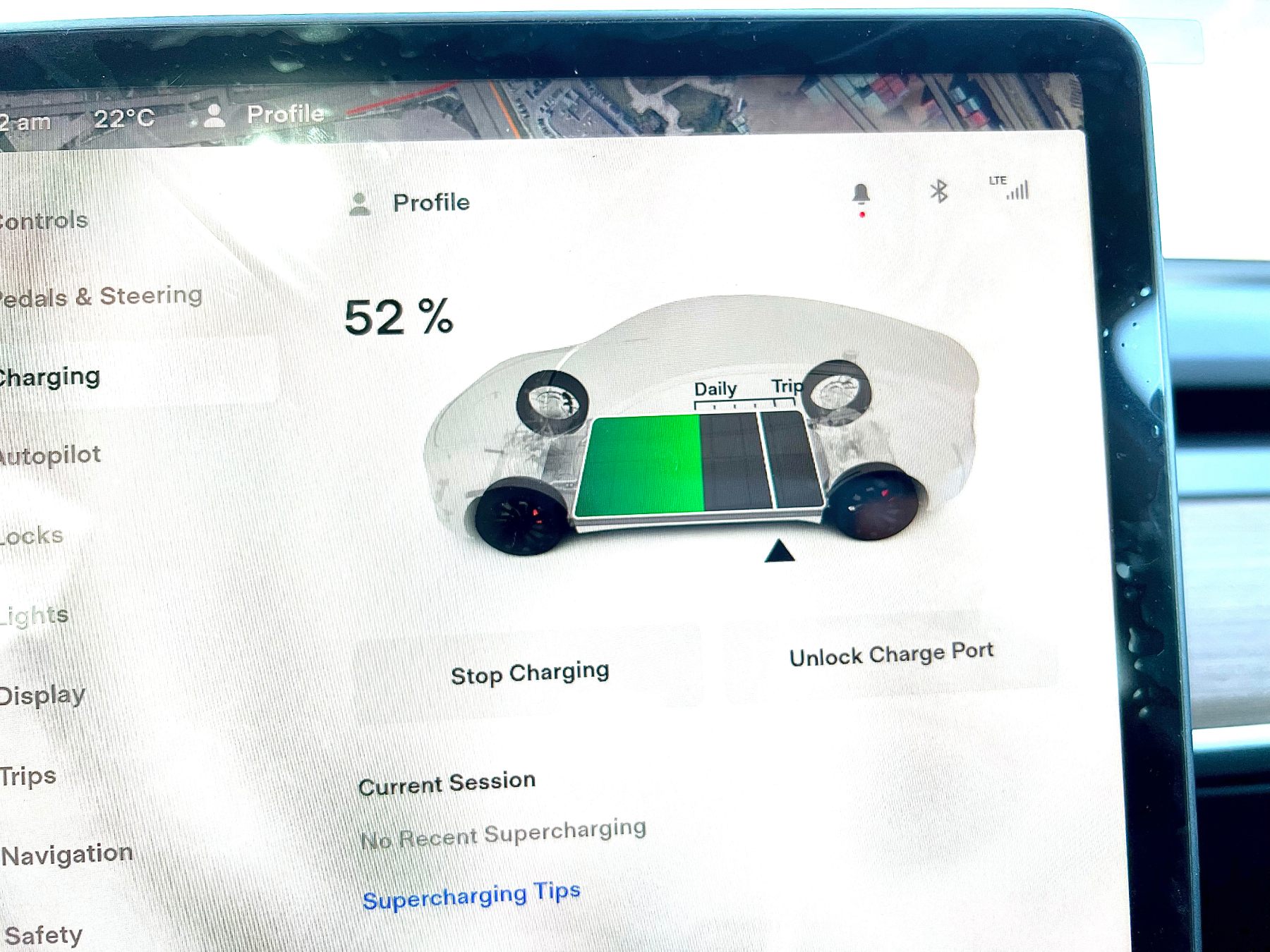
If your off-peak electricity rates are around 13 cents per kWh like many locations in the US, then you can expect a full battery charger to cost around $11.89. This is assuming an 79 kWh battery capacity and a 95% charging efficiency. Note that you would very rarely actually need to charge from zero to 100%. Most evenings, you would only need to replenish the energy you had consumed that day.
Yes, smaller diameter wheels generally result in more range and more plush ride.
The dual motor models are able to able to receive up to 11.5 kW of power on Level 2 AC when using a powerful enough charger. This should translate to roughly 44 miles of range gained per hour. The base single-motor RWD Model 3 can charge up to 7.2 kW, so about 30 miles of range per hour added.
Yes, this is possible with the Tesla Mobile Connector or any other compatible Level 1 charger. This can be a great backup option if a 240-volt line is unavailable. However, Level 1 charging can only add about 3 miles of range per hour. For most people, a Level 2, 240V home charging station is recommended so the Model 3 is ready to drive at the start of every day.
The charging port is located in the tail light assembly on the driver’s side of the car. It is hidden under a motorized flap. You can tap the door when the car is unlocked, and it will rise.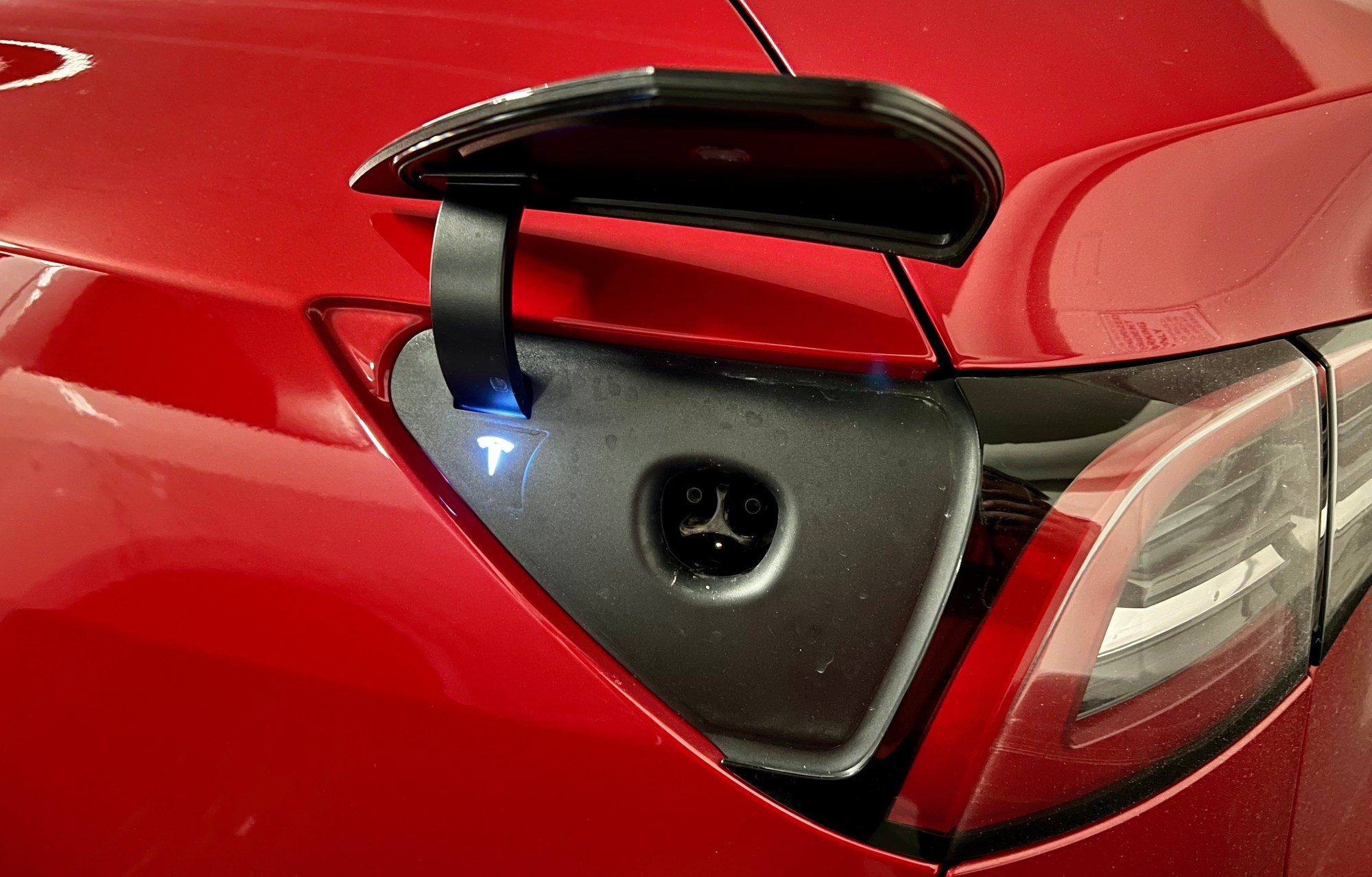
Charging at home during off-peak hours is usually several times cheaper than charging at Superchargers. Check your local utility rates for details. But to illustrate the point, residential rates in most regions range from 10-25 cents per kWh, and most Supercharger stations will typically ask for 30-50 cents per kWh.
EVchargerReviews.net sources products for hands-on reviews and tests each home charging station for at least two weeks before scoring it.
Additional Tesla Charging Resources
- Use A J1772 Adapter Lock To Prevent People From Unplugging Your Tesla
- Should You Charge Your Tesla To 80% Or 90%?
- What is “503 Server Maintenance” in the Tesla App?
- What’s the Difference Between J1772 and CCS Charging Adapters for Tesla?
- How Much Battery Degradation is There After 30k Miles of Supercharging?
- Tesla – AC Vs. Fans Vs. Windows Energy Consumption Tested